

Benefits of a Live Edge Dining Table: Natural Character for Everyday Living
What if the most distinctive part of your dining table is also what makes it feel at home in your dining room? The benefits of a live edge dining table go beyond its natural outline: the grain and shape bring a piece of the tree’s character into everyday meals. Still, it’s worth considering whether an irregular edge will suit your space, leave room for the seating you need, and fit your care routine.
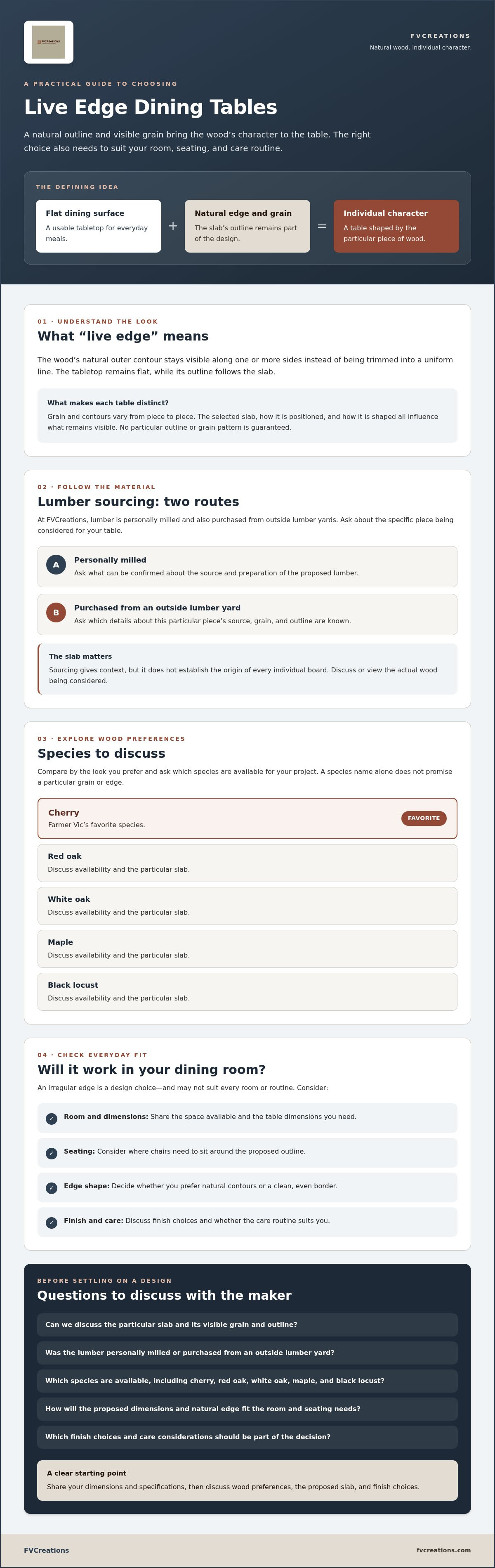
A live edge table isn’t right for every room or routine, and that’s part of the decision. This guide looks at what gives these tables their appeal and what to consider before choosing one, from seating and care to the wood itself. Lumber can be personally milled or purchased from outside lumber yards, and the source and individual slab both affect what you see. We’ll also compare red oak, white oak, maple, and black locust, with extra attention to cherry, Farmer Vic’s favorite. By the end, you’ll have practical questions to ask a maker about dimensions, wood preferences, and finish choices.
Key Takeaways
- The benefits of a live edge dining table include natural contours and grain that give each slab its own visual character.
- Compare cherry, red oak, white oak, maple, and black locust by the look you prefer, and ask which species are available for your project. Cherry is Farmer Vic’s favorite.
- Ask how the lumber was sourced. It may be personally milled or purchased from an outside lumber yard.
- Before choosing, consider your room, seating needs, preferred edge shape, finish, and care routine.
- For a custom furniture commission, share your dimensions and specifications, then discuss wood preferences and finish choices with the maker.
What Are the Benefits of a Live Edge Dining Table?
Featured-snippet definition: A live edge dining table keeps the wood’s natural outer contour visible along one or more sides, rather than trimming every edge into a uniform line. The tabletop still has a flat surface for dining, while its outline follows the shape of the slab.
The term describes a design choice, not one exact shape. As the Live edge overview explains, the approach leaves part of a piece of wood’s natural edge visible in the finished furniture. Depending on the slab, the edge may curve gently, shift in and out, or look relatively subtle. Grain and contours vary as well, so no particular pattern or appearance is guaranteed.
How does a live edge preserve the character of wood?
With a live edge, the wood’s outline becomes part of the design instead of being cut into a straight, matching border. The maker works with the slab’s natural contours while shaping a usable tabletop. The visible edge and grain bring the material’s natural variation into view, giving the table a more individual look.
Each slab has its own features, and the finished edge depends on the piece selected and how it’s prepared. Lumber may be personally milled or purchased from outside lumber yards. In either case, the source and the particular slab help shape the table’s appearance. Ask to see or discuss the actual wood being considered rather than relying on a general description to predict its outline.
What makes a live edge table feel distinctive?
The contrast is straightforward: the tabletop provides a flat place for plates and shared meals, while its perimeter keeps an organic line. That combination of everyday function and visible variation is central to the benefits of a live edge dining table. Instead of a perfectly uniform border, the design lets the wood’s contours contribute to the finished look.
This character may suit a dining room if you enjoy natural forms and visible grain, whether showcased across furniture or complemented by wood wall art from WoodSnap, but it isn’t automatically the right choice for everyone. If you prefer clean, even lines around the entire tabletop, a conventional straight-edged design may suit you better. The important question is which outline you’ll enjoy seeing and using day after day.
Before choosing a slab, consider how its shape will look in your room and where chairs need to sit. A live edge doesn’t promise a particular silhouette, and slabs won’t have identical contours. Ask what the proposed piece looks like and discuss how its outline would fit your space. That helps turn an appreciation for natural character into a decision based on how you’ll use the table.
How Material, Grain, and Sourcing Shape a Live Edge Table
A live edge table’s appearance starts with the particular piece of lumber. Grain and natural outline both contribute to the finished look, but neither follows a template. Slabs from the same species can differ, and decisions about how to position and shape a slab affect what remains visible.
The material’s origin and grain help give each live edge table its visual character, while the selected slab and design decisions shape the final result.
Why can no two live edge tables look exactly alike?
Grain is the pattern visible in the wood, while the natural edge follows the tree’s outer contour. Both can vary from one piece of lumber to another. A maker may position or trim a slab in different ways, so the visible grain and edge depend on the material and the design. That individuality is part of the benefits of a live edge dining table, but it doesn’t guarantee a particular shape or grain pattern.
If you have a specific look in mind, ask to discuss the actual piece being considered for your project. Preferences such as “subtle curves” or “prominent grain” can guide the conversation, but the final appearance depends on the lumber available and the choices made for the table.
What should buyers ask about lumber sourcing?
Ask where the lumber came from and how it was prepared. At FVCreations, Farmer Vic personally mills lumber and also purchases it from outside lumber yards. This gives context about the shop’s sourcing, but it doesn’t establish the origin of every individual board. For a specific commission, ask what can be confirmed about the proposed piece, including its source and the features you’ll be choosing from.
- Was the lumber personally milled, purchased from an outside lumber yard, or sourced through both methods?
- Can I see or discuss the particular piece being considered for my table?
- Which details about its source, grain, and outline are known, and which may depend on design decisions?
These questions help set clear expectations before settling on dimensions and specifications. They also make it easier to explain what matters to you instead of assuming a species or general description guarantees a particular result. For more background on handcrafted wood furniture and sourcing, explore FVCreations’ work and consider what you’d want to ask about a future commission.
Cherry, Red Oak, White Oak, Maple, and Black Locust: Comparing Character
Wood species can help narrow the look you’re after, but a species name alone can’t tell you exactly how a live edge table will appear. Grain and natural contours vary from slab to slab, so ask to see or discuss the particular lumber being considered. The benefits of a live edge dining table come partly from that individual character, paired with a wood choice that suits your preferences.
Why does cherry deserve a closer look?
Cherry is Farmer Vic’s favorite, in part for its changing color. It can start pinkish-brown and deepen toward a richer reddish-brown as it ages. The finished table’s appearance also depends on the specific piece and its finish, so ask what can be confirmed about the lumber being considered. Confirm availability for your commission rather than assuming a particular species can be supplied.
How do red oak, white oak, maple, and black locust differ?
Red oak and white oak are distinct choices, not interchangeable names for one look. Red oak is known for more prominent, swirling grain and warm reddish undertones. White oak tends toward straighter, subtler grain. For maple and black locust, ask to see the actual lumber being considered; the appearance of a specific piece can’t be determined from the species name alone. A maker can help you compare the slab with the look you want.
| Species | Visual character | Questions to discuss with the maker |
|---|---|---|
| Cherry | May begin pinkish-brown and deepen to reddish-brown with age. | What can you confirm about this piece’s color and grain? |
| Red oak | Often has prominent, swirling grain and warm reddish undertones. | How does the grain in the available slab look? |
| White oak | Often has straighter, subtler grain than red oak. | Can I compare the actual grain with red oak? |
| Maple | Appearance depends on the particular piece; inspect the lumber. | What visual details stand out in this slab? |
| Black locust | Appearance depends on the particular piece; inspect the lumber. | Can you show or describe the piece being considered? |
Use the table as a starting point, not a promise about a finished tabletop. Farmer Vic personally mills lumber and also purchases it from outside lumber yards, so ask which sourcing route applies to the material under discussion and what’s known about that piece. Compare its visible grain, color, and edge with your preferences. The right fit is the one you enjoy looking at, provided the species and slab can be confirmed for your commission.
Is a Live Edge Dining Table Practical for Everyday Meals?
It can be, but practicality depends on the table’s edge, layout, and finish. An organic outline brings natural character to a room, while a straight, uniform edge may suit buyers who prefer even borders and a more predictable seating arrangement. The benefits of a live edge dining table depend on how well its specific design fits your home, not on a guarantee that every slab works equally well in every space.
What should you check before choosing a live edge?
Ask to review the actual table or clear images of the specific piece under consideration. Then picture your usual meals: where will the chairs sit, and does the outline leave the seating positions you need? Consider movement around the table as well as its footprint in the room. If you’re discussing a custom commission, share your dimensions and specifications so the maker can talk through whether a particular slab may suit your space.
- Household use: Think about how the table will serve everyday meals and gatherings.
- Room fit: Check the table’s footprint and how its edge relates to chair placement and movement around the room.
- Appearance: Decide whether you enjoy the slab’s actual contours or would rather have a uniform outline.
- Care expectations: Ask about the specific finish and the care it calls for before making your choice.
Don’t assume every irregular edge will feel comfortable in every seat or be simple to clean. Reviewing the actual piece helps you assess its contours and how they relate to your dining setup.
How do you care for a live edge dining table?
Care guidance depends on the table’s wood and finish, so don’t rely on one general rule for every piece. Ask the maker which cleaning and maintenance products are suitable and what routine is recommended for the finish used. This gives you guidance for the table you’re considering rather than asking you to guess based on its appearance or species alone.
If you’re exploring a custom commission, bring your room measurements, seating needs, and finish questions to the conversation. Discussing these details with the maker helps you weigh the natural character you like against your household’s practical needs before settling on a design.
Choosing a Live Edge Dining Table That Feels Right for Your Home
- Define room needs: Note your available space, preferred table dimensions, and how you expect to use the table.
- Choose visual preferences: Consider the edge shape and grain you’d like to see, while allowing for variation between individual pieces.
- Ask about lumber: Find out whether the material is personally milled, purchased from an outside lumber yard, or sourced through both methods. Ask what can be confirmed about the piece for your project.
- Confirm finish and care: Discuss finish options and ask what care the selected finish requires.
What should you discuss with a furniture maker?
Bring your preferred dimensions and dining needs, along with wood preferences and questions about the finish. Ask which requested species and design details can be confirmed for your project. Farmer Vic personally mills lumber and also purchases lumber from outside lumber yards, so ask which sourcing route applies to the material being considered. Discuss the production schedule directly rather than assuming a turnaround.
A maker can talk through feasible options, but the final choices depend on the project and the material that can be confirmed. Much like consulting bespoke timber specialists such as KM Joinery for custom commissions, asking early about wood availability and explaining which details are flexible—such as the exact edge contour or grain appearance—helps ensure a successful collaboration.
How can the maker’s other work help you assess their approach?
What is a comfortable next step if you are interested?
Write down your priorities: room fit, seating, preferred wood, edge appearance, finish, care, and any flexibility around design details. Then explore FVCreations’ handcrafted woodwork. If you’d like to discuss a furniture commission, bring those notes to the conversation. A table feels right when its natural character suits your home and its practical details suit the way you live.
Choose a Table That Feels Like Yours
The benefits of a live edge dining table come down to more than its natural outline. The slab’s grain and contours bring individual character, while the table still needs to suit your room, seating, and daily routine. Compare the wood’s appearance, consider how the edge works with your layout, and ask what finish and care the specific piece calls for.
Wood choice is personal, too. Cherry is Farmer Vic’s favorite, while red oak, white oak, maple, and black locust each offer a different starting point for discussion. Farmer Vic personally mills lumber and also purchases it from outside lumber yards, so ask what can be confirmed about the material being considered. For a custom furniture commission, your dimensions and specifications can guide a conversation about feasible options, wood preferences, and finish choices.
Ready to explore your options? Explore FVCreations’ handcrafted woodwork, then contact the shop to discuss your dimensions, specifications, and preferred finishes for a custom furniture commission.
Frequently Asked Questions
Is a live edge dining table practical for everyday use?
It can be, but everyday practicality depends on the specific table, its edge shape and finish, and how your household uses it. Check the actual piece or clear images, and consider how its outline fits your chairs, seating positions, and room layout. If you’re discussing a custom commission, tell the maker how you plan to use the table so you can talk through whether the design suits your needs.
What makes live edge dining tables unique?
They preserve the wood’s natural outer edge instead of trimming every side into a uniform line. The slab’s outline and visible grain contribute to its appearance, while the particular piece of lumber and the maker’s design choices shape the final result. Natural variation doesn’t guarantee a specific pattern or prove superior quality, so ask to see the material being considered if you have a certain look in mind.
Can you choose the wood species for a live edge dining table?
You can discuss your wood preferences with a furniture maker, but confirm which species are available for your particular project. Cherry, red oak, white oak, maple, and black locust are all species you might ask about; none should be assumed available. Cherry is Farmer Vic’s favorite. Ask what lumber can be considered and what its visible grain and color are like before settling on a choice.
How do you clean and maintain a live edge dining table?
Follow care instructions for the specific wood and finish on your table. There isn’t one routine or cleaning product that can be assumed suitable for every piece. Ask the maker which cleaning and maintenance products are appropriate for the finish, and follow their guidance. If you’re commissioning a table, discuss care before agreeing to the project so you know what to expect in everyday use.
What should I ask before commissioning a live edge dining table?
Share your preferred dimensions, dining needs, wood preferences, and finish expectations. Ask what can be confirmed about the proposed lumber, its source, and the design details. Farmer Vic personally mills lumber and also purchases lumber from outside lumber yards, so ask which sourcing route applies to the material for your project. Clarify the production schedule and care guidance with the maker before agreeing to a commission.
Are live edge tables made from one kind of wood?
No. “Live edge” describes a design that keeps the wood’s natural outer edge visible, not a particular species. The wood can influence the table’s color and grain, while the slab and design choices shape its final appearance. Cherry, red oak, white oak, maple, and black locust are possible preferences to discuss with a maker, but ask which species are available for your project and what the specific lumber looks like.
Does a live edge dining table need special care?
Not necessarily, but the right care depends on the wood and finish used on that particular table. Ask the maker for clear cleaning and maintenance instructions, including which products suit the finish. Don’t assume all finishes respond the same way or apply an oil, wax, or treatment without checking its suitability. A specific care plan helps you understand the table’s routine before choosing it for your home.