

Cedar vs Pine Planter Box: Which Wood is Best for Your Garden in 2026?
What if the "budget-friendly" pine planter you're eyeing ends up costing you double in just a few seasons? I've spent plenty of time milling timber on my own property and sourcing specific grades from local lumber yards, and I know how frustrating it is to see a garden bed you worked hard on start to rot away after only two years. It's a common pain for many folks I talk to in the workshop. You want a beautiful space for your vegetables, but you don't want to worry about chemicals from treated wood leaching into the soil or boards crumbling under the weight of wet earth.
When you're caught in the cedar vs pine planter box debate, you're really deciding between a temporary fix and a decade-long legacy for your backyard. I want to help you break the cycle of constant repairs and ensure your garden remains a safe, low-maintenance sanctuary. In this guide, we'll dive into the tactile differences between these materials, comparing their real-world durability, cost, and maintenance requirements. By the end, you'll know exactly which wood will help your garden thrive for ten years or more.
Key Takeaways
- Understand the biological differences that allow cedar to resist rot for up to 20 years while untreated pine often fails within five.
- Calculate the true cost of a cedar vs pine planter box by looking at the "price per year" rather than just the initial sticker price.
- Protect your garden's microbial ecosystem by choosing materials that don't require you to dump out your hard-earned soil every few seasons.
- Identify why natural finishes are essential for food safety and how they help even the most durable wood last even longer.
- See how sourcing a mix of property-milled timber and lumber yard stock creates a sturdier, more reliable planter than mass-produced alternatives.
Understanding the Basics: Cedar vs Pine Planter Box Materials
Choosing between a cedar vs pine planter box isn't just about what looks good in the garden center. It's about biology. In my workshop, I handle a lot of different timber. Some of it I've milled myself from trees on my own property, and other pieces are specific grades I've sourced from local lumber yards to ensure the highest quality for my builds. Both cedar and pine are classified as softwoods, but they behave very differently when they're sitting in wet soil. Pine is fast-growing and abundant, which keeps the cost down. Cedar is a slower-growing wood that comes prepared with its own internal survival kit.
The Natural Defense System of Cedar
Cedar is famous for that distinct, aromatic smell. That scent is actually a sign of the wood's built-in armor. It contains organic compounds called thujaplicins and natural oils that act as a preservative. This natural decay resistance of western red cedar is exactly why it's the gold standard for outdoor furniture and garden beds. It manages moisture better than almost any other North American wood. It doesn't warp or twist nearly as much as pine does when the sun hits it after a heavy rain. Over time, its reddish-brown color will fade into a weathered silver-gray. This change is purely aesthetic and doesn't mean the wood is failing. It's just aging gracefully while keeping your plants supported.
Why Pine is the Budget-Friendly Entry Point
You can find pine in every big-box store and lumber yard across the country. It's easy to work with and very affordable upfront. However, pine lacks the natural oils found in cedar. When you put untreated pine in direct contact with damp earth, the cellular structure starts to break down almost immediately. Soil microbes and fungi see untreated pine as a food source. You might see labels for kiln-dried or heat-treated pine. These processes are great for making the wood stable for indoor furniture, but they don't provide any long-term protection against the elements. Pressure-treated pine is another option, but many gardeners are rightfully cautious about the chemicals used in that process leaching into their soil. This is why the low initial price of pine is often a misleading metric. If you're looking for something that lasts, check out my collection of outdoor items built to withstand the seasons.
The core difference really comes down to how these woods interact with water. Pine acts like a sponge, soaking up moisture and expanding. Cedar's tighter grain and natural oils repel that water. This difference is what determines whether your garden bed will be a permanent fixture or a weekend project you'll have to repeat in three years. Building something once with the right materials is always better than building it three times with the wrong ones.
The Science of Durability: Resistance and Longevity
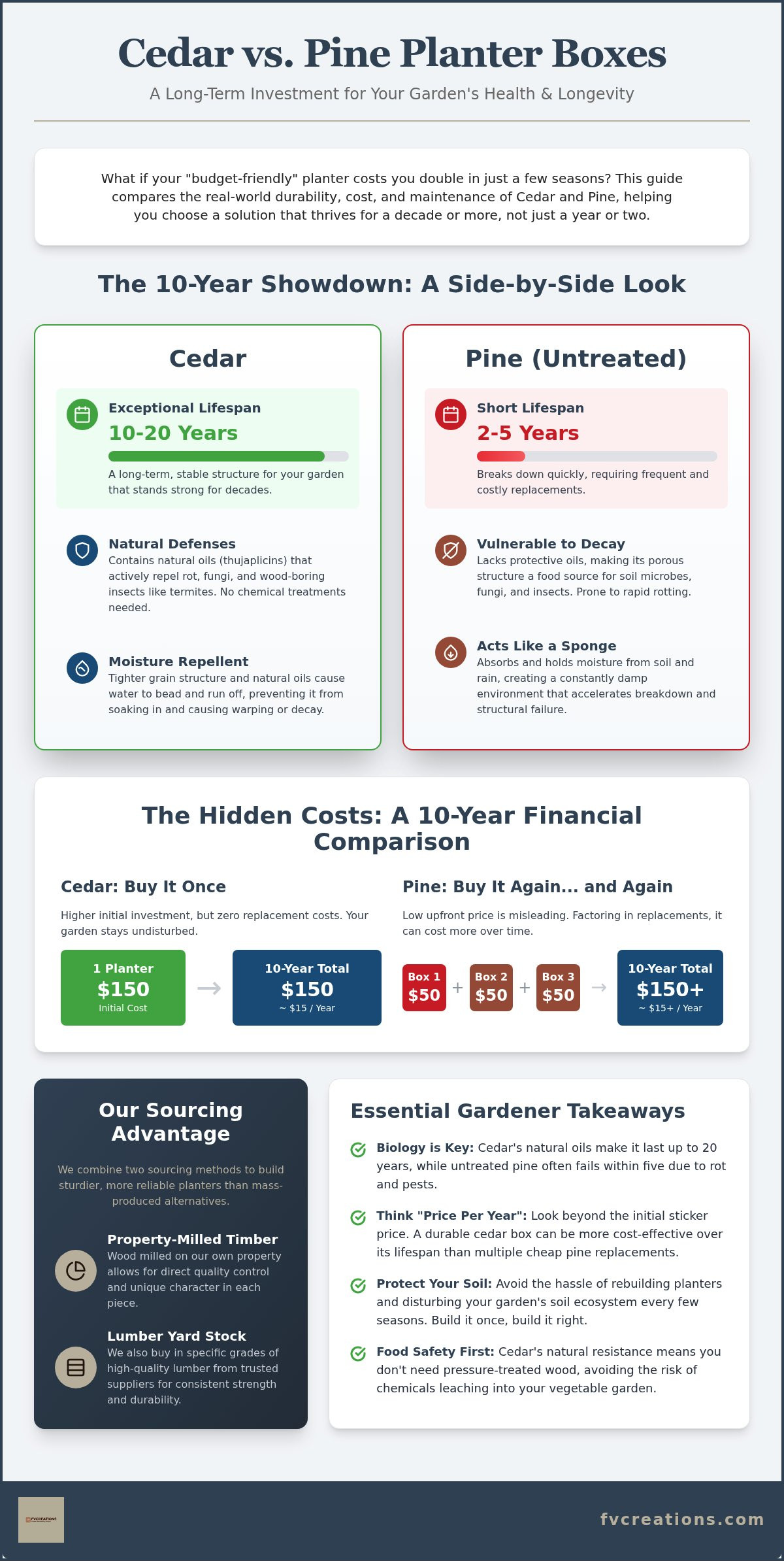
When I'm working with a fresh stack of timber, whether it’s some oak I’ve just finished milling on the property or a load of western red cedar I’ve picked up from the local lumber yard, I can feel the difference in my hands. In the cedar vs pine planter box comparison, the biggest shock for most gardeners is just how fast the clock runs out on pine. You can expect a cedar box to stand strong for 10 to 20 years. Untreated pine? You’re lucky to get 2 to 5 years before the bottom falls out. It's a massive gap in performance that usually catches people by surprise after the second winter.
The reason pine fails so quickly comes down to the biology of the wood. Soil is a living thing, full of microbes and fungi that are looking for a snack. Untreated pine has a loose cellular structure that these organisms can easily penetrate. In humid climates or areas with heavy rain, this process accelerates. Moisture gets trapped against the wood, and the pine stays damp for days. This constant wetness is like an invitation for rot. I've noticed that the corner posts are always the first point of failure in cheaper boxes. These joints trap the most moisture and hold the weight of the soil, so once they soften, the whole structure starts to lean and eventually collapses.
Rot Resistance and Insect Repellency
Insects like termites and carpenter ants are a real threat to garden structures, but they generally avoid cedar. This is because of the high concentration of natural oils in the heartwood. To be clear, heartwood is the dense, inner core of the tree that’s packed with natural preservatives, whereas sapwood is the lighter outer layer that lacks those protective qualities. Pine is much more porous. It acts like a sponge, drawing in water and creating the exact damp, soft environment that wood-boring insects love. When you use cedar, you’re using a material that is essentially toxic to the things that want to eat your garden beds.
Stability and Warping in Harsh Weather
Cedar has a very low shrinkage coefficient. This is a fancy way of saying it stays flat and straight even when the weather turns nasty. Pine tends to bow, twist, or cup as it dries out under the summer sun. When the wood moves that much, it puts a huge amount of stress on your fasteners and joints. Screws can pull right through the soft grain of a warped pine board. If you want to give your wood an even better chance at fighting the elements, I often recommend using a high-quality outdoor defense oil to seal out that excess moisture. Keeping the wood stable means your joints stay tight and your planter stays square for years to come. Choosing the right material from the start saves you the headache of rebuilding your entire garden layout every few seasons; for other backyard structures that benefit from this same durability, you can discover Southern Chicken Coops and their expertly handcrafted designs.
The Hidden Costs: A 10-Year Financial Comparison
When I’m standing at the lumber yard or looking at the logs I’ve just finished milling on my property, I’m always thinking about the long game. Most folks just see the price tag on the shelf today. But the real math of a cedar vs pine planter box happens over a decade, not just on the day you buy it. If you choose pine, you’re essentially signing up for a subscription service you didn't ask for. You pay a little now, but you’ll be paying again and again as the wood fails. I’ve seen it happen dozens of times. A gardener gets a "deal" on a pine kit, and three years later, they’re back in my workshop asking for something that actually lasts.
There’s a hidden cost that most people forget: the soil. It takes years to build up a healthy microbial ecosystem in your garden beds. This "black gold" is full of worms, beneficial fungi, and nutrients that you’ve carefully managed. When an untreated pine box rots through, you have to shovel all that soil out to replace the boards. You lose a portion of it to the ground, and you definitely disrupt the biological life you’ve worked so hard to cultivate. It’s a massive setback for your garden's health that a simple receipt can't fully capture.
The Replacement Cycle of Pine
If a pine box lasts three years, you’ll be building or buying a new one at least three times in a ten-year span. That’s three times the labor and three times the assembly. You also have to figure out how to dispose of the old, soggy, rotted wood. If it was treated with chemicals to make it last longer, you can't even burn it or compost it safely. That "cheap" pine entry point quickly turns into a bill that’s double or triple what you would have spent on a single quality build. It’s a cycle of waste that frustrates the gardener and the environment alike.
Cedar as a One-Time Investment
I like to call cedar "set it and forget it" infrastructure. When you invest in handcrafted cedar planters, you are buying back your future weekends. You spend your time gardening and harvesting, not rebuilding. Cedar keeps its structural integrity and holds its aesthetic value as it matures. It’s an artisan-level choice that respects your time and your wallet in the long run. I’ve always believed in building things once and building them right. Whether I’m using timber from my own land or sourcing specific grades from trusted lumber yards, the goal is always the same: longevity. It’s just better for the soul and the soil when your garden beds outlast your original plans.
Maintenance and Weatherproofing for Maximum Life
Even though cedar is the clear winner in the cedar vs pine planter box debate, it isn't invincible. I've spent years testing different finishes on both property-milled timber and wood I've sourced from various lumber yards. The goal is always to protect the wood without poisoning the plants. A common mistake I see is gardeners leaving their boxes completely bare. While cedar can handle it, a little bit of maintenance goes a long way in making sure that ten-year investment actually lasts twenty years. Pine, on the other hand, requires a finish just to survive its first few winters without turning into a soggy mess.
The danger with most "big box" advice is the suggestion to use generic exterior stains. These products are often loaded with heavy metals and fungicides. They're fine for a backyard fence, but I don't want those chemicals leaching into the soil where I'm growing my family's lettuce. You need a finish that penetrates deep into the wood fibers rather than just creating a plastic-like film on top. When the sun beats down on your garden, a surface film will crack and peel. A penetrating oil moves with the wood, keeping moisture out while letting the grain show through.
Food-Safe Finishes for Your Garden
I'm a big believer in using what nature gave us to protect our builds. For my own projects, I rely on Outdoor Defense Oil. It’s a non-toxic blend that uses Tung oil and citrus solvents to create a waterproof barrier. It smells great and, more importantly, it is completely safe for soil contact. If you’re looking for a more colorful, rustic aesthetic, Real Milk Paint is a fantastic option. It’s an ancient recipe that doesn't off-gas or release toxins. These finishes respect the biological life in your soil while giving the wood the armor it needs to fight off rot and UV damage.
Best Practices for Longevity
Maintenance is about more than just what you brush on. I always tell folks to get their boxes off the ground. This is why I build my cedar planters with legs. It prevents that constant ground-contact moisture that can rot even the best cedar over time. You should also do a seasonal check to make sure soil hasn't packed too tightly against the drainage holes. If you live in a place with heavy snow, you need to know how to maintain cedar planters through the winter. A quick cleaning and a fresh coat of oil every few years will keep the wood from graying too aggressively and maintain its structural strength.
If you're ready to start your garden with a foundation that's built to last, take a look at my handcrafted cedar planters designed to handle the elements for years to come.
The Artisan Choice: Why FVCreations Uses Cedar
When I’m out in the shop, my philosophy is pretty simple: I want to build things once and build them right. I’ve spent years looking at the cedar vs pine planter box comparison from the perspective of a maker. While pine is easy to find and cheap to buy, it doesn't meet the standards I have for my customers. I want you to feel the weight and the quality the moment you set a planter in your garden. For me, cedar isn't just a material choice; it’s a commitment to making sure your gardening efforts aren't wasted on a structure that will fall apart in a few seasons.
Transparency is a big part of how I run things here. I take a lot of pride in my process, which starts with the raw timber. I mill a good portion of the wood I use right here on my property, which gives me a deep connection to the grain and the history of the material. But I also buy in a lot of outside lumber from various local lumber yards. This balanced approach is important. It ensures I have a consistent supply of high-grade cedar that meets specific structural requirements, allowing me to focus on the handcrafted joinery that sets these boxes apart from mass-produced kits you’d find at a big-box store.
From the Milling Table to Your Deck
Selecting the right boards is a tactile process. I look for thickness and grain stability that you just won't find in a flat-packed pine kit. Most mass-produced options use thin slats that are prone to cracking under the pressure of wet soil. In my shop, I use heavy-duty hardware and thicker cuts of wood to ensure every build is solid. This focus on "heavy duty" design is why our outdoor items can be shipped nationwide and thrive in any climate, from the dry heat of the desert to the damp winters of the Pacific Northwest.
Customizing Your Garden Space
I design my pieces to solve the real-world problems gardeners face. For instance, my cedar planters with legs aren't just about saving your back from constant bending. They’re built that way to improve airflow and drainage, which are critical for soil health. Elevating the box also keeps the wood away from the constant moisture of the ground, adding even more years to its life. Bespoke woodworking allows for these kinds of thoughtful details that a factory line simply ignores. In the end, choosing cedar is a gift to your future self. It’s the difference between a temporary container and a permanent home for your plants that you’ll still be enjoying a decade from now; to find the perfect trees or shrubs to fill your new space, you can learn more about Verdant Tree Farm.
Building a Garden That Stands the Test of Time
Choosing the right foundation for your backyard is a decision you'll live with for years. We’ve looked at how the cedar vs pine planter box debate really comes down to the biology of the wood and the value of your own time. Cedar’s natural oils and rot resistance make it the only sustainable choice if you want your beds to last a decade or more without leaching chemicals into your soil. Pine might save you a few dollars today, but the hidden costs of replacing rotted boards and losing your healthy soil microbes make it a frustrating cycle for any gardener.
I take a lot of pride in every piece that leaves my shop. Whether I’m working with timber I’ve milled on my property or high-grade supplies from local lumber yards, the focus is always on quality that lasts. You deserve a garden space that brings you peace, not a list of chores. If you're ready to invest in a "buy it once" solution, I'd love for you to Browse Our Handcrafted Cedar Planter Collection. Every planter is handcrafted by Farmer Vic and built for 10+ years of use using sustainable cedar sourcing. Happy gardening, and I hope to see your backyard thriving soon.
Frequently Asked Questions
Is cedar or pine better for a raised garden bed?
Cedar is the superior choice for a raised garden bed because it contains natural oils that resist rot, decay, and wood-boring insects. Pine is a much softer wood that lacks these protective properties. While pine is cheaper at the lumber yard, it will start to crumble under the weight of wet soil long before cedar shows any signs of wear.
How many years will a cedar planter box last compared to pine?
A well-built cedar planter box will typically last between 10 and 20 years, depending on your local climate and maintenance habits. Untreated pine usually fails within 2 to 5 years when it is in constant contact with damp earth. When you look at the cedar vs pine planter box lifespan, cedar is clearly the more sustainable choice for a long-term garden.
Do I need to line a cedar planter box with plastic?
I generally recommend against using plastic liners because they can trap moisture against the wood and cause it to rot from the inside out. Cedar needs to breathe to maintain its structural integrity over time. If you’re worried about soil escaping, a layer of landscape fabric is a much better option. It keeps the dirt in place while allowing excess water to drain away freely.
Is pine wood toxic for vegetable gardens if it is treated?
Modern pressure-treated pine is safer than the older versions used decades ago, but many gardeners still worry about chemicals leaching into their food. Most treated lumber uses copper-based preservatives to fight rot. If you want a truly organic garden, I always suggest using natural cedar. It gives you peace of mind without needing any industrial chemical treatments to survive the weather.
Can I use pine for a planter box if I paint it with outdoor paint?
You can use painted pine, but it’s often a temporary fix that requires a lot of upkeep. As the wood expands and contracts with the seasons, the paint will eventually crack and let moisture in. Once water gets trapped behind a layer of paint, pine rots even faster than if it were left bare. I’ve found that it’s much easier to start with a wood that is naturally durable.
What is the best food-safe finish for a cedar planter box?
The best food-safe finish is a high-quality Tung oil or a natural product like Outdoor Defense Oil. These finishes soak deep into the grain to create a waterproof barrier without using toxic dryers or solvents. In my workshop, I use these natural oils on both property-milled timber and wood I’ve sourced from local lumber yards to ensure every piece is safe for growing vegetables.
Why is cedar so much more expensive than pine at the lumber yard?
Cedar is more expensive because it grows much slower than pine and possesses unique biological traits that make it naturally rot-resistant. It’s a premium material that is in high demand for outdoor building. When I’m sourcing my inventory, I pay for the quality and longevity that cedar provides. It’s a classic case of paying more upfront so you don't have to pay for a replacement in three years.
Should I use cedar or pine for a planter box with legs?
I always use cedar for any cedar vs pine planter box that features legs or elevated joints. The legs of a planter carry a lot of weight and are often the first part to fail if the wood softens from moisture. Cedar stays stable and holds fasteners much better than pine. This ensures your planter stays sturdy and upright even when it’s fully loaded with heavy, wet soil and mature plants.