

Charcuterie Board Ideas for Beginners: Simple Boards Anyone Can Build
A beautiful charcuterie board doesn’t need a crowded shopping list. The best charcuterie board ideas for beginners start with one anchor ingredient, then add contrast in flavor, color, and texture. If choosing from a long list of cheeses, meats, and extras feels overwhelming, you’re not alone. It’s easy to wonder whether familiar ingredients will go together or whether a simple board will look bare.
You can keep it simple and still make a board feel generous and inviting. Start with a few foods you enjoy, then build around them with creamy, crisp, sweet, and savory bites. This guide shares easy themes for different occasions, a flexible ingredient formula, and straightforward arranging tips so you can serve your board with confidence.
We’ll also look at choosing a wooden serving surface. FVCreations handcrafts wooden goods from wood sourced from the owner’s property, and cherry is the owner’s favorite wood. Whether you’re using a board you already own or choosing one for your table, a little planning helps the food, setting, and serving surface feel right together.
Key Takeaways
- Use these charcuterie board ideas for beginners to choose an easy theme and mix familiar foods without following a rigid recipe.
- Pair sweet, savory, tangy, and mild flavors, then add texture and color for a board that feels balanced, not crowded.
- Arrange your board in a simple sequence: set down the anchors, group the other foods, and make small adjustments as you go.
- Choose a serving surface that fits both the amount of food and your available table space.
- FVCreations handcrafts wooden goods from wood sourced from the owner’s property. Build on a favorite board combination over time.
Charcuterie Board Ideas for Beginners: Start with a Simple Plan
A welcoming board doesn’t need rare cheeses or formal styling. Familiar foods arranged in relaxed groups can feel just as inviting. Think of a beginner board as a small, coordinated selection, not a fixed recipe you have to follow exactly. The easiest charcuterie board ideas for beginners start with one anchor food, add a few contrasts, and include something guests can serve themselves easily.
Your anchor gives the board a starting point. It might be a cheese you enjoy, a cured meat, or a favorite dip. Build around it with contrasting flavors or textures, then add an easy-to-grab option such as crackers or sliced fruit. A little background on the traditional components of a charcuterie board can help, but your own version can be more flexible and personal.
What makes a charcuterie board easy for a first-timer?
Choose a clear theme before you shop, such as a cozy evening snack, a casual family gathering, or a fruit-and-cheese spread. A theme narrows the choices without locking you into a strict menu. Stick with familiar foods that are easy to portion, like sliced cheese, crackers, grapes, olives, or a small bowl of jam. A modest assortment can still look varied when you mix colors and textures, then leave a little breathing room between groups.
Serving ease matters, too. Choose foods guests can pick up or spread without much extra preparation, and put dips, spreads, or loose small items in bowls. You don’t need to fill every open spot. Clear space helps people see what’s on the board and makes it easier to reach each item.
How many kinds of food should a beginner include?
Let the occasion and guest list guide the amount and variety. A light snack before dinner calls for a different spread than a board meant to be the main event. Consider how many people will be grazing, what else you’re serving, and whether guests have dietary needs or preferences. If you’re unsure, plan a compact selection first and keep extra ingredients nearby to refill or add as needed.
Before shopping, jot down a short list: one anchor, a few complementary foods, and something simple to serve them with. Check what you already have, then add only what completes the plan. That keeps choices manageable and leaves room to adjust based on the occasion, your guests, and what looks good at the market.
Five Charcuterie Board Ideas for Beginners to Try
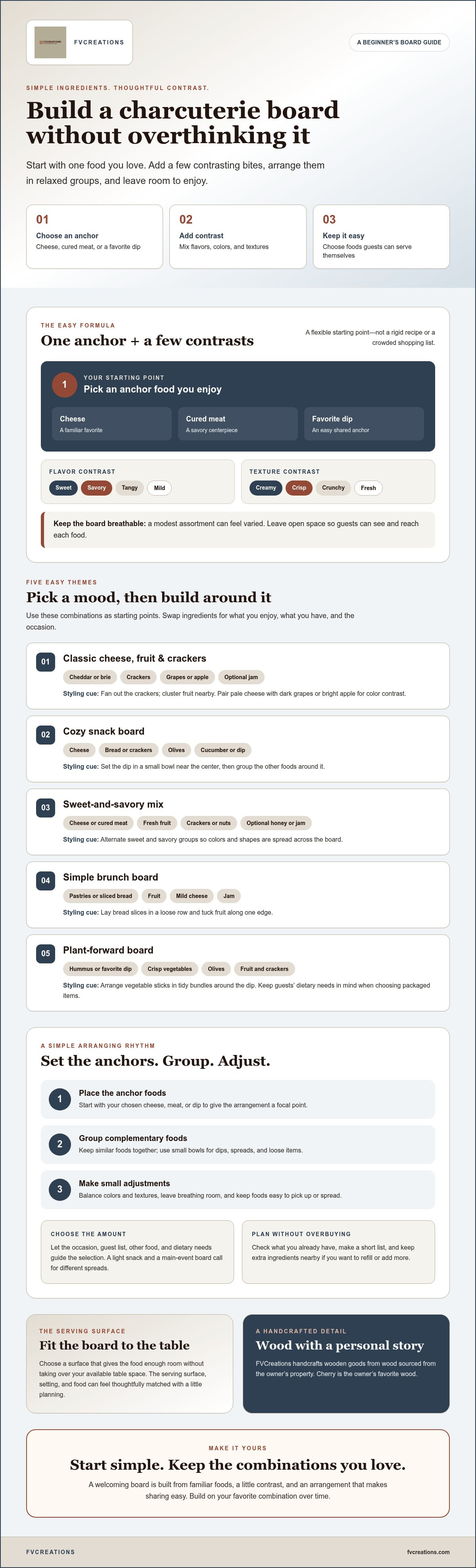
These charcuterie board ideas for beginners are starting points, not strict recipes. Choose an anchor food you like, then add a few easy-to-find companions. Swap ingredients to suit the season, your guests, or what you already have at home. Each theme includes one simple styling cue to help the board look pulled together without special tools.
- Classic cheese, fruit, and crackers. Start with a familiar cheese, such as cheddar or brie, then add crackers, grapes or apple slices, and an optional sweet accent like jam. For easy color contrast, group pale cheese beside dark grapes or bright apple. If fresh berries aren’t available, use another fruit you enjoy. Styling cue: Fan out the crackers and place the fruit in a small cluster nearby.
- Cozy snack board. Make cheese the anchor, then add bread or crackers and approachable extras such as olives, sliced cucumber, or a dip. Pick a few foods that suit a casual evening rather than trying to cover every flavor, perhaps alongside a bottle of fine wine from Stellez Vine Singapore for a relaxed night in. Styling cue: Put the dip in a small bowl near the center, then arrange the other foods around it.
- Sweet-and-savory mix. Pair a savory bite, such as cheese or cured meat, with fresh fruit and a crunchy choice like crackers or nuts. Add a small portion of honey or jam if you’d like a sweeter accent. Styling cue: Alternate the sweet and savory groups so the colors and shapes are spread across the board.
- Simple brunch board. Let pastries or sliced bread take the lead, with fruit and a mild cheese alongside. A small bowl of jam gives guests an easy topping, while sliced pear or berries bring another color and texture. Styling cue: Place bread slices in a loose row and tuck fruit along one edge.
- Plant-forward board. Use hummus or another favorite dip as the anchor, then add crisp vegetables, olives, fruit, and crackers. Choose familiar produce your guests enjoy, and keep any dietary needs in mind as you select packaged items. Styling cue: Arrange vegetable sticks in small, tidy bundles around the dip.
Choose a serving surface that gives the food enough room without taking over the table. If you’re considering a wooden option, browse FVCreations’ cutting boards as one place to explore. Whichever theme you try, a few well-chosen foods and clear groupings are plenty to make the board inviting.
Build a Balanced Charcuterie Board with Flavor, Texture, and Color
A board feels balanced when each bite has something to play against. Rich cheese can taste brighter beside fresh fruit; a salty, savory bite can pair well with something crisp or gently sweet. These are flexible ideas, not rules. Choose contrasts you enjoy, and don’t feel you need to include every flavor or texture on one board.
Start with one anchor, then add a few contrasts: a crisp bite beside something creamy, or a sweet note alongside a savory one. That simple approach gives you direction without turning your board into a complicated recipe.
Which flavors and textures work well together?
Think in pairs. Creamy cheese and crisp apple offer a clear texture contrast, while a tangy pickle can cut through a rich or salty bite. Crackers bring crunch; bread, dried fruit, or sliced meat can add a softer or chewier element. Use whichever options suit your theme and guests. Before serving, check ingredient labels and ask about dietary requirements, especially if you’re choosing packaged foods or serving a group with different preferences.
| Board direction | Flavor contrast | Texture contrast |
|---|---|---|
| Cheese and fruit | Mild cheese with sweet fruit | Creamy cheese with crisp apple |
| Salty and tangy | Savory cheese or meat with olives or pickles | Soft bites with a firm, crisp accompaniment |
| Sweet and savory | Fruit or jam beside a savory bite | Chewy fruit with crunchy crackers |
| Fresh and creamy | Vegetables with a mild dip | Crisp vegetables with a smooth spread |
Use the table as a set of starting points, then swap in familiar ingredients. A mild cheese doesn’t need a sweet accent if you’d rather pair it with something tangy. The aim is variety that makes sense to you, not a checklist of required flavors. If you plan on serving drinks alongside your spread, independent wine merchants like Mosse and Mosse can help you select versatile bottles that complement your favorite cheese and charcuterie pairings.
How can you make a board look inviting without overthinking it?
Group similar foods together so guests can see what’s available, then vary the shapes around the board. A row of crackers can sit near a cluster of fruit, while a small bowl holds dip or olives. Let ingredient colors do the decorating: green grapes beside pale cheese or red fruit beside golden crackers can create contrast naturally. Leave practical room for serving utensils and reaching hands.
If the board looks sparse, first spread out the groups or add a small, easy-to-reach item, such as crackers or fruit. Don’t fill every gap just for appearance. A little open space keeps the arrangement clear and makes serving easier.
Choose a Serving Board and Arrange It in Simple Steps
A good serving surface gives your food room to sit neatly and your guests room to reach it. Match the board to the amount you plan to serve and the table space you have. A smaller spread can feel lost on an oversized surface, while a crowded arrangement is harder to serve. For more background on materials, craftsmanship, and care, read this handcrafted charcuterie board guide.
What should beginners look for in a wooden serving board?
Look for a stable surface with enough usable space for your anchor foods, smaller bites, and any serving utensils. The board should sit securely where you plan to serve, with room around it for guests to gather. Wood species can shape the look of the arrangement: cherry is my favorite, with a warm reddish character; maple has a lighter, more subtle grain; red oak tends toward a pinker tone and more prominent grain, while white oak has a more neutral look. Black locust offers another distinct wood character to consider.
These are design cues, not food-contact or care guarantees. Suitability depends on the specific board and finish, so check with the maker about intended use and care guidance. FVCreations sources its wood from the owner’s property. To compare wooden surfaces, browse FVCreations’ cutting boards.
How do you arrange food on a charcuterie board step by step?
Keep the process simple. Place the larger anchor foods first, then build around them with smaller groups. Step back as you go; if everything blends together, shift foods with different colors or shapes farther apart. Finish by setting out the serving utensils guests need, and skip decorations that could get in the way or touch food inappropriately.
- Choose the surface. Set it where guests can reach comfortably, and make sure it has room for the planned spread.
- Place the anchors. Add larger items first, such as a cheese wedge, a bowl of dip, or a cluster of fruit.
- Group the smaller foods. Arrange crackers, sliced fruit, and other bites in clear, easy-to-reach sections.
- Refine the layout. Separate similar colors or shapes where helpful, leave room for utensils, and adjust any crowded spots.
Those simple steps work with nearly any of the charcuterie board ideas for beginners in this guide. Aim for an arrangement that’s easy to scan and serve, rather than one that looks carefully staged.
Make Your First Charcuterie Board Personal and Easy to Repeat
Your first board doesn’t have to become a new project every time you host. If a combination works, make a note of what you served and use it as a starting point next time. That’s the heart of charcuterie board ideas for beginners: find a mix you enjoy, then adjust it to fit the gathering.
How can your board reflect your own taste?
Start with foods you already like, or choose a simple theme that suits the occasion. You might build around a favorite cheese, pick ingredients in colors that feel right for the season, or keep the board familiar for a casual get-together. There isn’t one correct arrangement.
To learn what guests enjoy, change one ingredient at a time. Try a different fruit beside your usual cheese, or swap one crunchy choice for another. Small adjustments make it easier to notice which pairings are worth repeating. Keep the combinations that feel effortless, and let the rest go.
The serving surface can be part of that personal touch, too. FVCreations handcrafts wooden goods from wood sourced from the owner’s property. Cherry is the owner’s favorite wood, though the character of each board depends on its material. If you’re considering a wooden surface for serving, take a look at the handcrafted cutting board collection.
How should you care for a wooden serving board?
Follow the care instructions from the maker of your specific board. Guidance can depend on the wood and finish, so don’t assume the same routine applies to every piece. If the instructions aren’t clear, ask the maker what care is appropriate for that board rather than guessing. You can also refer back to the handcrafted charcuterie board guide for more on materials, craft, and care.
Keep the process comfortable. Repeat a favorite combination, make one small change when you feel like experimenting, and choose a serving board that suits your table. Explore FVCreations’ handcrafted cutting boards if you’d like to consider a wooden serving surface for your next gathering.
Build a Board You’ll Enjoy Making Again
A welcoming board doesn’t depend on complicated ingredients or a picture-perfect arrangement. Start with a theme that suits the occasion, choose one anchor food, then add a few contrasts in flavor, texture, and color. These charcuterie board ideas for beginners are flexible starting points, so you can adjust the mix to suit your guests and what you have on hand.
As you serve more boards, keep track of the combinations people enjoy and change one ingredient at a time. The same personal touch can guide your choice of serving surface. FVCreations handcrafts wooden goods from wood sourced from the owner’s property. Cherry is the owner’s favorite wood species, though each wood brings its own character.
If you’re looking for a wooden serving surface to complement your next gathering, explore FVCreations. Keep your first board simple, make it your own, and enjoy sharing it. You’ll find your rhythm with each one.
Frequently Asked Questions
What should a beginner put on a charcuterie board?
Start with one anchor food, such as a cheese you enjoy, then add a few contrasting bites and something easy to serve. Crackers, fresh fruit, olives, sliced vegetables, or a small bowl of jam can round out a simple spread. Choose familiar ingredients that fit the occasion and your guests’ preferences. Check packaged food labels and ask about dietary needs before deciding what to include.
How do you make a charcuterie board look good for the first time?
Arrange larger items first, then group smaller foods in clear sections. Vary the shapes and colors so similar items don’t all blend together, and leave some open space for serving utensils and guests’ hands. A fan of crackers beside a cluster of fruit adds shape without extra tools. If the board looks sparse, spread the groups out or add a few easy-to-grab items.
What is the easiest charcuterie board theme for beginners?
A cheese, fruit, and cracker board is an easy place to begin because the ingredients are familiar and simple to serve. Choose a cheese you like, add crackers and a fruit such as grapes or apple slices, then include jam or honey if you want a sweet accent. Swap ingredients to match the season, what you have on hand, or what your guests prefer.
How many items should a beginner charcuterie board have?
There’s no fixed number that suits every board. Choose enough variety to complement your occasion, guest count, and other food being served, without feeling you have to fill every inch. A useful plan is one anchor food, a few contrasting accompaniments, and something easy to serve them with. Consider dietary preferences before shopping, and keep extra ingredients nearby if you may need to refill.
What kind of wood is best for a charcuterie board?
No single wood is right for every serving board. Cherry is the FVCreations owner’s favorite and is known for deepening to a richer reddish-brown over time. Maple has a light, subtle grain; red oak has a more pronounced grain than white oak; black locust has its own distinct character. Treat these as appearance considerations, and ask the maker whether the specific board and finish are suitable for food contact.
Can I make a charcuterie board with foods I already have?
Yes. Look through your kitchen for a food to anchor the board, then add a few things that offer contrast. Cheese, crackers, fruit, olives, bread, or a favorite spread can work if they suit your plan and guests. You don’t need specialty ingredients or a shopping trip for every board. Keep the arrangement relaxed, and use small bowls for loose foods or spreads.
How do I care for a wooden charcuterie board after serving?
Follow the care instructions provided by the maker for your specific board and finish. Wood and finishes can call for different care, so avoid assuming a cleaning method or product is suitable for every piece. If the directions aren’t clear, ask the maker for guidance. For a board from FVCreations or another maker, use the instructions supplied with that board rather than relying on a general routine.