

Choosing the Best Natural Wood Finishing Oil for Your Workshop Projects
You've spent twenty hours sanding a walnut slab to perfection, only to watch a cheap hardware store finish turn it into a sticky, yellowed mess that never quite dries. It's a heartbreaking moment every maker knows, and it usually happens because the labels on those cans don't tell the whole story. Whether you're searching for how to waterproof cedar planter box projects for the garden or sealing a board for your kitchen, you want something that's safe, durable, and easy on the eyes.
I understand the hesitation. Nobody wants a greasy cutting board or a planter that leaches chemicals into their soil. I've personally vetted the oils I use in my own shop, focusing on non-toxic, penetrating finishes like those from Real Milk Paint Co. that enhance the wood's natural beauty rather than masking it. I promise to show you how to protect your woodcraft with supplies that are as safe for your family as they are tough against the elements.
We'll clear up the confusion between drying and non-drying oils, match the best finish to your specific wood species, and walk through a step-by-step method for a pro-level result. You'll leave here with a clear plan for your next project and the confidence to choose supplies that truly last.
Key Takeaways
- Natural penetrating oils soak deep into wood fibers to harden from the inside out, letting the wood breathe and preventing the cracking you get with plastic coatings.
- Discover the best methods for how to waterproof cedar planter box projects using Pure Tung Oil for a weather-resistant finish that's safe for your garden.
- Learn to spot the difference between food-safe oils and common store brands that hide toxic chemical driers, ensuring your kitchenware is always safe for your family.
- Master the "wet sanding" technique to transform a standard application into a professional, glass-smooth finish that highlights the natural grain.
- See why I personally vet and use Real Milk Paint Co. oils to protect the character of property-sourced wood used in my workshop every day.
What exactly is a natural wood finishing oil?
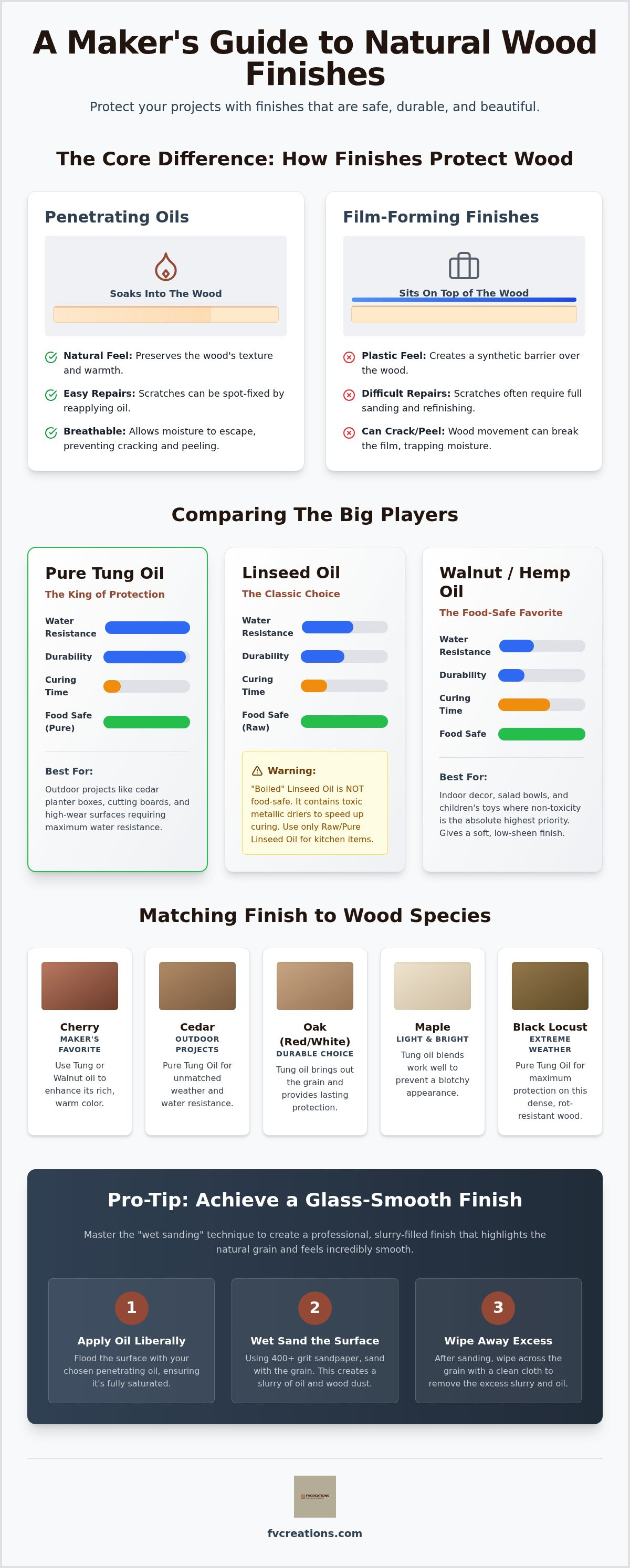
When I talk about a natural wood finishing oil, I'm not talking about those thin, smelly varnishes that sit on top of your project like a sheet of saran wrap. A true natural penetrating oil is a plant-based extract that actually soaks into the wood fibers and hardens from within the cellular structure itself. Think of it as a partnership between the oil and the wood. Instead of a brittle shell, the oil becomes part of the board. This is especially vital when you are learning how to waterproof cedar planter box projects. Cedar is a living, moving material. If you seal it with a plastic-based film, the natural expansion and contraction of the wood will eventually crack that coating. This lets moisture in and traps it where it starts to rot the wood from the inside out.
Natural oils offer what we call "breathability." This allows moisture to move in and out of the wood cells without causing the finish to flake or peel. If you're looking for a deep dive into the technical side of this, I recommend checking out this comprehensive guide to wood finishing. It explains the chemistry better than I can, but the practical result is simple: your wood looks like wood, not plastic. Using a breathable oil is the best way to handle how to waterproof cedar planter box builds because it won't trap water underneath a synthetic shell.
You'll generally run into two types of oils in the shop. Drying oils, like Pure Tung Oil and Linseed Oil, undergo a chemical reaction with oxygen to turn into a solid, protective resin. Non-drying oils, like Mineral Oil or certain Walnut oils, stay liquid and eventually wash away or need frequent reapplication. I personally avoid the "mystery" finishes you find at the big hardware stores. Those cans are often full of petroleum distillates and metallic driers that I don't want near my family or my garden. I prefer knowing exactly what is going onto the wood I spent hours preparing.
Penetrating oils vs. film-forming finishes
The biggest difference is the tactile feel. When you use a penetrating oil, you can still feel the texture of the grain under your fingertips. It’s a warm, organic sensation. Film-forming finishes, like polyurethane, create a barrier that feels cold and synthetic. The real secret advantage here is repairability. If a film finish gets scratched, you usually have to sand the whole thing down and start over. With a natural oil, you just rub a little more oil into the scratch and it disappears. It’s a much more forgiving way to treat your hard work.
The 'Food Safe' question for kitchenware
I get asked about food safety more than almost anything else. When I’m finishing my handcrafted cutting boards, I have to be 100 percent certain the finish is non-toxic. True food safety comes down to two things: pure ingredients and proper curing time. Even a natural oil needs time to fully harden before it's ready for a steak or a block of cheese. This is why I stick with Real Milk Paint Co. products. They are transparent about what’s in the bottle, which aligns with my own values of honesty and quality in everything that leaves my shop.
Comparing the big players: Tung, Linseed, and Walnut oils
If you walk into a big box store, you will see a dozen cans labeled "wood oil." It is easy to get overwhelmed. In my shop, I have narrowed it down to a few heavy hitters, but they each have a specific job. Pure Tung Oil is the absolute king of water resistance and durability. If you are looking for how to waterproof cedar planter box setups, this is your best friend. It doesn't just sit on the surface; it cures into a tough, flexible resin that laughs at rain and sun. It is a slow process, but the protection is unmatched.
Then there is Linseed Oil. You have to be careful here. Raw Linseed Oil is safe but takes weeks to dry. Most stores sell "Boiled" Linseed Oil to speed things up, but it isn't actually boiled. They add metallic driers, often including heavy metals, to make it cure faster. I don't want those chemicals on my hands or near my garden beds. If you want a soft, natural finish for indoor decor, Walnut or Hemp oils are great options. They don't offer the same protection as Tung oil, but they are incredibly safe. When choosing food-safe wood finishes, purity is everything. These oils will slightly yellow the wood over time, giving it a warm, amber glow that many makers love.
The power of Tung Oil blends
Pure Tung Oil is thick. On dense hardwoods, it can struggle to soak in deep enough. That is why I often turn to a blend like the Real Milk Paint Company Citrus Half & Half Tung Oil. By mixing the oil with a natural citrus solvent, it thins the consistency without adding toxic fumes. This allows the oil to penetrate deep into the wood cells. For those figuring out how to waterproof cedar planter box projects, this blend is a game changer. It ensures the protection goes deep, which is exactly what you need for cedar that sits outside year-round. The 2026 formulations have made these blends even more reliable while keeping the ingredients 100 percent natural.
Drying times and maintenance cycles
Natural oils cure through a process called polymerization. This isn't just "drying" like water evaporating. It’s a chemical reaction where the oil molecules bond together to form a solid. This takes time, usually a few weeks to fully reach maximum hardness. I choose sustainability over speed every single day. A rushed finish is a failed finish. You’ll know your wood is "thirsty" for a maintenance coat when water stops beading on the surface or the grain starts to look dull and flat. If you want a heavy-duty option that's already formulated for the tough stuff, I've had great results with Outdoor Defense Oil for my outdoor builds.
Matching Oil to Wood Species: Cherry to Black Locust
One mistake I see folks make is thinking every board in their shop will drink oil the same way. It just isn't true. A piece of spongy Red Oak is a totally different animal than a dense slab of Black Locust. If you're building something for the yard and looking at how to waterproof cedar planter box projects, you're dealing with a wood that is naturally rot-resistant, but other domestic hardwoods have their own specific quirks. Some species are "thirsty" and will soak up three coats in an hour, while others will let the oil sit on the surface for days if you aren't careful.
I source a lot of my lumber directly from my own property. This means I have a personal connection to the tree before it ever hits the saw. Property-milled wood often has a different moisture profile than kiln-dried lumber from a yard. I have to be extra diligent about checking moisture levels because applying oil to "green" or damp wood is a recipe for a cloudy, failing finish. Whether you're making a spoon or a table, the U.S. Forest Service guide to natural wood finishes offers some great technical background on how different species react to drying oils versus non-drying ones.
Oiling my favorite: Cherry wood
Cherry is my absolute favorite species to oil. It has a unique "Cherry Wood Test" in my shop. When you first apply a natural oil to freshly sanded Cherry, it looks pale and modest. Give it a few days in the sun, and the oil accelerates a natural darkening process that turns the wood a deep, rich cinnamon color. It’s like watching the wood mature right in front of you. Maple, on the other hand, is much more temperamental. Because it has such a tight, closed grain, it can get splotchy or "blotchy" if the oil doesn't penetrate evenly. I always sand Maple to a higher grit to ensure the surface is perfectly uniform before the first drop of oil touches it.
The Oak distinction: Red vs. White
In my workshop, the difference between Red Oak and White Oak is huge. White Oak has a closed-pore structure thanks to something called tyloses that plugs the wood's plumbing. This makes it incredibly water-resistant, which is why I often use Outdoor Defense Oil on White Oak projects meant for the porch. It’s a great companion to the methods I use when teaching how to waterproof cedar planter box builds because both woods handle the weather so well. Red Oak is the opposite. Its pores are open like tiny straws. If you don't wipe it down frequently during the curing process, the oil will "bleed back" out of those pores and leave sticky spots on your finish. I sometimes source specialized White Oak from local yards for furniture that needs that extra bit of structural stability and rot resistance.
Black Locust is the heavyweight champion of density. It’s so hard that standard oils can't always get inside. For Locust, I always use a thinner oil blend mixed with citrus solvent. It’s the only way to get the protection deep enough into the fibers to keep that beautiful, greenish-gold grain protected for the long haul.
How to apply natural oils for a professional finish
Sanding is the part of the job everyone loves to hate. But here is the truth: your finish is only as good as your prep work. If you skip a grit or leave pigtails from your orbital sander, the oil will find them and highlight them for everyone to see. When I am teaching folks how to waterproof cedar planter box projects, I tell them that the oil isn't a cover-up. It is a spotlight. You need a solid sanding process to get the results you want. I have spent years refining my sequence to make sure the wood is ready to receive the oil properly.
The sanding sequence
I usually start with 80 grit to remove tool marks from the planer or saw. Then I move to 120 and finish with 180. For most species, going much higher than 180 before oiling can actually burnish the wood. This closes the pores and prevents the oil from soaking in. One trick I always use is "water-popping." I take a damp cloth and wipe down the whole piece. This raises the grain fibers that were flattened during sanding. Once it dries, I do a final hand-sand with my highest grit. This ensures a deep, even soak that brings out the best in the wood.
Application and Wiping
When you are ready, apply what I call a "flood coat." This means you put on enough oil so the wood can't drink any more. When you are learning how to waterproof cedar planter box units, that first coat is critical. Watch for thirsty spots where the oil disappears quickly and add more there. The most important part is the 20-minute rule. After about 20 minutes, you must wipe away every bit of excess oil with a clean rag. If you leave it, it will turn into a sticky, gummy mess that is a nightmare to fix. It should feel dry to the touch after you wipe it back.
To get that truly glass-smooth surface, I use a "wet sanding" technique on the second or third coat. I sand the wet oil into the wood using 400 or 600 grit paper. This creates a slurry of wood dust and oil that fills the tiny pores of the wood. It results in a finish that feels like silk. If you're ready to start your next build, make sure you have the right professional-grade sandpaper to get that perfect surface before you oil.
Safety is not optional here. Rags soaked in drying oils like Tung or Linseed can actually catch fire on their own through spontaneous combustion. I always lay my rags flat on the shop floor or over the edge of a metal trash can until they are bone dry and crispy before I throw them away. Never leave them bunched up in a pile. Patience is your best tool during this stage. Remember that curing is a chemical change, not just drying. Your project might feel dry in a day, but it takes weeks to reach full hardness and maximum protection.
Why I trust natural finishes for property-sourced wood
There is a specific kind of quiet pride that comes from milling a tree that fell on your own property. Every knot and swirl in the grain is a memory of where that tree stood. When I bring those slabs into the workshop, I can’t bring myself to slap a generic, chemical-heavy coating on them. It feels wrong. I have spent years finding finishes that actually respect the wood. I have found that Real Milk Paint and their natural oil line align perfectly with my neighborly values. They don't hide behind marketing jargon. Instead, they offer pure ingredients that let the wood’s history shine through from my woods to your home.
I believe in building quality that lasts for decades, not just a single season. A natural oil finish isn't a temporary fix. It is a long-term commitment to the health of the wood. By choosing oils that harden within the fibers, you are ensuring that the piece remains stable and beautiful as it ages. This approach honors the journey of the material from the forest floor to your living room. It creates a connection between the maker, the wood, and the family who will eventually use the finished piece.
The Artisan's endorsement
Protecting outdoor investments
We also have to think about our outdoor spaces. When I am building handcrafted cedar planters, I am building them to last. A common question I get is how to waterproof cedar planter box units without using nasty sealants that might leach into the soil. The answer is always a high-quality penetrating oil. It protects the wood while keeping your vegetables safe. The maintenance schedule for property-harvested outdoor furniture shouldn't be a chore. With a natural oil, you avoid the "peeling" nightmare of synthetic stains. A quick refresh every year or two keeps the wood healthy and resilient. Choosing a natural finish is a gift to the next generation. You aren't just building for this season. You are building a legacy that stays in the family for decades.
Finish Your Projects with Lasting Pride
Your workshop projects deserve a finish that works as hard as you do. We've explored how matching the right oil to specific species like Cherry or Oak makes all the difference; and why I'll always choose a breathable, non-toxic option over a synthetic plastic coating. Whether you're finally tackling how to waterproof cedar planter box builds for the backyard or sealing a handcrafted cutting board for the kitchen, the goal is always the same: durability without the toxins. I've personally put these oils through their paces on my own property-milled lumber, ensuring they bring out the best in every grain of Maple and Locust.
I simply don't sell anything I wouldn't use on my own workbench. These finishes are sourced for sustainability and health, so you can have total confidence in the safety of your home projects. If you're ready to give your hard work the protection it deserves, Shop Farmer Vic's Vetted Wood Finishes to find the exact supplies I trust in my shop every day.
Keep your tools sharp and your standards high. There is nothing quite like the feeling of that final coat of oil bringing a project to life. I look forward to hearing about your next great build.
Frequently Asked Questions
Is natural wood finishing oil really as durable as polyurethane?
Natural oils are durable in a different way than polyurethane. While a plastic coating like poly offers a hard surface against scratches, it eventually flakes and peels under stress or weather. A penetrating oil becomes part of the wood fibers themselves; making it much more flexible and easier to repair over time. It won't crack when the wood moves, which is a major win for long-term protection.
How long does it take for Tung oil to fully cure?
Pure Tung oil takes about 30 days to reach a full chemical cure through polymerization. You can usually handle your project and move it around after about seven to ten days. However, you should wait the full month before putting it into heavy use or letting water sit on the surface. Curing is a slow process that builds a much stronger bond than a quick-drying synthetic finish.
Can I use natural oils on wood that was previously stained?
You can use natural oils over an oil-based stain as long as the wood remains porous enough to drink the oil. If the previous finish was a film-forming product like a heavy deck stain or varnish, the oil won't be able to penetrate. This is a common hurdle when folks ask how to waterproof cedar planter box projects that were treated with cheap hardware store sealants in the past. You'll need to sand back to bare wood for the best results.
Are all natural wood oils safe for food contact?
Not every oil labeled as "natural" is safe for your kitchen. You should stick to Pure Tung oil, Walnut oil, or food-grade Mineral oil for items like cutting boards. Avoid "Boiled" Linseed oil from big box stores because it typically contains metallic driers that aren't safe for food contact. When learning how to waterproof cedar planter box setups for a vegetable garden, always ensure your finish is non-toxic to keep your soil and food clean.
What happens if I forget to wipe off the excess oil?
If you forget to wipe the excess, the oil will turn into a sticky, gummy mess that never feels quite dry. This happens because the oil on the surface can't cure properly when it's too thick. You'll likely need to use a natural citrus solvent to soften the residue and wipe it away; or in some cases, you might have to sand the surface back and start the finishing process over again.
How often do I need to reapply a natural oil finish?
Reapplication depends entirely on how much abuse the wood takes. For indoor furniture, a fresh coat every three to five years is usually plenty to keep it looking sharp. For outdoor items exposed to the elements, I recommend a quick maintenance coat once a year. You'll know it's time when the wood starts to look dull or water no longer beads on the surface.
Does natural oil change the color of the wood?
Natural oils will almost always deepen the color of your wood and make the grain "pop." It gives the lumber a rich, wet look that highlights the natural character of the tree. Some oils, like Linseed, will add a warm amber tone that gets deeper as the wood ages; while others like Tung oil stay a bit more true to the wood's original shade.
Can I apply wax over a natural oil finish?
You can absolutely apply a high-quality wax over a natural oil finish. Just make sure the oil has fully cured first so the wax doesn't trap uncured oil underneath. The wax adds a beautiful satin sheen and provides a sacrificial layer of protection against fingerprints and light moisture. It's a great final touch for furniture pieces that you'll be touching often.