

Herb Garden Ideas for Small Spaces: 2026 Planter Guide
Most potted herbs don't die from a lack of care; they suffocate inside shallow plastic pots that bake their delicate roots before midsummer even arrives. If you've spent seasons wrestling with cramped balcony floor space, soggy soil, or cheap containers that clash with your patio, you aren't alone. Bringing smart herb garden ideas for small spaces to life isn't about crowding more plastic onto your deck. It is about giving living roots the depth, clean drainage, and natural breathing room they need to thrive right outside your kitchen door.
You don't need a sprawling backyard to enjoy fresh, aromatic rosemary or sweet basil whenever dinner calls. In this 2026 guide, you'll discover practical setups for tight corners, from vertical arrangements to handcrafted cedar planters built with honest joinery to weather the elements. We'll explore clever sun-tracking strategies, container depth essentials, and how working with natural wood elevates your small outdoor footprint into an enduring, flavorful sanctuary.
Key Takeaways
- Explore functional herb garden ideas for small spaces that lift containers off cramped decks and take advantage of vertical railing setups.
- Group Mediterranean perennials separately from thirsty leafy greens to avoid waterlogged soil and stunted root growth.
- Discover why solid wood naturally insulates delicate herb roots from extreme outdoor temperatures better than thin plastic pots.
- Dial in container depth and drainage hole placement to keep kitchen culinary cuttings healthy and harvest-ready all season.
- Learn how elevated cedar planters with legs turn compact corners into durable, furniture-grade micro gardens.
Clever Herb Garden Ideas for Small Spaces and Micro Patios
Micro patios and tight balconies do not have to limit your culinary ambitions. Bringing practical kitchen garden setups into a small footprint simply requires working upward rather than outward. Exploring clever herb garden ideas for small spaces helps you maximize every square inch, turning bare walls and empty railings into productive growing zones that keep fresh aromatics right outside your back door.
Elevated Planters for Patios, Decks, and Balconies
Working on hands and knees to pinch off a few sprigs of parsley gets old fast. Tending herbs at waist height eliminates that tedious back strain, turning daily harvests into a relaxed routine. Freestanding planters with sturdy legs also lift damp wood away from your deck boards, stopping trapped moisture from creating mildew stains. That extra air gap underneath boosts circulation, cools root zones on baking concrete slabs, and keeps ground crawling pests from feasting on your tender herbs. Handcrafted timber designs like those found in our outdoor items collection offer lasting beauty while solving these practical deck problems.
Vertical Tiered Systems and Railing Herb Boxes
When deck square footage is at a premium, walls and railings offer the best growing real estate. Stacking narrow planter boxes along an exterior wall catches angled morning light without stealing foot traffic. Mounting secure boxes to balcony railings lifts plants above railing shadows, delivering the unfiltered sunshine that sun-loving herbs crave. To keep your vertical layout balanced, organize plants intentionally:
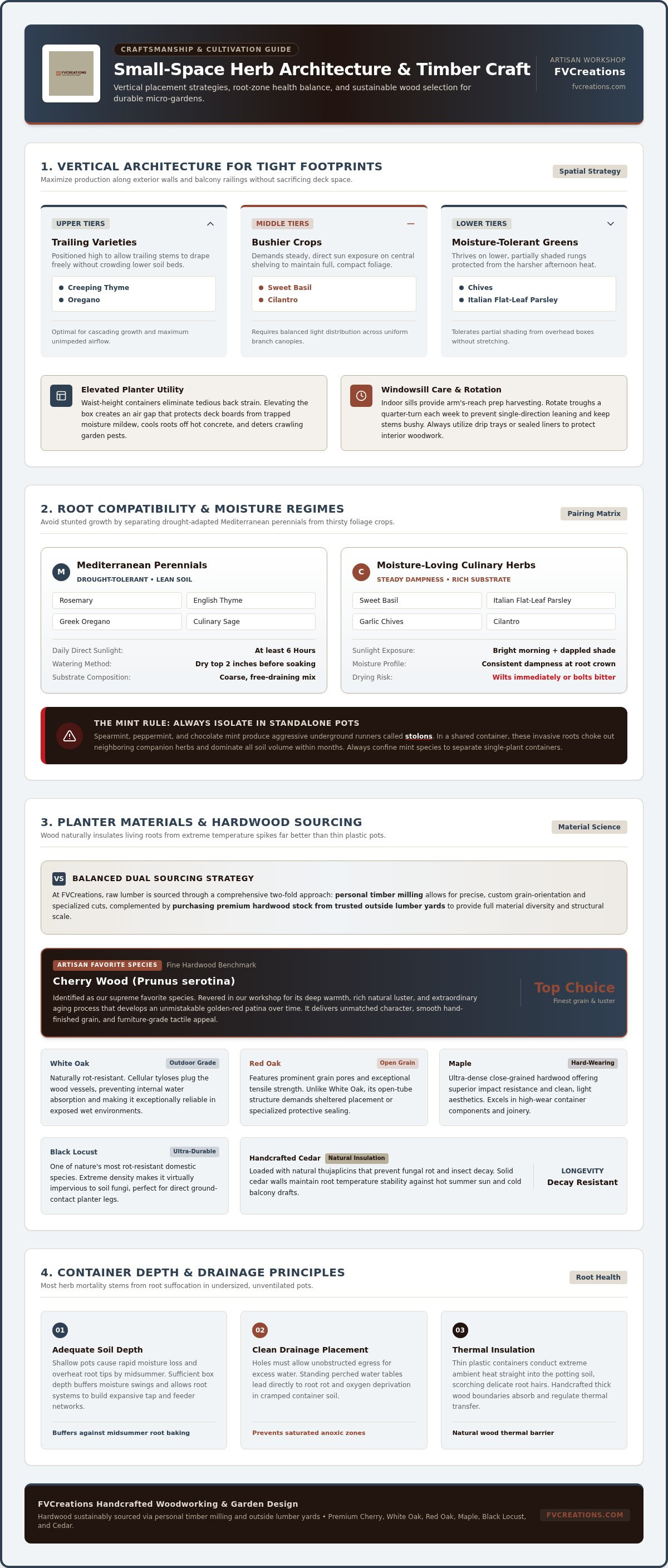
- Upper tiers: Position trailing varieties like creeping thyme and oregano up high where stems can drape downward freely.
- Middle tiers: Dedicate central shelving to bushier crops like sweet basil and cilantro that need steady, direct exposure.
- Lower tiers: Reserve lower, partially shaded rungs for moisture-tolerant culinary greens such as chives and Italian flat-leaf parsley.
Compact Windowsill and Tabletop Container Arrangements
If you lack outdoor space altogether, your kitchen windowsill remains prime territory for compact planters. Placing narrow wooden troughs within arm's reach of your meal prep area ensures you can snip fresh garnishes in seconds. Always use containers equipped with integrated drip trays or sealed liners to protect interior sills from runoff. Because windowsill light arrives from a single direction, rotate your boxes a quarter turn every week so stems grow full and bushy instead of leaning weak toward the glass.
Selecting the Best Herbs and Companion Pairings for Tight Quarters
Bringing practical herb garden ideas for small spaces to life requires paying close attention to what happens beneath the soil. When roots share cramped container soil, mixing mismatched plants guarantees disappointment. Thirsty foliage will rot drought-adapted roots, while hungry feeders quickly starve slower growers. Pairing herbs with identical thirst levels and sun habits keeps your arrangement thriving with minimal fuss.
Drought-Tolerant Mediterranean Herbs in Shared Boxes
Perennials from the Mediterranean basin thrive when you treat them with a bit of neglect. Rosemary, English thyme, Greek oregano, and culinary sage love rubbing shoulders in a coarse, free-draining potting blend. They demand at least six hours of direct sunlight daily to build their rich essential oils. Soak the container thoroughly, then let the top two inches of soil dry out completely before watering again. As university small-space gardening resources often highlight, avoiding soggy roots is the single most critical factor for container health.
Moisture-Loving Culinary Herbs for Partial Sun
Soft-stemmed kitchen herbs have entirely different moisture rules. Sweet basil, Italian flat-leaf parsley, garlic chives, and cilantro prefer steady, even dampness around their root crowns. If their soil dries out under a harsh afternoon sun, they wilt immediately or bolt to seed, turning bitter. Situate these varieties where they receive bright morning light followed by dappled afternoon shade. That balance preserves leaf tenderness and keeps the potting blend from drying into a hard brick.
The Mint Warning: Isolating Vigorous Root Spreaders
Every gardener learns this hard lesson once: never give mint free rein in a shared planter. Spearmint, peppermint, and chocolate mint spread through aggressive underground runners called stolons. In just a few months, those underground runners will choke out neighboring roots and take over the entire container.
- Plant solo: Keep every mint variety isolated inside its own dedicated pot.
- Control runners: Snip back trailing stems before they touch nearby containers and take root.
- Strategic placement: Set isolated mint pots around patio seating edges to help repel nuisance bugs naturally.
Dividing your plantings into dedicated boxes makes companion gardening simple and keeps each herb variety healthy. If you want sturdy boxes to keep these groupings organized on a balcony, checking out the timber builds in our outdoor items collection gives your favorite culinary pairings the proper depth and room to thrive.
Planter Materials: Wood Species Comparison and Container Longevity
Thin plastic pots conduct harsh afternoon heat straight to delicate roots, baking soil in midsummer and freezing it solid when the first autumn frost hits. Solid timber provides natural thermal insulation, buffering delicate culinary roots from rapid temperature swings. In my workshop, I source our timber through a dual approach: milling logs personally on our own equipment and hand-selecting premium stock from trusted outside lumber yards. Getting timber selection right directly dictates whether your setup lasts two seasons or two decades, which matters when investing in lasting herb garden ideas for small spaces.
Cedar and Black Locust: The Kings of Outdoor Rot Resistance
Cedar remains our go-to standard for outdoor planters. Its natural extractives fight off decay, insects, and fungus without the need for toxic pressure treatments that could leach into your organic culinary herbs. For severe outdoor conditions and direct ground contact, black locust is another incredible domestic species. It is remarkably dense, intensely hard, and resists fungal rot better than almost any other North American timber.
Oak and Maple: Understanding Grain Porosity in Garden Use
Lumber anatomy determines how a board handles garden moisture. White oak excels outdoors because microscopic balloon-like structures called tyloses plug its cellular pores, creating an impenetrable water barrier. Red oak is the complete opposite; its open vascular pores absorb water like a bundle of drinking straws, causing it to rot quickly in damp patio environments. Hard maple features tight, beautiful grain and high density, but it lacks natural decay resistance. Keep maple containers under covered, sheltered porches where rain won't saturate the joints.
The Artisan Woodworker Perspective: Why Cherry is Farmer Vic’s Favorite
While cedar does the heavy lifting outside, cherry wood is my absolute favorite species to work with in the shop. There is an unmatched joy in shaping cherry. Its fine, satiny grain darkens with age, transforming from a delicate honey glow into a deep, radiant reddish-brown patina that simply cannot be replicated by stains. Cherry is best kept in sheltered patio nooks, protected outdoor tables, or bright sunrooms where moisture is controlled. Coating fine exterior timber accents with food-safe outdoor defense oil nourishes the grain naturally, keeping your culinary herb containers stunning and non-toxic for years to come.
Essential Container Care: Drainage, Soil Depth, and Sunlight
Digging your fingers into fragrant potting mix is one of life's simple pleasures, but keeping potted greens vigorous comes down to three basic mechanics: gravity, depth, and light. Even the most inventive herb garden ideas for small spaces fall flat if roots suffocate in dense dirt or sit in stagnant moisture. Dialing in container care ensures your culinary herbs stay crisp, aromatic, and ready for harvest all season long.
Determining the Right Soil Depth for Herb Roots
Gardeners often make the mistake of planting every culinary variety at the exact same depth. Herb roots have distinct structural habits that dictate how deep your soil must run:
- Shallow rooters (6 inches): Thyme, chives, oregano, and summer savory feed near the surface and flourish in shallow troughs.
- Deep taproots (8 to 10 inches): Rosemary, dill, sage, and Italian flat-leaf parsley drive root systems downward, demanding a deeper soil profile to prevent stunted growth.
Dense backyard garden topsoil quickly turns rock-hard in small containers. Always fill your boxes with an airy, lightweight potting blend amended with perlite or coarse horticultural sand to keep pathways open for delicate root hairs.
Preventing Waterlogging on Finished Decking and Patios
Soggy soil suffocates root systems faster than drought ever could. When water cannot escape, root rot takes hold within days. Line the base of your planter box with porous landscape fabric before adding soil mix; this lets runoff flow away freely while holding your potting blend in place. Freestanding boxes with solid legs elevate soil off the deck floor, letting excess moisture drain cleanly without pooling against expensive patio decking. Check soil dampness with a quick finger test before you water. If the soil feels cool and moist two inches down, hold off on the hose.
Managing Sun Exposure and Microclimates in Small Spaces
Micro patios create intense localized heat zones. Brick facades, concrete slabs, and dark composite decking absorb solar energy through the morning, then radiate that trapped heat back onto tender foliage during the afternoon. Position sun-worshiping Mediterranean varieties along southern exposures for vigorous leaf development. When midsummer heat peaks, shift movable planters a couple of feet inward toward shaded eaves so sensitive leafy greens don't scorch.
Give your balcony plantings the proper drainage and root depth they need. Take a look at the sturdy builds in our outdoor items collection to find elevated timber planters built to protect patio floors while helping compact herb gardens flourish.
Choosing Handcrafted Cedar Planters for Lasting Small-Space Gardens
Throwaway seasonal containers made from cheap plastic or pressed sawdust might look fine on a store shelf, but they rarely survive a single harsh winter. When bringing thoughtful herb garden ideas for small spaces into reality, your planter shouldn't be treated as a disposable item. It is a working piece of outdoor furniture and an extension of your home. Choosing solid, handcrafted woodwork ensures your culinary setup stays sturdy, attractive, and productive for years of harvests.
Why Elevated Cedar Planters with Legs Excel on Balconies
Elevated cedar planters with legs change how you interact with your plants every single day. Tending to your herbs at waist height spares your back and knees when you're quickly harvesting sprigs of rosemary or cutting fresh chives for supper. That raised footprint keeps soil weight off delicate balcony flooring while giving herb root systems the depth they require. If you're designing a tight outdoor retreat, browsing the durable builds across our outdoor items collection gives you furniture-grade timber designed specifically for compact patio living.
The Value of Artisan Quality Over Mass-Market Flat Packs
Mass-produced flat-pack planters cut corners with thin, stapled slats that quickly buckle under the immense pressure of saturated potting soil. We take the opposite approach in our shop. Whether the cedar is personally milled on our own sawmill equipment or hand-selected from trusted outside lumber yards, every board is chosen for its structural strength and tight grain. Solid timber legs and robust joinery support heavy, damp soil without sagging, wobbling, or pulling apart during winter freeze-and-thaw cycles.
Setting Up Your First Small-Space Herb Garden
Transforming your patio into a fragrant culinary sanctuary takes just an afternoon of honest work:
- Settle your box: Position your planter where it catches generous morning sun and stays shielded from strong wind gusts.
- Add an airy potting blend: Fill the interior with a light organic potting mix, leaving roughly two inches of clearance below the top lip.
- Plant and pinch: Bed your rooted starters, then snip the tender top shoots regularly to encourage bushy side growth instead of tall, spindly stems.
Starting with durable cedar gives your kitchen herbs the foundation they deserve, turning even the narrowest apartment balcony into an enduring, aromatic garden retreat.
Cultivate Your Own Fresh Patio Harvest
Growing fresh, aromatic culinary cuttings doesn't require acres of open farmland. By grouping compatible varieties together, giving roots adequate soil depth, and selecting natural timber over disposable plastic pots, you can turn any cramped deck into a thriving culinary pantry. Putting smart herb garden ideas for small spaces to work simply comes down to giving your plants an enduring foundation that lets them flourish season after season.
You deserve a setup that functions as reliable outdoor furniture while elevating your cooking. Every piece in our workshop is handcrafted in the USA by Farmer Vic using rot-resistant solid cedar, sourced responsibly through our own milling and reputable lumber yards. With an elevated ergonomic design engineered specifically for balconies, decks, and micro spaces, our time-tested joinery handles heavy, saturated soil without warping or splitting. When you're ready to enjoy crisp, fragrant cuttings just steps from your stove, visit fvcreations.com to explore our Cedar Planters with Legs and build an outdoor haven you'll love tending every day.
Frequently Asked Questions
Can I grow a successful herb garden in a small space with low light?
Yes, you can cultivate fresh herbs even on north-facing balconies or shaded porches. While sun-worshiping varieties struggle, shade-tolerant herbs like chives, flat-leaf parsley, chervil, and mint adapt well to dappled light or three to four hours of sun. If you want to expand your herb garden ideas for small spaces indoors, adding a full-spectrum LED clip light provides the supplemental energy leafy greens need to flourish without getting leggy.
How deep does a planter box need to be for growing culinary herbs?
A functional planter box should provide between 6 and 10 inches of soil depth. Shallow rooters such as thyme, chives, and oregano produce hearty foliage in just 6 inches of soil. Deeper culinary perennials like rosemary, sage, and dill require at least 8 to 10 inches to stretch out their root structures. Giving roots adequate vertical depth prevents them from circling the container bottom and becoming unhealthily root-bound.
Why do herbs often die in small indoor pots?
Poor drainage and severe root crowding kill most indoor herbs. Tiny decorative pots often lack drainage holes, causing watering runoff to pool at the base and rot delicate root systems. Additionally, dry indoor air and thin plastic walls cause soil temperatures to fluctuate violently between waterings. Moving plants into well-aerated containers with proper drainage and setting them where air circulates freely keeps roots oxygenated and active.
Is cedar wood safe for growing organic herbs and vegetables?
Cedar is one of the safest, most natural materials you can choose for edible gardening. Unlike pressure-treated construction lumber that relies on chemical preservatives, cedar produces natural organic compounds called thujaplicins. These natural oils resist rot, termites, and fungal decay without leaching anything harmful into your potting mix. It provides a clean, chemical-free growing environment that preserves the pure flavor and safety of your culinary harvest.
How often should I water herbs planted in small outdoor containers?
Water whenever the top inch or two of soil feels dry, rather than sticking to a fixed calendar. Small outdoor containers lose moisture rapidly on windy balconies and sunny decks. During peak summer heat, you may need to water daily, while cooler spring weather might only require a soak twice a week. Always push your finger into the potting mix first; if it feels damp beneath the surface, hold off.
Can I leave wooden herb planters outside during freezing winter weather?
Solid timber planters built with durable joinery easily withstand freezing winter conditions outside. Unlike ceramic or terra cotta pots that crack when frozen soil expands, cedar flexes naturally with temperature swings. Sourcing quality lumber, whether cut on our own equipment or selected from outside lumber yards, ensures the wood won't buckle under frost. Just ensure drainage ports remain clear so standing water doesn't freeze into solid ice dams.
What herbs should never be planted together in the same container?
Never plant aggressive spreaders like mint alongside slower-growing herbs, as mint stolons quickly strangle neighboring roots. You should also keep drought-loving Mediterranean herbs separated from moisture-craving varieties. Rosemary, thyme, and oregano will rot if given the constant dampness that basil, chives, and parsley need to produce tender foliage. Grouping plants with identical hydration habits is essential when testing new herb garden ideas for small spaces.