

Holiday Cheese Board Presentation: A Simple Guide to a Festive, Beautiful Spread
Could a holiday cheese board feel festive without being crowded or arranged like a themed centerpiece? Planning a generous spread can feel daunting when you’re balancing color, shapes, and room for guests to serve themselves. A welcoming holiday cheese board presentation comes from thoughtful placement, not piling on more food.
This guide offers a practical way to plan a board that looks abundant, stays easy to reach, and suits your gathering and serving surface. You’ll find layout ideas, pairing suggestions, and small touches that add seasonal color without making the arrangement feel fussy.
The serving board can help set the mood, too. At FVCreations, each charcuterie board is handcrafted using lumber obtained through the owner’s personal milling and purchases from outside lumber yards. Natural grain and well-chosen proportions bring warmth to the table while leaving the food room to shine. Start with a manageable plan, then make the spread your own.
Key Takeaways
- A festive holiday cheese board presentation can feel welcoming without elaborate carving or a crowded spread.
- Choose a few contrasting colors and textures, then leave room for guests to reach and serve themselves.
- Pick a wreath, clustered, or flowing layout to suit your serving surface and how guests will approach the board.
- Build the board in stages: place larger items first, group the food, fill gaps, and finish with restrained seasonal accents.
- A handcrafted wooden board brings natural grain and warmth to the holiday table while giving the spread a personal touch.
What Makes a Holiday Cheese Board Presentation Feel Festive?
Your first holiday board doesn’t need elaborate cheese carving, specialty decorations, or a long ingredient list. A few well-chosen foods, arranged with care, can feel just as celebratory. The goal of a holiday cheese board presentation is to make the spread feel seasonal, balanced, inviting, and easy to serve. Each part should look appealing, but guests should feel comfortable reaching in and helping themselves.
Visual balance means distributing color, shape, and texture so the eye moves naturally across the board, while leaving enough open space for food to be seen and served. That matters more than filling every corner.
Start with the feeling you want the board to create
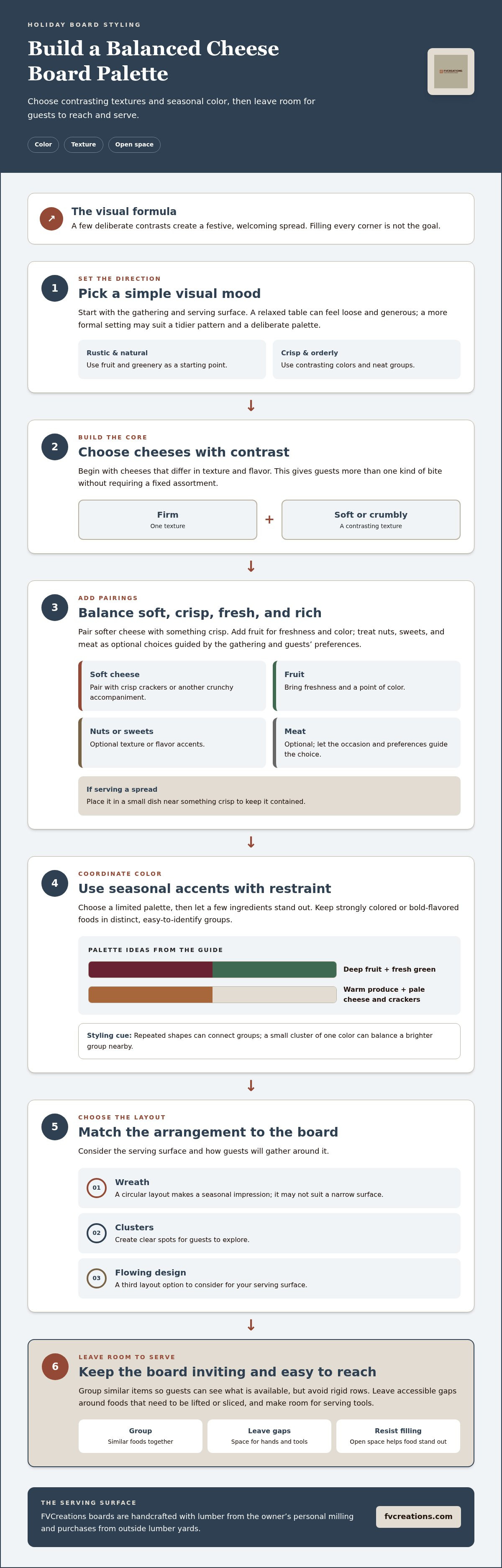
Begin with the gathering, not the decorations. For a relaxed family meal, a loose, generous arrangement feels at home: group familiar favorites within easy reach and add a few seasonal touches for warmth. A more formal holiday table may suit a tidier pattern, repeated shapes, and a deliberate palette that works with the dishes and linens.
Choose a visual direction before adding decorative details. You might go rustic and natural with fruit and greenery, or keep the look crisp with contrasting colors and neat groups. A strict theme isn’t necessary. A clear starting point helps you avoid decorations that compete with the food.
Keep the spread welcoming. A cheese board is meant to be shared, not admired from a distance like a centerpiece guests are afraid to touch. Leave room for serving tools, and don’t tuck the most tempting items behind taller pieces. For context on how these spreads bring foods together, explore the history and composition of charcuterie boards.
Use color, texture, and open space as your styling tools
Think in contrasts. Pale cheeses stand out beside dark fruit or a small bowl of preserves; green grapes can brighten a group of crackers and cheese. You don’t need every color on the table. A few contrasts help guests spot each item and keep the arrangement lively.
Texture adds another layer of interest. Place crisp crackers near soft cheese, then balance crumbly pieces with fresh fruit or another easy-to-pick-up accompaniment. Group similar items so guests can see what’s available at a glance, but vary the shapes and sizes of those groups rather than lining everything up in rigid rows.
Resist the urge to fill every gap. Open space gives the eye a place to rest and gives hands room to serve. Leave accessible gaps near utensils and around foods that need to be lifted or sliced. If the board looks sparse, adjust the groups before adding ingredients. A small shift can make the spread feel more generous and orderly without making it harder to navigate.
Build a Holiday Cheese Board Palette with Cheese, Produce, and Accents
Once you have a general feeling in mind, choose ingredients as a palette rather than shopping for every possible extra. Start with cheeses that differ in texture and flavor, then add crisp accompaniments, fresh fruit, and a small number of accents. This gives your holiday cheese board presentation a visual thread without locking you into a fixed recipe.
Choose complementary ingredients without making a fixed recipe
Think about contrasts, not a required assortment. A firm cheese alongside a soft or crumbly one gives guests different textures and ways to enjoy each bite. Pair softer cheeses with crisp crackers or another crunchy accompaniment. If you’re including a spread, set it near something crisp and serve it in a small dish to keep it contained.
Fruit brings freshness and color, while nuts or sweets can add another texture or flavor. Treat them as options, not obligations. You might skip sweets when cheese and savory bites are the focus, or add a little something sweet to a casual table. Meat is optional, too. Let your guests’ preferences and the kind of gathering guide what belongs on the board.
Bring in seasonal color with restraint
Pick a simple color direction before adding seasonal details. Combine a deep fruit color with a fresh green accent, or place warm-toned produce beside pale cheeses and crackers. These are starting points, not rules. Choose produce or edible garnishes that make sense with the food, and use them as small accents rather than a blanket of decoration. A garnish should look at home on the board without getting in the way of serving.
A limited, coordinated palette makes a board feel intentional by giving each ingredient room to stand out. This helps when you’re mixing foods with strong colors or bold flavors. Keep those flavors in distinct, easy-to-identify groups instead of scattering them through milder choices. Guests can see what they’re reaching for, and anyone who prefers a simpler bite can choose with confidence.
As you refine the arrangement, look at the whole surface instead of judging each ingredient on its own. A small cluster of one color can balance a brighter group nearby; repeated shapes, such as rounds of cheese beside round fruit, can create a quiet visual connection. The principles of food presentation for visual appeal offer helpful ideas for composition, but your board doesn’t need to look formal. A little coordination is enough.
If you’re choosing a serving surface, browse FVCreations’ wooden cutting boards for inspiration. Let the ingredients and occasion lead; the best palette feels considered but still easy to share.
Choose a Holiday Cheese Board Layout: Wreath, Clusters, or Flowing Design
With your ingredients in mind, choose an arrangement that fits the board and the way people will gather around it. A circular wreath makes a seasonal impression, but may not suit a narrow surface. Clusters give guests clear spots to explore, while a flowing layout guides the eye along a long board. Choose the layout that suits your serving surface and keeps food within easy reach.
| Layout | Visual effect | Space that suits it | Serving access |
|---|---|---|---|
| Wreath | A circular, seasonal frame with an open center | A round or broad surface with room for a ring | Works best when guests can reach around the arrangement |
| Clusters | Distinct groups with visual pauses between them | A surface that has room for several small groupings | Makes different food groups easy to find and choose |
| Flowing design | A gentle path that carries the eye across the board | A long or narrow serving area | Can guide guests along the spread, especially from one end |
Match the layout to the table and serving surface
A wreath-inspired arrangement works on a surface that can support a circle. Curve ingredients around a central bowl or leave the middle open to show the wood beneath. It can look festive without carved shapes or extra decorations. Check that people can approach from the sides they’ll use; a pretty ring that’s awkward to reach won’t feel welcoming for long.
Choose clusters when you want clear boundaries between food groups or guests will gather on more than one side. Give each group a little breathing room. A flowing arrangement works well on a narrow table or counter, where a loose line of groups leads guests from one end to the other without making them reach across the whole spread.
Let the serving board contribute its own character
The surface itself is part of the display. Visible grain and natural variation give a wooden board character, while its shape and proportions can guide the layout. Cherry is the owner’s favorite species, and its warm color and fine grain make it a distinctive choice in wood. Red oak and white oak have different grain patterns; maple has a subtler grain, while black locust offers its own natural color and pattern. These are general characteristics of the species, not claims about the wood used for a particular board.
Keep the arrangement in balance with the surface. If the grain has a strong visual presence, a simpler layout lets it show; an understated surface gives the food groups room to lead. Let the board’s proportions guide your choice: use a wreath on a surface that can support a circle, clusters where guests need clear choices, or a flowing line on a long, narrow board. For more on the craft and care of these serving pieces, explore our charcuterie board guide.
How to Assemble and Finish a Holiday Cheese Board Presentation
A little preparation makes assembling the board easier. Before placing food, decide where it will sit, which way guests will approach, and where serving tools need to go. Plan the layout and prepare components ahead, then bring the board together closer to serving time. Keep perishable ingredients stored appropriately until final assembly, and follow the guidance for the foods you’re serving.
Set the foundation before arranging the food
Choose a stable serving surface with enough room for your planned assortment, plus space for hands and utensils. If you’re using small bowls for spreads or loose accompaniments, place them first. They take up fixed space, so setting them down early helps prevent awkward shuffling later.
Build the board from the surface and larger items to grouped foods, open gaps, and a few finishing accents. That order gives the arrangement structure without making it fussy.
- Choose the surface. Set the board or serving platter where it will be used, and check that guests can reach it from the available sides.
- Place bowls and larger items. Add containers for spreads, then position larger cheeses or other substantial pieces to establish the main shape.
- Establish ingredient groups. Gather similar foods together so guests can tell what belongs where. Keep stronger flavors in recognizable spots of their own.
- Fill gaps with care. Add smaller accompaniments where they balance the arrangement, while preserving space for hands, serving utensils, and easy access.
- Add restrained accents. Finish with a few seasonal details that suit the food and palette, then stop before decoration crowds the spread.
Separate make-ahead planning from final assembly
Do the planning ahead if that makes hosting calmer. Decide on the surface, serving tools, bowls, and general placement in advance. Prepare ingredients according to your recipe and serving needs, keeping items separate where that helps them stay tidy. Save the final arrangement for close to serving so the board looks fresh and its groups remain clear.
During assembly, check the board from a guest’s point of view. Is a utensil close to the food it belongs with? Can someone reach a cracker or piece of cheese without leaning across another group? If a bowl blocks access or two clusters feel cramped, move them now. A small adjustment can make the board more comfortable to use.
Finish with small details that help guests
Keep ingredients recognizable instead of scattering them into a decorative blur. Add seasonal accents where they support the color without blocking a serving spot. Make serving knives, spoons, or small tongs easy to see and reach, with enough room to use them without disturbing nearby foods.
A successful holiday cheese board presentation is ready when the spread feels inviting and guests can serve themselves with ease. For a closer look at handcrafted wooden serving surfaces, explore FVCreations’ handcrafted cutting boards.
Make a Handcrafted Wooden Board Part of the Holiday Table
A wooden serving surface adds more than a place to arrange food. Its visible grain and natural feel bring warmth and texture to the holiday table, while giving the colors of the spread a calm backdrop. Let the wood contribute quietly rather than compete with the food or decorations.
Let the serving surface complement the food
Use the board’s proportions to support your planned arrangement. A broad surface gives food groups room to sit apart; a longer one can create a gentle path across the table. Keep some of the wood visible and let its grain provide pattern without trying to match every ingredient to it. If the surface has a pronounced visual character, a simpler arrangement can keep the table from feeling too busy.
The board can also help tie the spread to the rest of the setting. A natural wood tone sits comfortably among seasonal linens, simple dishes, and colorful food. For ideas on wooden serving surfaces, browse the cutting board collection.
Bring a personal touch to the table
A serving board feels especially at home when it reflects the way you like to host. Pair a generous, informal arrangement with a relaxed family meal, or use more deliberate placement for a carefully set table. Either way, let the surface remain useful. Guests should feel welcome to reach for a bite, not worry about disturbing a display.
If you’d like to explore more about the craft and care behind wooden charcuterie boards, take a look at our charcuterie board guide. A thoughtful serving surface doesn’t need elaborate decoration to make the table feel personal. Choose one that suits your gathering, arrange the food with room to share, and let the conversation take over.
Set the Table for a Holiday Gathering That Feels Like Yours
Give yourself permission to keep the plan simple. Before guests arrive, decide how you want the table to feel, then make one small choice that brings that feeling through, perhaps a favorite serving piece or a seasonal accent you already have at home. The details don’t need to match perfectly. A relaxed, welcoming table often feels more personal than one styled to look untouched.
Let your holiday cheese board presentation be a starting point, not a performance. Once the board is set out, guests will reach, share favorites, and make the spread their own. That’s part of the pleasure of gathering around food: the table becomes a place to linger, not just something to look at.
FVCreations handcrafts charcuterie boards using lumber obtained through the owner’s personal milling and purchases from outside lumber yards. Explore FVCreations’ handcrafted charcuterie boards to find a wooden serving piece for your holiday table. Keep the plan comfortable, trust your eye, and enjoy welcoming everyone in.
Frequently Asked Questions
How many cheeses should I put on a holiday cheese board?
For a manageable board, start with three cheeses that offer different textures or flavors, such as one firm, one soft, and one crumbly option. That gives guests a useful choice without letting cheese take over the whole spread. For a larger gathering, add another variety if you have room and know guests will enjoy it. Cut some pieces in advance to make serving straightforward.
Can I make a holiday cheese board ahead of time?
You can do much of the planning ahead, but assemble the board close to serving so it looks fresh and stays easy to serve. Choose the surface, set out bowls, and prepare serving tools in advance. Keep ingredients stored according to their packaging or food-handling guidance, and add them when you’re ready to arrange the board. If you’re prepping cut ingredients, keep them covered and separate until assembly.
What can I use instead of a large wooden board?
A large platter, serving tray, slate surface, or a few smaller plates can work well. For a narrow table, several small dishes placed along the center may be easier for guests to reach than one oversized surface. You can also use a plate for the main ingredients and small bowls nearby for loose items. Choose a clean, stable surface with enough room for serving utensils.
How do I make a holiday cheese board look full without overcrowding it?
Make the arrangement feel generous by using small bowls to add height and contain loose ingredients, rather than spreading everything thinly across the surface. Group foods in distinct sections and vary the size of each group. If the board still looks sparse, adjust the spacing or add a small portion of something already on the menu. Leave clear paths for hands and utensils so guests can serve themselves comfortably.
Is a wreath-shaped cheese board difficult to assemble?
No. A simple wreath layout is approachable if you build it in sections rather than trying to form a perfect circle all at once. Arrange small groups around the edge of a round platter, then check the gaps from above and shift items until the shape reads clearly. Keep the center open or use a small bowl there. The ring can be loose; it doesn’t need to look exact.
What holiday decorations are safe to place on a cheese board?
Use edible accents that are clean and intended to be eaten, such as suitable fresh fruit or herbs. Keep decorative items that aren’t food, including ornaments, ribbon, and candles, off the food surface and away from serving areas. Don’t place unfamiliar greenery or berries beside food where guests might mistake them for edible garnishes. If you’re unsure about an accent, leave it out and let the ingredients provide the seasonal color.