

How Long Do Cedar Planters Last? The Honest Truth About Longevity (2026)
Most gardeners assume a wooden planter is a temporary fixture destined to rot and stain their deck within three short seasons. It is a frustrating cycle of spending hard-earned money on thin, mass-produced boxes only to watch them crumble. I have seen this happen far too often, and frankly, you deserve better for your backyard. If you are tired of the "buy and replace" routine, you are likely asking the big question: how long do cedar planters last before the soil and moisture win the battle?
I understand the worry about wood treatments leaking into your organic tomatoes or the dread of finding rot in your expensive cedar. The truth is that a well-built planter shouldn't just survive; it can last anywhere from 10 to 30 years with the right care. In this guide, I'll share the artisan secrets to hitting that 15-year mark and beyond. We'll talk about why board thickness matters more than a fancy label. I'll also be transparent about how I source my materials, whether I'm milling cedar myself or hand-picking heavy-duty stock from local lumber yards. You'll get a clear maintenance schedule and the keys to a safe, chemical-free garden that stands the test of time.
Key Takeaways
- Learn exactly how long do cedar planters last in different climates and why the 10 to 15 year mark is just the beginning for a well-built box.
- Discover the "Heartwood Advantage" and why I hand-select specific boards from both my own milling and local lumber yards to prevent early rot.
- Identify the structural secrets of heavy-duty construction, including the specific fasteners that prevent ugly black streaks on your wood.
- Master a simple annual maintenance routine that protects your investment and keeps your soil safe for edible gardening.
- Understand why artisan-sourced materials and thicker boards offer a better long-term value than the thin, mass-produced options found in big-box stores.
The Realistic Lifespan of Cedar Planter Boxes
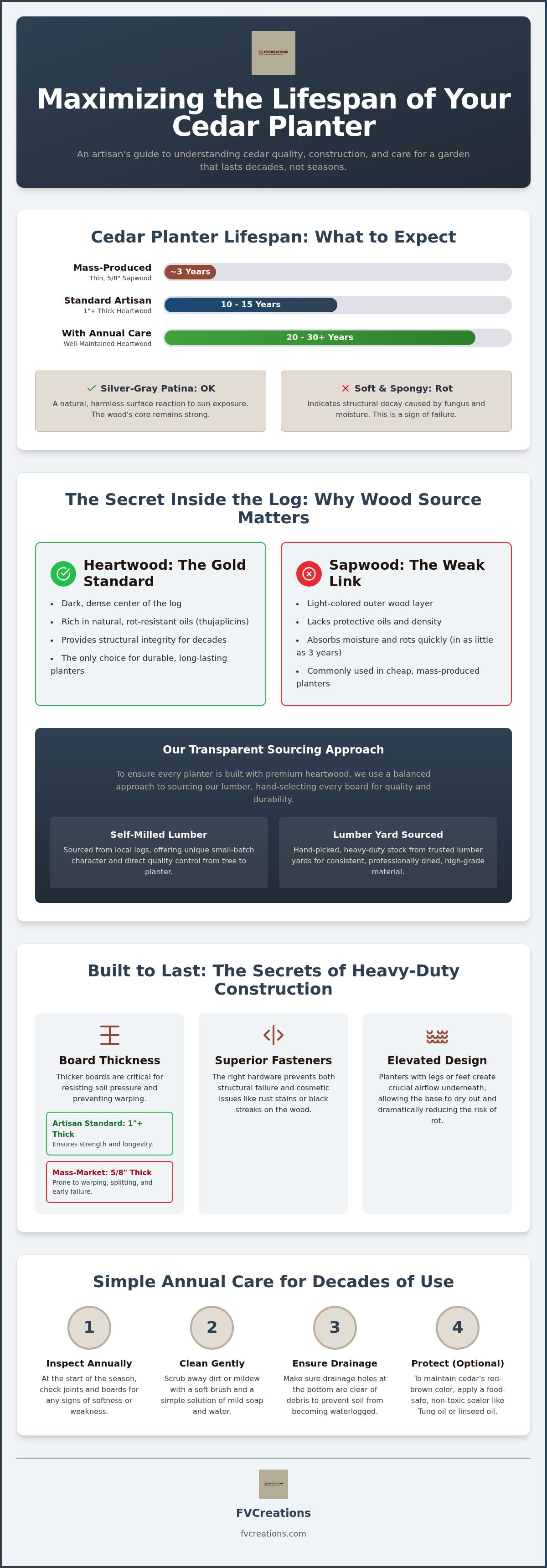
When folks stop by my workshop, they usually want to know if they're making a real investment or just buying a temporary hobby. The honest truth about how long do cedar planters last is that you should expect 10 to 15 years for untreated wood. If you take a little extra care, that number can easily climb to 20 years or more. Whether I am milling the cedar myself from local logs or buying in a lot of outside lumber from trusted lumber yards, I look for specific grain density and quality. Cedar isn't just another softwood; it contains organic compounds called thujaplicins that give it a natural resistance to decay and insects. This is why it outlasts pine or fir by a long shot without needing a single drop of chemical preservative.
I often see gardeners worry when their beautiful reddish-pink planter starts turning a silvery gray after a season or two. Don't let that color change fool you. This is just a surface reaction to the sun, not a sign of structural rot. While the aesthetic silvering happens quickly, the heart of the wood remains strong and sturdy. Real rot feels soft, spongy, or flaky to the touch. The silver patina is simply the wood aging gracefully in its environment, much like a cedar fence or a coastal boardwalk.
A standard 1-inch thick cedar board in constant contact with wet soil typically lasts between 8 and 12 years before structural integrity begins to decline.
Environmental Factors That Impact Longevity
Moisture is the biggest enemy of any wood project. In high-humidity areas or spots with heavy rainfall, the wood stays damp for longer periods, which can accelerate the growth of fungi that cause decay. Sun exposure also plays a role. UV rays eventually break down the cellulose fibers on the surface, making the wood more porous over time. I always tell customers that our Cedar Planters with Legs have a distinct advantage in these conditions. Because they aren't sitting directly on the wet ground, the airflow around and under the boards helps them dry out quickly after a storm, which helps them last much longer than a bed sitting in the mud.
Softwood Realities: Cedar vs. Other Garden Woods
I often get asked why I don't just use pressure-treated pine to save people a few dollars. The reality is that those boards are treated with chemical preservatives to mimic what cedar does naturally. When you are growing food for your family, you want a clean environment. Cedar is the gold standard for edible gardening because it's safe, durable, and naturally beautiful. If you're still weighing your options, take a look at my comparison of the cedar vs pine planter box to see why I've staked my reputation on this specific wood for my outdoor builds.
Why Wood Sourcing and Milling Matter for Your Garden
When you ask how long do cedar planters last, you're really asking about the quality of the tree itself. Not all cedar is created equal, and where the wood comes from within the log makes all the difference. In my workshop, I see the raw reality of timber every day. If you pick up a cheap planter at a big-box store, you're likely looking at sapwood. This is the light-colored outer ring of the tree that transports water. It's soft, lacks the natural preservatives found in the center, and often rots in as little as three years. I avoid using sapwood for structural pieces because it simply won't stand up to the constant moisture of a garden.
The real secret to longevity is the heartwood. This is the dark, dense center of the tree where those rot-resistant thujaplicins are most concentrated. I take a very transparent approach to how I source this material. I love using cedar that I've milled right here on the property because it has a unique, small-batch character you can't find elsewhere. However, for larger projects or to keep up with demand, I also buy in a lot of outside lumber from professional lumber yards. This balance allows me to hand-select the best heartwood boards for every build, ensuring that the Cedar Inground Raised Planting Beds I create are built to last for decades, not just a few seasons.
The Difference Between Artisan and Big-Box Lumber
Thickness is another area where mass-produced planters fail. Many stores sell "cedar" planters made from 5/8-inch fence pickets. These are far too thin to hold the weight of wet soil and will warp or split within a year. I prefer a "heavy duty" standard, using boards that are at least one inch thick. I also pay close attention to moisture content. Lumber from professional yards is often dried more consistently, which prevents the wood from shrinking or twisting once it's in your backyard. You can learn more about these quality markers in my guide to handcrafted cedar planters.
Sustainable Sourcing and the Environment
Construction Secrets That Prevent Early Failure
When people ask how long do cedar planters last, they often forget that the wood species is only half the battle. The way those boards are held together determines if your garden bed stays square or turns into a bowing mess after the first big rain. In my workshop, I follow a "Heavy Duty" standard. Whether I am using cedar I have milled myself from local logs or high-quality stock I have bought in from regional lumber yards, I stick to thicker boards. Thinner 5/8-inch wood simply cannot handle the lateral pressure of wet soil. When that soil gets saturated, it pushes outward with incredible force, and thin boards will eventually snap or warp.
Fasteners are another common failure point that many builders overlook. I have seen plenty of planters held together with basic nails that rust and leave ugly black streaks across the wood. This happens because the natural tannins in cedar react with iron. To prevent this, I use stainless steel or high-quality coated screws. These won't corrode or cause staining, and they provide the mechanical grip needed to keep joints tight as the wood naturally expands and contracts. While high-quality outdoor glue is a helpful secondary bond, it is never enough on its own to fight the constant movement of cedar joinery in the elements.
Joinery That Stands Up to Soil Pressure
Soil is heavy, and wet compost is even heavier. If the corner joints aren't reinforced, the pressure will eventually pull the screws right through the end grain. I often use internal bracing or robust corner posts to give the fasteners more "meat" to bite into. This is especially important for my cedar planters with legs, which have to support the entire weight of the garden off the ground. By using smart joinery, I ensure the structure stays stable even when your plants are at their peak and the soil is fully soaked.
Drainage and Aeration Design
Airflow is the secret weapon against rot. If a planter has a flat bottom with no way for water to escape, the wood sits in a constant puddle. This leads to "wet feet" for your plants and accelerated decay for the wood. I prefer designs that allow for clear drainage, sometimes using a slight gap between bottom slats or a V-shaped floor. For inground beds, I pay close attention to the corner post design. By ensuring the posts are made from heartwood sourced from trusted lumber yards, I can prevent the bottom-up rot that usually claims cheaper garden beds within five years.
How to Maintain Cedar Planters for Decades
I build my planters to be tough, but even the sturdiest heartwood benefits from a little neighborly care. If you want to know how long do cedar planters last when they're truly looked after, the answer can easily stretch into twenty or thirty years. I use a mix of property-harvested cedar and high-quality lumber sourced from external lumber yards; regardless of where the wood begins its journey, it needs a simple routine to stay healthy. Maintenance isn't about complex chemistry. It's about respecting the natural material and keeping the elements from getting the upper hand.
Step one is a basic annual cleaning. Every autumn, I recommend clearing out dead leaves and organic muck that piles up in the corners. Fungi love damp debris, and leaving it against the wood is an open invitation for rot. A gentle scrub with a soft brush and some plain water does wonders. Step two involves checking your hardware. Wood is a living material that breathes and moves with the seasons. Once a year, grab a screwdriver and make sure those stainless steel fasteners are still snug. It keeps the structure rigid and prevents small gaps where moisture can hide. Finally, re-applying a food-safe protective oil every year or two will keep the fibers from becoming brittle. For a deeper dive into these steps, you can read my full guide on how to maintain cedar planters.
The Best Finishes for Cedar Longevity
Choosing a finish is a balance between the look you want and the protection the wood needs. I personally recommend Outdoor Defense Oil for almost every project. It's a 100% natural, deep-penetrating seal that gets right into the grain rather than just sitting on the surface. If you want a bit of color without the peeling mess of plastic-based paints, Milk Paint is a fantastic, breathable option. It's completely safe for your vegetables and develops a beautiful, lived-in character as the years go by. I avoid heavy varnishes because they eventually crack and trap moisture underneath, which is exactly what we want to avoid.
To Line or Not to Line?
Folks often ask me if they should use plastic liners to protect the wood. While they keep the soil from touching the boards, they often trap a layer of stagnant water against the cedar. In my experience, that's a recipe for early decay. If you feel you must use a liner, stick to breathable landscape fabric. It keeps the soil contained but lets the wood dry out properly between waterings. If you're ready to start your next garden project with wood that's built to endure, take a look at my handcrafted cedar planters and see the difference that heavy-duty construction makes.
Finding Quality: Handcrafted vs. Mass-Produced
It is easy to be tempted by the low price tags at local garden centers. You see a cedar box for forty dollars and think you've found a steal. However, when you weigh that initial cost against how long do cedar planters last in a real-world setting, those "bargains" start looking pretty expensive. Most mass-produced planters use thin, 5/8-inch sapwood that is prone to splitting and rot within just a few seasons. When you have to replace your garden beds every three years, you end up spending far more in labor, soil, and lumber than if you had invested in a heavy-duty build from the start.
In my workshop, the value comes from personal vetting. Every single board is inspected for grain density and heartwood content before it ever touches a saw. I am always upfront about my supply chain; I use a balanced approach that includes both property-harvested cedar and heavy-duty lumber I buy in from professional lumber yards. This mix ensures I can find the perfect thickness for your specific project. Whether I am milling a unique log from my own land or hand-picking premium stock from a yard, the goal is the same: structural integrity that ignores the "disposable" trend of modern retail.
Custom commissions are where this artisan approach really shines. If you have a specific space on your deck or a particular height requirement for your knees, a one-size-fits-all box from a store just won't cut it. I take pride in the fact that I can adjust board thickness and sizing to meet the heavy demands of your specific garden. There is a deep sense of accountability in small-scale woodworking. When a planter leaves my shop, my reputation goes with it.
The FVCreations Difference
Personal accountability is the foundation of what I do. Farmer Vic stands behind every build because I've touched every piece of wood involved. By choosing a handcrafted piece, you are supporting sustainable, small-scale woodworking and ensuring your garden has a foundation that lasts. You can explore our full range of outdoor items and planters to see the difference that heartwood and heavy-duty joinery make in person. I don't just build these for customers; I build them to be a permanent part of your landscape.
Next Steps for Your Garden
If you are ready to move away from the cycle of rotting planters, the first step is measuring your space. Think about the depth you need for your roots and the height that makes gardening enjoyable for you. I am always happy to discuss bespoke cedar projects and provide a quote for custom sizes. You can also sign up for my newsletter to get updates on new small-batch releases. Let's build something that stays in your family for a decade or two, rather than something that ends up in a landfill by next spring.
Start Your Forever Garden Today
You now have the honest truth about what keeps a garden bed standing strong through the seasons. We've seen that the secret isn't just the cedar itself, but the use of hand-selected heartwood that naturally resists the elements. Whether I'm milling a log from my property, similar to how Santa Barbara Firewood sources and prepares quality timber for regional delivery, or buying in specific stock from local lumber yards, I look for that dense center wood to ensure your investment pays off. When you combine those thick boards with stainless steel fasteners and food-safe finishes, you're building a foundation that respects both your plants and your hard work.
Understanding how long do cedar planters last gives you the confidence to stop buying disposable boxes and start growing for the long haul. A little annual cleaning and a fresh coat of oil are all it takes to keep these pieces looking beautiful for decades. If you're ready to upgrade your backyard with a build that's as sturdy as it is safe, I'd love to help you get started. Shop our heavy-duty handcrafted cedar planters here and let's get your garden growing on a foundation that lasts. I can't wait to see what you produce this season.
Common Questions About Cedar Planter Longevity
Do cedar planters need to be sealed to last?
Cedar doesn't strictly require a seal to survive because its natural oils do a heavy lift in fighting off rot. However, applying a seal will definitely extend the wood's life by preventing it from becoming brittle and cracking over time. While the natural oils help, the answer to how long do cedar planters last often depends on whether you give them a little help with a breathable, food-safe oil every few seasons.
Is cedar safe for growing organic vegetables and herbs?
Yes, cedar is one of the best choices for organic gardening because it's naturally rot-resistant without any chemical pressure treatments. It relies on its own organic compounds to ward off insects and decay, so you don't have to worry about toxins leaching into your soil. I always recommend using food-safe finishes to keep your edible garden as clean as possible.
How often should I re-oil my cedar planter box?
I recommend re-oiling your planter every one to two years depending on your local climate. If your garden gets a lot of direct, punishing sun, you might notice the wood looking a bit "thirsty" or parched sooner than a shaded box. A quick coat of a penetrating oil in the spring is a simple way to keep the wood fibers supple and protected from moisture.
Can cedar planters stay outside during the winter?
Cedar planters are built to handle the winter and can stay outside year-round without any issues. The wood is naturally stable, which means it doesn't shrink or swell as drastically as pine when the temperature fluctuates. Just ensure your planter has clear drainage so that freezing water doesn't build up inside and put unnecessary pressure on the corner joints.
What is the difference between Western Red Cedar and White Cedar longevity?
Western Red Cedar is often considered the champion for how long do cedar planters last in damp environments because it has a slightly higher concentration of rot-resistant oils. I frequently source Western Red from professional lumber yards because it offers the consistent thickness I need for larger builds. Both species are excellent, but Western Red's durability makes it my top choice for heavy-duty garden beds.
Why is my cedar planter turning gray, and is it rotting?
Turning gray is just a natural reaction to UV rays and isn't a sign that your wood is rotting. This silver patina is purely a surface change and doesn't affect the structural strength of the heartwood inside. To check for real rot, try pressing a screwdriver into the wood; if it feels firm and solid, your planter is perfectly healthy and just aging gracefully.
Do I need a liner for my cedar raised garden bed?
You don't usually need a liner, and I actually advise against using plastic ones because they can trap stagnant water against the wood. If you're worried about soil leaking through the drainage slats, a layer of breathable landscape fabric is a much better option. It keeps the dirt in place while allowing the wood to dry out properly, which helps prevent early decay.
How thick should the wood be for a long-lasting cedar planter?
For a planter that truly lasts, the wood should be at least one inch thick to handle the weight of wet soil. Many store-bought options use thin 5/8-inch pickets that warp or split under pressure within a few seasons. Whether I am milling boards here on the property or hand-picking stock from local lumber yards, I always stick to a "heavy duty" thickness to ensure the structure stays square and sturdy for decades.