

How to Clean a Wooden Serving Board Without Damaging It
What if a little water and soap is exactly what your wooden serving board needs, as long as you don’t leave it soaking? If you’ve wondered how to clean a wooden serving board without risking cracks, warping, or a worn finish, you’re not alone. Food smells and stains can make cleanup feel less straightforward than it should.
Everyday care can be gentle and simple: wash the board promptly by hand with mild, soapy water, rinse sparingly, and dry it thoroughly. This guide walks through that routine, explains how to handle lingering odors and sticky residue, and shows when a board may need conditioning rather than another scrub. We’ll also cover oak, maple, black locust, and cherry, Farmer Vic’s favorite for its warm character. With the right approach, you can clean your board confidently and help keep it ready for the next gathering.
Key Takeaways
- Clean a wooden serving board promptly by hand and limit its exposure to water.
- Use a soft sponge or cloth and mild dish soap. Avoid soaking the board or putting it in the dishwasher.
- Wash and dry the board before trying anything extra for stubborn smells, stains, or sticky spots.
- Learn how oak, maple, and black locust compare, and why cherry is Farmer Vic’s favorite wood.
- Know the difference between everyday cleaning and periodic conditioning so you can maintain the board without overdoing it.
How to Clean a Wooden Serving Board After Everyday Use
Routine cleaning is simple when you handle crumbs and spills promptly. You don’t need to soak a wooden serving board or scrub it with harsh tools. A quick handwash, careful rinse, and thorough drying are usually the right place to start. This routine works for everyday serving messes while limiting the board’s exposure to excess water.
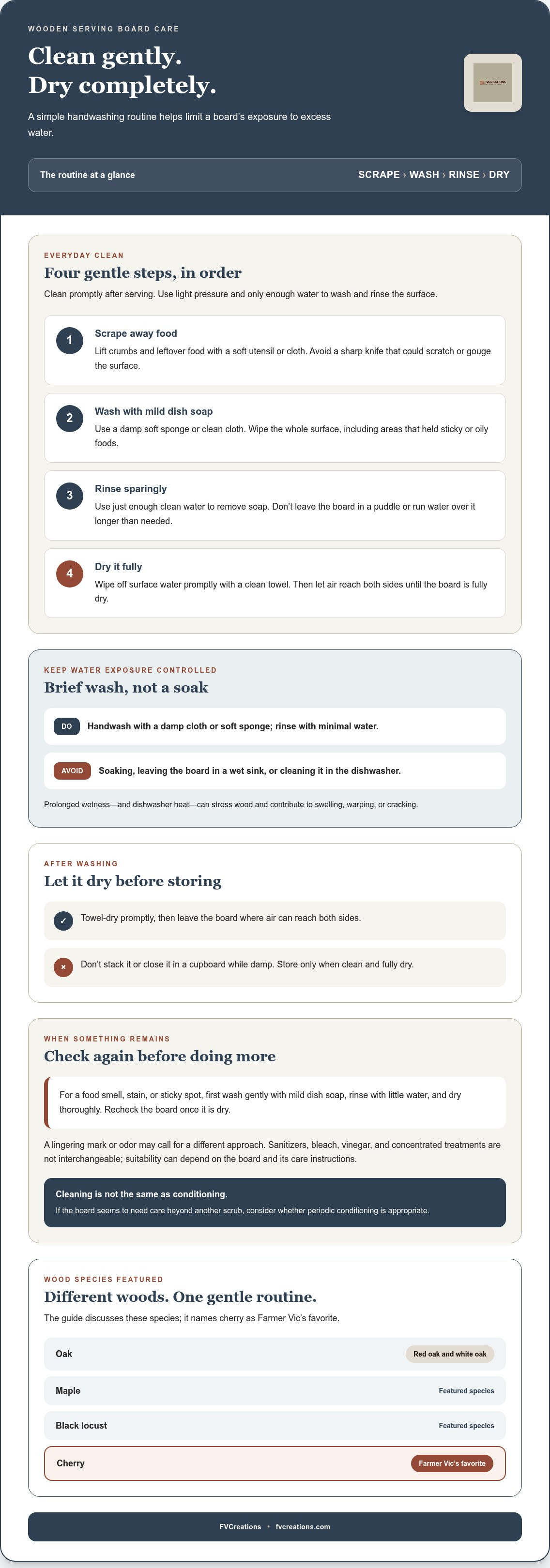
Follow this order: scrape away residue, wash gently with mild dish soap, rinse sparingly, and dry the board right away.
- Scrape: Lift away crumbs and leftover food with a soft utensil or cloth. Avoid a sharp knife, which can scratch or gouge the surface.
- Wash: Wipe the board with a damp cloth or soft sponge and a little mild dish soap. Clean the whole surface, including areas that held sticky or oily foods.
- Rinse: Use just enough clean water to remove soap. Don’t leave the board in a puddle or run water over it longer than needed.
- Dry: Wipe off surface water promptly with a clean towel, then let the board air-dry fully before putting it away.
What to Do Immediately After Serving
Start cleanup after you’ve cleared the food. A soft utensil or cloth can lift most residue without damaging the wood. Follow with a damp, soapy sponge to remove any remaining film. The goal is to clean the surface, not saturate it. Handwashing lets you control how much water reaches the board. For a broader overview of board materials and sanitation considerations, see Cutting board.
How to Dry a Wooden Serving Board
Don’t put the board away wet. After towel-drying, leave it where air can reach both sides until it’s fully dry. Avoid stacking it or closing it in a cupboard while damp, since trapped moisture can linger against the wood. Prompt drying helps limit how long the board stays wet.
If you’re wondering how to clean a wooden serving board without overthinking it, keep the routine gentle and prompt. Skip prolonged soaking and dishwasher cleaning, which expose wood to more water than a quick handwash. Make sure the board is clean and fully dry before storage, rather than leaving it beneath a stack of dishes or inside a closed cupboard.
Which Cleaners and Tools Are Gentle Enough for a Wooden Board?
A clean, non-abrasive sponge or soft cloth and ordinary mild dish soap are usually enough for everyday washing. The aim is to lift food and grease, not scour the wood. Use light pressure and a damp, soapy cloth. If a spot needs extra attention, work over it gently instead of reaching for a rough scrubber or aggressive cleaner.
Use mild dish soap with a soft sponge or cloth. Avoid abrasive scrubbing and prolonged soaking.
Choosing a Soap, Sponge, and Cloth
A soft sponge works well across broad surfaces, while a clean cloth can help you wipe edges and corners. Rinse your cleaning tool as needed so you don’t spread food residue around. Skip steel wool, scouring pads, and gritty cleaners, which can scratch or wear the board’s surface. Routine washing doesn’t require a specialty product. Gentle contact and a thorough wipe are the point.
Sanitizers, bleach, vinegar, and concentrated treatments aren’t interchangeable, and whether they’re suitable can depend on the specific board and its care instructions. A stronger cleaner isn’t automatically a better choice. For background on how wood grain and species relate to bacterial contamination and cleaning, read what a food safety researcher at NC State explains about cutting boards.
Why Soaking and Dishwasher Cycles Can Cause Trouble
Wood responds to moisture. Leaving a board submerged or sitting in a wet sink exposes it to water much longer than a quick handwash. This can stress the material and contribute to changes such as swelling, warping, or cracking. A dishwasher is a poor fit for the same reason: the board can be exposed to prolonged wetness and heat during the cycle.
Handwashing gives you more control. Wet the cloth or sponge, wash the surface, rinse away soap with minimal water, and dry the board promptly. If you’re unsure about a particular finish or construction, follow the care guidance supplied with that board rather than trying a concentrated cleaner or unusual treatment.
Careful cleaning helps keep a board ready for the table, and the board itself is worth choosing with care. If you’re comparing styles, you can browse the cutting boards from FVCreations.
How to Handle Food Smells, Stains, and Sticky Residue
A sticky patch, food smell, or dark mark can make a serving board look as if it needs a hard scrub. Start gently instead. Wash the surface with mild dish soap and a damp cloth, rinse with little water, then dry it thoroughly. Once the board is dry, check it again. The ordinary residue may be gone, while a lingering mark or odor may need a different approach.
Removing Sticky or Dried-On Food
For dried cheese, honey, or another tacky spot, loosen what you can with a soft utensil. Don’t use a sharp blade, which can cut into the wood. Wipe the area with a damp, soapy cloth and light pressure. If residue remains, repeat the gentle wash instead of scrubbing harder. Dry the cleaned area promptly, then check whether it still feels sticky.
What to Do About Lingering Odors or Marks
If an odor remains after washing, let the board dry fully before deciding whether it needs more attention. A damp board can hold onto smells, and a mark that remains after cleaning may be discoloration in the wood rather than food on the surface. Natural grain and color variation can also look like a stain, so inspect the area before trying to remove it.
Lemon and salt, vinegar, and baking soda are often suggested as home treatments, but they aren’t automatically suitable for every board or finish. Their acidity, abrasiveness, or residue may affect a particular surface. Check your board’s care instructions before trying them, and don’t combine cleaners or make unverified chemical mixtures. For general context on board care, see this wooden cutting board care guide.
Ordinary cleaning and sanitizing are different tasks. If you need guidance for a food-safety concern, consult the USDA cleaning and sanitizing guidelines rather than assuming a home remedy is a substitute. For everyday care, the practical answer to how to clean a wooden serving board is to remove residue gently, wash, rinse sparingly, and dry well before considering any extra treatment.
Does Wood Species Change How You Clean a Serving Board?
Wood species affect a board’s appearance and character, but they don’t call for a more aggressive everyday wash. Start with the same gentle routine: remove food, handwash with mild dish soap and a soft cloth or sponge, rinse sparingly, and dry thoroughly. The board’s finish and its maker’s care instructions matter too, so check them before trying a special treatment.
Oak, Maple, and Black Locust: Keep Care Advice Grounded
Oak, maple, and black locust are distinct woods, but the species name alone isn’t a reason to soak, scour, or apply a strong cleaner. Red oak and white oak should be identified separately, rather than treated as interchangeable. Use these notes as a practical starting point:
| Wood species | Everyday care note |
|---|---|
| Red oak | Use prompt, gentle handwashing and follow the board’s care instructions. |
| White oak | Use the same gentle routine. Don’t assume its care guidance matches every red oak board. |
| Maple | Wash by hand with mild soap, rinse sparingly, and dry fully. |
| Black locust | Keep routine cleaning gentle and check the maker’s guidance for the specific board. |
| Cherry | Follow the same prompt handwashing routine and the board’s finish instructions. |
These notes are deliberately cautious. They don’t claim that any species is waterproof, stainproof, or automatically suited to every treatment. Finish, construction, and the maker’s directions can all matter.
Cherry Wood and the Board’s Finish
Cherry is Farmer Vic’s favorite wood species, and I have a soft spot for its warm, distinctive look. That doesn’t mean it needs a different cleaning method: wash it gently, avoid leaving it wet, and let it dry fully. If you’re unsure whether a treatment is suitable, check the care guidance supplied with the board first. You can also explore handcrafted cutting boards to see different board styles.
So, how to clean a wooden serving board doesn’t depend on memorizing a separate method for every species. Start with careful handwashing, then let the particular board’s finish and maker-provided instructions guide any extra care.
Keep a Wooden Serving Board Clean, Dry, and Ready to Use
A little care after serving makes the next use easier. Treat cleanup and long-term maintenance as two separate jobs: washing removes food from the surface, while periodic conditioning addresses the wood’s maintenance needs. One doesn’t replace the other, and conditioning isn’t something to do after every meal.
Keep this after-use checklist handy:
- Remove food: Lift away crumbs and leftover residue.
- Wash gently: Handwash the surface with mild dish soap and a soft cloth or sponge.
- Rinse sparingly: Use only enough water to clear away soap.
- Dry fully: Towel-dry the board, then let it air-dry before storing it.
Simple Storage Habits That Support Board Care
Make sure the board is completely dry before putting it away. A damp board tucked into a closed stack or cupboard has less opportunity to dry freely, so leave room for air to circulate around it. If you store boards stacked together, don’t place a freshly washed one beneath another item. Follow the maker’s care directions, especially if you’re unsure how to maintain the board’s finish.
When Cleaning Is Not the Same as Reconditioning
Washing deals with food residue; conditioning is a separate part of ongoing wood care. If a board looks dry or its maker recommends periodic maintenance, check the supplied guidance before choosing a treatment. There’s no need to turn routine cleanup into an oiling session. FVCreations carries woodworking maintenance supplies, including oils and waxes, approved by Farmer Vic. Check the board’s care instructions to help choose a suitable treatment.
If you’ve been looking up how to clean a wooden serving board, the lasting routine is simple: clean it after use, let it dry all the way, and treat conditioning as occasional maintenance rather than part of every wash. A well-cared-for board can feel at home on the table for everyday snacks or a gathering with friends.
FVCreations handcrafts wooden goods, including charcuterie boards. If you’re considering a board for your own table, browse our wooden cutting boards and explore the styles in the collection.
Make Gentle Board Care Part of Your Routine
A wooden serving board can stay ready for the next meal without complicated care. The core of how to clean a wooden serving board is to clean it promptly, handle the surface gently, and let it dry fully before storage. If a smell or mark persists, check the board’s care instructions before trying a stronger treatment.
Remember that cleaning and conditioning serve different purposes, and wood species or finish may influence the maker’s recommendations. A little attention after use helps you care for the board without turning every cleanup into a deep-maintenance project.
Farmer Vic personally approves FVCreations’ woodworking maintenance supplies, and the shop offers handcrafted charcuterie boards and cutting boards. Browse handcrafted wooden cutting boards for your table.
Keep the routine simple, follow the guidance for your specific board, and enjoy bringing it back to the table.
Frequently Asked Questions
Can you wash a wooden serving board with dish soap?
Yes. Mild dish soap is suitable for routine handwashing unless the board’s maker gives different care instructions. Apply it with a soft sponge or cloth, clean the surface gently, and use just enough water to rinse away the suds. The aim is to remove food, not scrub or saturate the wood. Towel-dry the board and let it finish air-drying before storing it.
Can a wooden serving board go in the dishwasher?
It’s best to handwash a wooden serving board rather than put it in the dishwasher. A dishwasher exposes wood to extended wetness and heat, conditions that may stress the material or affect its finish. A quick sink wash gives you more control over water and handling. If your board came with specific care directions, follow those instructions.
How do you clean a wooden serving board after cheese or oily foods?
Remove leftover cheese or oily food with a soft utensil or cloth, then wash the board with mild dish soap and a damp, non-abrasive sponge. Pay attention to tacky or greasy areas, using light pressure rather than a sharp blade or rough scrubber. Rinse away soap with little water, wipe the board dry, and let it air-dry fully. Repeat a gentle wash if residue remains.
What should you do if a wooden serving board smells like food?
Wash the board gently with mild dish soap, rinse sparingly, and let it dry completely before checking the smell again. An odor may be less noticeable once the wood is dry. If it lingers, consult the board’s care instructions before trying a home remedy, since lemon, salt, vinegar, or baking soda may not suit every finish. Don’t mix cleaning products or scrub aggressively.
Can you use vinegar to clean a wooden serving board?
Don’t assume vinegar is suitable for every wooden serving board or finish. Although it’s commonly suggested as a home treatment, the board’s construction and maker’s care guidance should determine what you use. For everyday food residue, start with mild dish soap and a damp cloth, then dry the board fully. If you’re considering vinegar for an odor or mark, check the board’s instructions first.
How do you dry a wooden serving board after washing it?
Wipe away water promptly with a clean towel, then leave the board out until it’s fully dry. Position it so air can circulate around it instead of leaving it in a wet sink, stacking it with other dishes, or putting it straight into a closed cupboard. Don’t store the board while damp. Air-drying after towel-drying helps prevent moisture from being trapped against the wood.
Does the wood species change how you clean a serving board?
The same gentle, prompt handwashing routine is a sensible starting point for red oak, white oak, maple, black locust, and cherry. Don’t assume the species name alone tells you which cleaner or treatment to use. A board’s finish and maker-provided care directions matter too. Cherry is Farmer Vic’s favorite wood, but it doesn’t call for a different everyday wash. Follow the instructions supplied with your specific board.