

Modern Rustic Living Room Furniture: 2026 Artisan Guide
What if that "solid wood" coffee table you've been eyeing is actually just compressed sawdust and glue hidden under a thin plastic sticker? It's a common trap in the world of big-box decor, and it's exactly why so many people feel stuck when searching for modern rustic living room furniture ideas that actually last. You want a home that feels grounded and natural, but balancing sleek, contemporary lines with the raw, rugged texture of real timber can feel like a guessing game.
I understand that frustration because I see it every day in my workshop. I'm here to help you bridge that gap and discover how to blend modern design with the soul-warming beauty of handcrafted wood. In this guide, we'll explore how I source lumber from both my own property and local yards to create pieces that tell a story. We will dive into the specific traits of Red Oak, White Oak, Maple, and the incredibly durable Black Locust. I'll also share why Cherry remains my absolute favorite species to work with; its aging process and warmth are simply unmatched. By the end, you'll have the knowledge to pick furniture that doesn't just look good today, but becomes a family heirloom for generations.
Key Takeaways
- Master modern rustic living room furniture ideas by learning how to blend clean contemporary lines with the raw, soul-warming textures of real wood.
- Understand the specific strengths of Red Oak, White Oak, Maple, and Black Locust to ensure your furniture stands up to generations of use.
- See why I consider Cherry wood to be the ultimate artisan material for its rich character and the way it naturally deepens in color over time.
- Get a behind-the-scenes look at how we source lumber from both my own property and local yards to ensure every piece has a clear history.
- Discover why natural finishes like Real Milk Paint are essential for maintaining the tactile, organic feel of handcrafted furniture.
Crafting the Modern Rustic Aesthetic: More Than Just a Look
I have spent countless hours in my workshop watching how the light hits a fresh slab of timber. It has taught me that modern rustic isn't just a category you click on a website; it's a specific feeling of balance. It's the point where the sharp, architectural lines of a contemporary home meet the wild, unbothered textures of the forest. When you're searching for modern rustic living room furniture ideas, you have to start with the wood. Real, solid wood is the non-negotiable foundation of this movement. Without it, you're just looking at a room full of brown shapes.
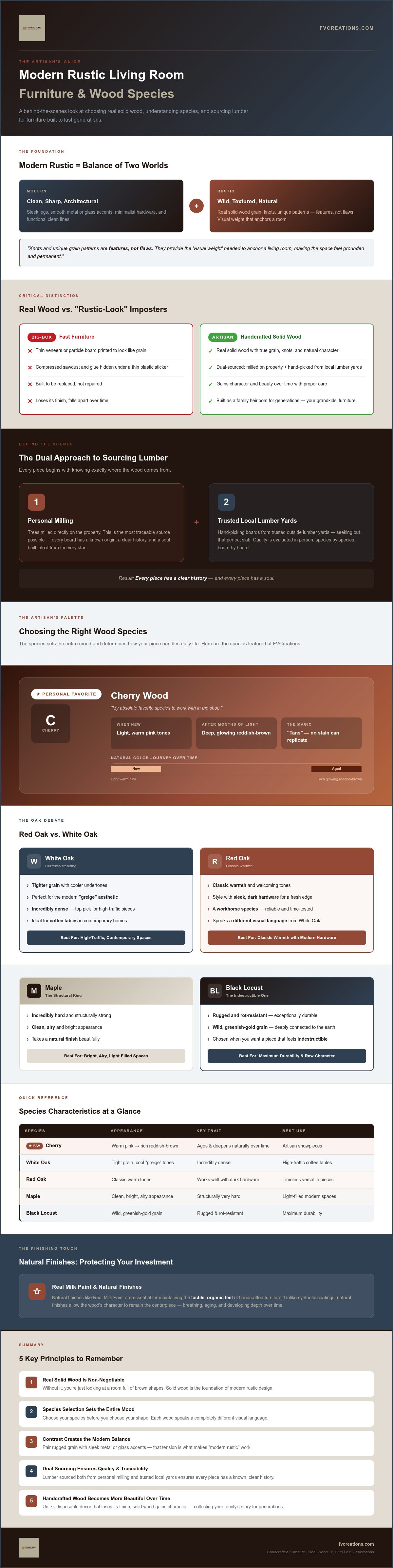
There's a massive difference between the "rustic-look" furniture you find at big-box stores and true artisan-crafted pieces. Mass-produced items often use thin veneers or particle board printed to look like grain. In my shop, I use a dual approach to sourcing, milling lumber from my own property and hand-picking boards from trusted local lumber yards. This ensures every piece has a soul. Modern rustic furniture is a balance of functional minimalism and unrefined natural beauty.
The Role of Texture and Contrast
I love the tension created when you pair a rugged, property-harvested grain with smooth metal or glass accents. That contrast is what makes the "modern" part of the equation work. If everything is rough and woody, the room feels like a cabin from a century ago. By keeping the legs or hardware sleek, the natural character of the wood species—like the deep, rich tones of Cherry, which is my personal favorite—really pops. I always tell folks that knots and unique grain patterns are features, not flaws. They provide the "visual weight" needed to anchor a living room, making the space feel grounded and permanent rather than airy and fleeting.
Moving Away from Disposable Decor
We've all seen the cost of "fast furniture" by now. It's built to be replaced, not repaired. By 2026, the shift toward sustainability has made bespoke furniture a much smarter long-term play. When I build a piece using White Oak, Red Oak, or incredibly tough Black Locust, I'm building it for your grandkids. These pieces follow rustic furniture traditions that prioritize durability over trends. Unlike disposable decor that loses its finish and falls apart, handcrafted solid wood gains character over time. It collects the stories of your life, and with the right care, it only gets more beautiful as the years pass.
The Artisan’s Palette: Choosing the Right Wood Species for Your Home
When you sit down with me to discuss modern rustic living room furniture ideas, the very first thing we talk about isn't the shape of the legs or the size of the top. It's the species. The wood you choose sets the entire mood and determines how your piece will handle the chaos of daily life. I source my lumber using a dual approach, often milling trees right here on my property or visiting local yards to find that perfect slab. Each tree has different mechanical properties, which you can explore in detail through the USDA Forest Service wood species research. Understanding these differences is what separates a temporary fix from a generational heirloom.
The choice of species is always the starting point for my custom commissions. If you want a bright, airy feel, Maple is the structural king. It is incredibly hard, clean, and takes a natural finish beautifully. On the opposite end of the spectrum, we have Black Locust. This wood is rugged, rot-resistant, and has a wild, greenish-gold grain that feels deeply connected to the earth. It's the kind of wood you use when you want a piece that feels indestructible.
The Oak Debate: Red Oak vs. White Oak
White Oak is having a major moment right now. Its tighter grain and cooler undertones make it perfect for that modern "greige" look that fits so well in contemporary homes. It is incredibly dense, making it my top pick for high-traffic pieces like coffee tables. Red Oak, on the other hand, brings a classic warmth. While some folks think it looks dated, I love styling it with sleek, dark hardware to give it a fresh edge. Both are workhorses, but they speak very different visual languages in a living space.
Cherry: The Personal Favorite
I'll be honest; Cherry is my absolute favorite species to work with in the shop. There is something magical about the way it "tans" over time. When you first get a Cherry piece, it might be a light, warm pink. Give it a few months of natural living room light, and it deepens into a rich, glowing reddish-brown that no stain can ever replicate. It is an artisan's dream. If you want your furniture to be the focal point of a minimalist room, Cherry is the way to go. If you aren't ready for a full custom table yet, you can see how these grains look and feel in person by starting with one of my handcrafted charcuterie boards.
Essential Furniture Ideas to Anchor Your Modern Rustic Living Room
To build a living space that feels intentional, you need to focus on the "Big Three": the coffee table, the bench, and the desk. These pieces define the flow and function of your home. If a custom commission feels like a big leap, I often suggest starting with a smaller entry point. A live-edge charcuterie board or a handcrafted bottle stand can bring that organic warmth into your home immediately. These smaller items allow you to experience the tactile beauty of different wood species, like the rich glow of my favorite Cherry wood, before you commit to a major centerpiece.
Whether I'm milling a log from my own property or selecting a unique board from a local yard, I focus on how the piece will serve your daily life. A desk isn't just a workspace; it's a bridge between your professional and personal life. In 2026, where the lines between home and office are blurred, a handmade wood desk prevents your living room from looking like a sterile cubicle. When you're done for the day, the natural grain of Maple or Red Oak remains a beautiful piece of decor rather than a functional eyesore.
The Statement Coffee Table
The coffee table is the anchor of any living room. It's the piece that pulls your seating together and sets the tone for the entire space. When exploring modern rustic living room furniture ideas, you have to decide between a thick, raw-edge slab and a more refined, tapered-leg design. A slab of White Oak offers a heavy, grounded feel, while tapered legs provide a sense of mid-century modern lightness. You can see examples of these different approaches when you explore our handcrafted outdoor and indoor furniture collections.
Multi-Functional Artisan Benches
Benches are the unsung heroes of the modern rustic aesthetic. I love building these because they are incredibly versatile. An artisan bench can serve as a sturdy entryway anchor, extra seating for guests, or even a low-profile media console for your electronics. I often use through-tenon joinery for these pieces. It's a traditional method where the leg passes all the way through the seat, exposing the end grain. This detail adds a level of soul and transparency that mass-produced furniture simply cannot match. Using property-harvested wood for a bench ensures that even a small piece of furniture has a story to tell.
Sustainable Sourcing: How Your Furniture’s Journey Begins
Sustainable sourcing isn't a marketing buzzword I throw around to sound fancy. It's the core of how I work every single day. When you're looking for modern rustic living room furniture ideas, you're usually searching for something that feels real and permanent. That "realness" starts with the journey of the log. I use a dual-sourcing approach that gives me the best of both worlds: I mill lumber directly from my own property, and I supplement that with high-quality boards from trusted local lumber yards. This isn't just about getting wood. It's about the longevity of the forest and the furniture I build for you.
Knowing the exact history and "life" of a tree is a privilege. When I mill a tree from my property, I know exactly where it stood and how it grew. That connection translates into the final piece. However, for specific projects that require high-grade White Oak or the incredible density of Black Locust, I head to the yards. These local suppliers are essential for finding those perfect, clear boards that my own woodlot might not provide at that moment. Whether it's property-milled or yard-sourced, the goal is always a piece that lasts generations.
From the Woodlot to the Workshop
The process starts long before I pick up a saw. I spend time on my property identifying trees that are ready for a second life as furniture. This might be a tree that has reached the end of its natural cycle or one that needs to be removed for the health of the surrounding forest. One of the biggest benefits of milling my own lumber is the ability to make "non-standard" cuts. Mass manufacturers ignore these because they don't fit into a high-speed production line. I look for the odd angles and unique grain patterns that give a piece its soul. It requires a lot of patience, as property-harvested lumber needs to be air-dried and carefully prepared before it ever sees a chisel.
Vetting the Outside Source
When I step into a lumber yard to find the perfect Maple, Oak, or my personal favorite, Cherry, I'm looking for more than just a price tag. I'm looking for consistency and character. This is where I find the specific boards needed to bring your modern rustic living room furniture ideas to life. Having a relationship with a supplier makes grain matching much easier. This is vital when you're trying to create a seamless look for a large tabletop or a custom desk. Supporting these local woodworking ecosystems ensures that we keep traditional skills alive. If you want to see how I use every single scrap of this carefully sourced wood, you can check out my handmade fire starters, which are made from the leftovers of these very same logs.
The Finishing Touch: Protecting and Styling Your Investment
The biggest mistake I see when folks explore modern rustic living room furniture ideas is the use of a thick, plastic-like finish. People spend hours picking the perfect White Oak or Cherry slab, only to bury it under a layer of heavy polyurethane. That synthetic coating kills the natural feel and prevents you from actually touching the timber. In my shop, I advocate for breathable, natural oils that soak deep into the grain. If you want to add a splash of color without hiding the wood's natural story, I suggest you browse our vetted wood finishing supplies to see how Real Milk Paint can transform a piece while keeping it authentic.
Sometimes a rustic slab has a deep knot or a hairline crack that adds character but needs a little help to stay structural. I use professional Starbond Adhesives to stabilize these areas. It is a clear, strong way to ensure the wood stays solid without distracting from the natural beauty of the grain. Whether I'm working with a piece of property-milled Maple or a yard-sourced Black Locust, these small details in the finishing process are what make a piece last a lifetime. It's about honoring the tree's history while preparing it for your home's future.
Natural Finishes vs. Synthetic Coatings
I personally vet every oil and wax I bring into the workshop. I've spent years testing products like Outdoor Defense Oil to make sure they are safe for your home and effective at protecting the wood. Natural finishes allow the timber to breathe, which is essential for that deep, rich patina to develop over the decades. There's a tactile difference you simply cannot ignore. You should be able to feel the ridges of the grain under your fingertips, not a cold, sterile layer of plastic. This connection to the material is what makes modern rustic living room furniture ideas feel so grounded and real.
Maintaining Your Artisan Furniture
Keeping your investment glowing for the next 50 years isn't as hard as it sounds, but it does take the right approach. For my favorite Cherry or rugged Red Oak pieces, a simple re-oiling every few years is usually all it takes to keep the wood healthy. Using the right sandpaper and maintenance supplies ensures you don't accidentally damage the surface while cleaning or refreshing the finish. At the end of the day, a handcrafted piece isn't just a place to put your coffee. It's a family legacy that gains value and character as it ages. It's about creating a living space that feels intentional and built to last.
Bringing the Forest Home for Generations
Building a space that feels both modern and deeply rooted in nature isn't about following a trend. It's about understanding the materials and the hands that shape them. We've explored how the right wood species, like the warm glow of Cherry or the structural strength of White Oak, can completely redefine your home. By choosing furniture with a transparent history, whether it's lumber I've milled from my own property or hand-selected from a local yard, you're making a choice for quality that outlasts any mass-produced alternative.
When you apply these modern rustic living room furniture ideas, you're creating more than just a decor style. You're building a sanctuary that feels grounded and real. I personally vet every adhesive and finish, like Real Milk Paint, to ensure your pieces are safe and beautiful for the long haul. I'm always available for custom commissions to fit your specific space perfectly.
Bring an artisan soul to your home with FVCreations handcrafted furniture. Your living room should be a place that feels authentic and grows more beautiful with every passing year.
Frequently Asked Questions
What wood species is best for a modern rustic living room?
White Oak and Black Locust are excellent choices because they offer incredible durability and distinct textures. While Maple provides a clean, contemporary look, I often suggest White Oak for those exploring modern rustic living room furniture ideas due to its neutral tone and tight grain. Each species brings a different visual weight to the room. I help clients choose based on whether they want their piece to blend in or stand as a bold focal point.
How do I mix modern furniture with rustic wood pieces without it looking messy?
You can avoid a messy look by focusing on contrast and intentionality. Pair a rugged, live-edge wood top with sleek, minimalist metal legs to ground the piece in modern design. Keep your larger upholstered items simple and neutral. This allows the natural imperfections of the wood to shine without competing for attention. It's about finding that sweet spot where architectural lines meet unrefined organic textures in a way that feels balanced and purposeful.
Is cherry wood a good choice for high-use living room furniture?
Cherry is an outstanding choice for high-use pieces because it is a stable hardwood that handles daily life with grace. It's my personal favorite species because it actually gets better as you use it. Unlike many woods that fade, Cherry deepens in color when exposed to light, hiding small scratches within its rich, developing patina. It offers a warmth and artisan appeal that makes it a perfect anchor for any busy, high-traffic living space.
What is the difference between red oak and white oak for furniture?
White Oak is the denser of the two and has a closed-cell structure, making it highly resistant to spills and wear. It has a cooler, more tan-colored grain that fits perfectly with modern palettes. Red Oak is more porous and has a distinct reddish-pink undertone. While White Oak is often preferred for high-traffic coffee tables, Red Oak provides a classic, soul-warming texture when styled with contemporary, dark-colored hardware or finishes to keep it looking fresh.
Where do you source the wood for your handcrafted furniture?
My sourcing process is a dual approach designed to find the best possible timber for every project. I harvest and mill logs directly from my own property, which gives me a deep connection to the tree's history. When a project requires specific high-grade boards or species like Black Locust that I don't have on hand, I visit trusted local lumber yards. This mix ensures that I always have access to sustainable, high-quality materials for your furniture.
How do I maintain the finish on my handmade wood table?
Maintaining a handmade table is simple if you use the right supplies. I recommend staying away from plastic store-bought sprays and instead using natural oils or waxes that I've personally vetted for safety and longevity. Every few years, you can apply a fresh coat of oil to keep the wood hydrated and glowing. This process allows the wood to develop a beautiful patina over the decades rather than just wearing out like mass-produced furniture pieces.
Can I order a custom-sized wood desk for my living room?
Yes, custom commissions are a major part of what I do in the workshop. I understand that modern rustic living room furniture ideas often need to fit into very specific or non-standard spaces. Whether you need a slim desk to tuck into a corner or a large centerpiece for a home office, I can work with your dimensions. We'll start by choosing the right species and finish to match your existing decor and lifestyle needs.
Why should I choose property-harvested wood over store-bought lumber?
Property-harvested wood offers a level of character and sustainability that you simply won't find in store-bought lumber. When I mill a tree from my own land, I can choose non-standard cuts that highlight unique grain patterns or knots that industrial mills usually discard. This process requires more patience, as the wood must be air-dried slowly, but the result is a one-of-a-kind piece with a story you can trace back to the ground it grew on.