

The Best Wood for an Outdoor Bench: A Practical Guide
The hardest wood isn’t automatically the best choice for an outdoor bench. If you’re wondering what is the best wood for an outdoor bench, start with where it will sit and how much care you’re willing to give it. Sun, rain, and damp ground can matter more than hardness, and some beautiful woods need more protection outdoors than you might expect.
I’m Farmer Vic. I work with lumber I mill myself and wood I purchase from outside lumberyards. Cherry is my favorite species for its warmth and character, but it needs more protection outdoors than naturally durable choices like white oak or black locust. In this guide, I’ll compare cherry, maple, oak, black locust, and cedar, so you can weigh appearance, workability, weather resistance, and upkeep. I’ll also explain how exposure, construction, and ongoing care work together to help a bench last. The right choice isn’t simply the toughest wood. It’s the one that suits your setting and the way you want to care for it.
Key Takeaways
- To decide what is the best wood for an outdoor bench, weigh its exposure, the look you want, and the upkeep you’re prepared to do.
- Compare white oak and red oak separately. Their different moisture resistance can make one more suitable outdoors than the other.
- Consider black locust for natural durability. Maple and cherry call for more attention to protection and care.
- Don’t choose by hardness alone. Durability, moisture movement, workability, construction, and maintenance all affect how a bench holds up.
- A maker’s approach to sourcing, including personal milling and lumber purchased from outside lumberyards, is one part of selecting material for a finished bench.
What Is the Best Wood for an Outdoor Bench? Start With Its Exposure
The best wood for an outdoor bench depends on where it will sit, how much weather it will face, how you want it to look, and how much upkeep you’re willing to take on. A bench under a covered porch has different demands from one left in open rain and sun, or arranged near a fire pit BBQ combo Australia offers for year-round entertaining. So, what is the best wood for an outdoor bench? Start with its setting, not a single species or hardness rating.
Outdoor performance depends on several things working together: the wood’s natural resistance to decay, how it responds to moisture, the way the bench is built, and the care it receives over time. I source lumber through both personal milling and outside lumberyards. That experience has taught me that choosing a species is only one part of making a bench that suits its surroundings.
How exposure changes the best wood for a bench
A covered porch offers some shelter from direct rain and sun, but damp air and seasonal changes still affect wood. A partly sheltered spot, such as one beneath a tree or near a roof edge, may get occasional rain and long periods of shade that slow drying. A fully exposed bench faces a tougher combination: rain, direct sunlight, and possibly moisture rising from the ground.
Consider the weather at your home throughout the year, not just on a pleasant afternoon. Does the bench get strong sun? Does rain run off nearby surfaces and collect around its feet? Standing water and poor drainage can keep wood damp and increase the chance of decay over time. Give the bench room to dry, and keep it clear of persistent puddles.
What matters beyond wood hardness
Hardness describes how well wood resists dents from impact. Natural durability is different: it refers to how well the wood itself withstands decay and insects. Moisture movement matters, too, because wood can swell and shrink as conditions change. A hard species isn’t automatically decay-resistant or stable outdoors.
Design and joinery count. Joints and horizontal surfaces that trap water can stay wet longer, while thoughtful construction helps water drain or run off. A protective finish and regular care can also help, though they don’t make every species equally suited to every exposure. For context, Teak wood is widely recognized for outdoor durability and water resistance.
Outdoor suitability isn’t a contest for the hardest wood. It’s a match between a species’ decay resistance and moisture behavior, the bench’s construction, its exposure, and the care you’re prepared to give it. That’s why there’s no single winner for every yard.
Compare Outdoor Bench Woods: Cedar, Oak, Black Locust, Maple, and Cherry
No single species suits every yard. Compare the choices by exposure, appearance, ease of working, and the care you’re willing to give the finished bench. Lumber quality, bench design, finish, and weather all affect how a particular piece performs outdoors.
| Wood | Outdoor exposure | Appearance | Workability | Upkeep |
|---|---|---|---|---|
| Cedar | A practical option for outdoor projects; still benefits from good drainage and care. | Lightweight look with warm, natural tones. | Generally easy to work. | Plan for cleaning and finish maintenance as needed. |
| Red oak | Less suitable for regular wet exposure; its open pores can take up moisture. | Pronounced grain and warm color. | Commonly workable with standard shop tools. | Needs careful protection outdoors. |
| White oak | Better suited to damp conditions than red oak because its pores contain tyloses that slow water movement. | Distinctive grain, often with a more muted tone than red oak. | Strong, dense wood that takes care in shaping. | Still benefits from sound construction and routine care. |
| Black locust | Heartwood is naturally resistant to decay and insects, making it a strong candidate for exposed settings. | Often golden to brown, with varied grain. | Dense wood can be more demanding to work. | Doesn’t mean maintenance-free; inspect and care for the bench. |
| Maple | Less naturally durable outdoors; protect it from persistent moisture and weather swings. | Pale color and fine, even grain. | Hard, smooth wood suited to careful shaping. | Expect more attention to finish and exposure. |
| Cherry | Beautiful for sheltered settings, but lacks the decay resistance of white oak or black locust. | Warm, rich color and a refined grain. | Usually pleasant to shape and finish. | Needs reliable protection and regular attention outdoors. |
How cedar, oak, and black locust compare outdoors
Cedar’s natural color and usefulness for outdoor projects make it a familiar choice, though placement and upkeep still matter. Red and white oak aren’t interchangeable: red oak’s open pores take up moisture more readily, while white oak’s tyloses help resist water movement. Black locust heartwood is notably resistant to decay, but its density can make shaping more demanding.
Where maple and cherry fit in an outdoor bench
Maple’s light, clean appearance is appealing, but it isn’t naturally durable against the elements and can move as humidity changes. Cherry is my favorite wood for its warmth and character. I’d use it outdoors thoughtfully, especially in a sheltered spot, because it needs more protection than naturally decay-resistant species.
So, what is the best wood for an outdoor bench? Match the species to your setting and care routine instead of relying on a universal ranking. I mill some lumber myself and purchase other boards from outside lumberyards, then consider each wood’s qualities alongside the bench’s intended use. Explore handcrafted outdoor furniture for examples of wood put to work outside.
Is the Hardest Wood the Best Wood for an Outdoor Bench?
No. Hardness is one consideration, not a stand-alone measure of outdoor suitability. It describes how well wood resists dents, but it doesn’t tell you by itself how well a species handles decay, moisture changes, or long-term exposure. Black locust, for instance, is hard and naturally decay-resistant, while a bench’s overall performance still depends on its design and setting.
So, what is the best wood for an outdoor bench? The answer depends on the trade-offs you’re comfortable with. A softer or easier-to-work species isn’t automatically inferior. It may suit a sheltered location, a particular look, or a builder’s design better than a harder alternative.
| Factor | What it tells you | Trade-off to consider |
|---|---|---|
| Hardness | Resistance to dents from impact. | A hard wood can still be vulnerable to decay if it stays wet. |
| Natural durability | How well the wood resists decay and insects without relying only on a finish. | Species differ: white oak and black locust are naturally more decay-resistant than cherry. |
| Moisture movement | How wood responds to changes in moisture, including swelling and shrinking. | Movement can stress joints and finishes, so design and construction matter. |
| Workability and appearance | How the wood shapes and the character it brings to the finished bench. | A favorite color or grain may come with more upkeep outdoors. |
| Maintenance | The cleaning and finish care you’re prepared to provide. | A finish can help protect wood, but it needs attention and can’t make every species equally suited to exposure. |
How rain, sunlight, and moisture affect a wooden bench
Rain followed by drying makes wood move as its moisture level changes. Over time, repeated wetting and drying can stress joints and finishes. Strong sunlight also weathers exposed surfaces. A bench that sheds water and has room for air to circulate can dry more readily than one with water-trapping ledges or tight, damp contact points. Spacing, drainage, and details that direct water away all matter.
When maintenance changes the species decision
If you’re willing to inspect and refresh a finish, you may have more flexibility in choosing a species for a partly sheltered spot. If you’d rather let the wood weather naturally, favor natural decay resistance and keep the bench out of persistent dampness. Either way, finish care is ongoing, not a substitute for suitable wood and sound construction. For a finish-care option, see outdoor wood protection oil.
At the bench, the right choice balances durability, movement, workability, appearance, and care. No hardness rating can make that decision on its own.
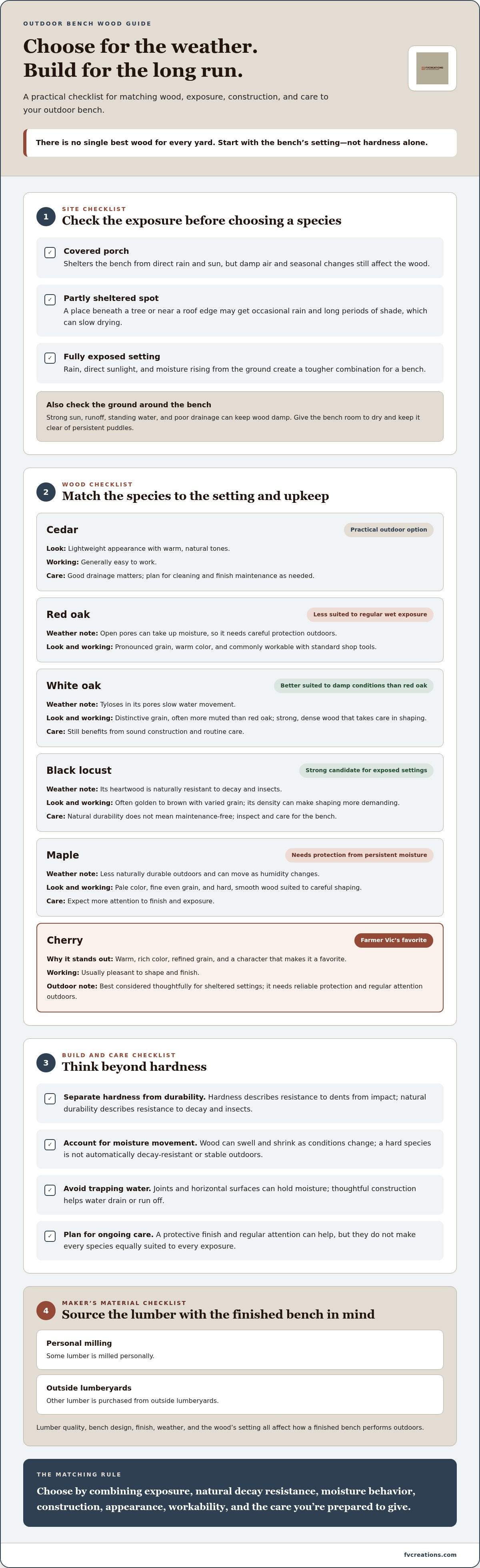
How to Choose Wood for Your Outdoor Bench: A Practical Checklist
A little planning before you choose lumber can help you avoid picking a beautiful board that doesn’t suit its location. Use this checklist to weigh the setting, the wood’s character, and the care you’re willing to provide. There’s no need to chase one universal winner.
- 1. Assess exposure. Decide whether the bench will sit under a roof, in a partly sheltered spot, or in direct weather. Note where rain collects, how much sun reaches the bench, and whether its feet will sit against damp ground.
- 2. Set your priorities. Rank what matters most: natural decay resistance, appearance, ease of working, availability, or a finish you’re willing to maintain. Being honest about upkeep helps narrow the options.
- 3. Compare species for your setting. Use the earlier comparison to weigh cedar, white oak, black locust, maple, cherry, and red oak. For example, cherry may suit a sheltered bench where warm color is a priority, while an exposed location puts greater emphasis on natural decay resistance.
- 4. Plan the construction. Consider how seat slats, joints, and the bench’s feet will handle water. Leave room for air to circulate, avoid details that trap rain, and keep wood from resting in persistent dampness.
- 5. Decide on care. Choose whether you’ll apply and maintain a protective finish or prefer the wood to weather naturally. Either way, plan to inspect the bench and address areas where water or wear could become a problem.
Plan the bench details and ongoing care
Species and construction go hand in hand. Slats arranged to let water drain, well-fitted joinery, and a design that allows surfaces to dry can all support outdoor performance. Choose a finish that suits both the wood and your willingness to maintain it. No finish removes the need for sound design or makes every species equally suited to full exposure.
For a maker, the decision starts with the intended setting. I work with lumber I mill myself and boards purchased from outside lumberyards, then consider how the material and construction can work together. FVCreations also offers sanding paper for surface preparation, along with finishing and maintenance products for woodworking.
Before choosing lumber, match the species to the bench’s exposure, rank your priorities, plan for water to drain and air to circulate, and choose a care routine you’ll actually follow. That’s a practical way to answer what is the best wood for an outdoor bench for your own yard.
From Lumber to Finished Bench: A Maker's View of Outdoor Wood
A finished bench starts with more than choosing a species from a list. As a maker, I consider where the bench will live, what the wood can handle, and how its grain and character suit the piece. The answer to what is the best wood for an outdoor bench shifts with those project details. A sheltered porch and an open, rain-exposed yard call for different material and design decisions.
How a maker thinks about lumber for outdoor furniture
I source lumber in two ways: I personally mill some wood, and I also purchase lumber from outside lumberyards. Those routes complement each other. The right material depends on the project, the boards available for it, and the wood’s qualities, not on a rule that every piece must come from one source.
Before shaping a bench, I consider its intended setting alongside the lumber’s appearance and working characteristics. Grain, board condition, and the species’ response to outdoor exposure help guide how I use the material. Cherry is my favorite species for its warmth and character, though outdoors it calls for more protection than naturally decay-resistant woods. That’s a trade-off to plan for, rather than expecting a finish to solve every exposure challenge.
Construction matters, too. Seat slats and joints should be planned with water and drying in mind, and the bench shouldn’t sit in persistent dampness. The goal is to bring the wood, the design, and the setting together. Thoughtful choices at the start make it easier to set realistic expectations for finish care later.
Explore handcrafted outdoor furniture and care
Species choice, sound construction, and ongoing upkeep all work together. A finish may help protect a bench, but it needs attention over time and doesn’t make every wood equally suited to a fully exposed spot. Check the surfaces and joints regularly for wear or areas that hold moisture, then decide whether cleaning or finish care is needed.
For me, that’s the heart of making outdoor furniture: respect the material, build with its setting in mind, and be honest about the care the finished piece will need. To see examples of wood used outdoors, take a look at FVCreations’ handcrafted outdoor furniture. Explore the collection to find a piece for your outdoor space.
Choose a Bench Wood That Fits Your Yard
The right outdoor bench wood depends on the spot, the look you love, and the care you’re ready to give it. Natural decay resistance matters, but so do construction details that let water drain and the wood dry. Hardness alone can’t answer what is the best wood for an outdoor bench.
Compare species with your setting in mind: white oak and black locust offer different strengths for outdoor exposure, while cherry brings a warmth I especially love, with more need for protection. Cedar, red oak, and maple have their own trade-offs, too. A thoughtful match between lumber, bench design, and upkeep makes the choice practical.
At FVCreations, I use lumber I mill myself as well as boards purchased from outside lumberyards, and those materials inform the handcrafted benches and outdoor furniture I make. If you’re ready to explore wood furniture for an outdoor space, explore handcrafted outdoor furniture.
Frequently Asked Questions
What is the best wood for an outdoor bench?
There’s no universal best species. What is the best wood for an outdoor bench depends on exposure, appearance, upkeep, construction, and the lumber you choose. White oak and black locust are naturally decay-resistant options to consider, while cherry and maple generally need more protection outdoors. Cedar is another common choice. Use the species comparison above to weigh the trade-offs for your bench’s location and the care you’re prepared to provide.
Is cedar a good wood for an outdoor bench?
Cedar can be a good option for an outdoor bench. Its warm, natural appearance and manageable workability appeal to many makers. Performance still depends on the boards, bench design, exposure, and maintenance. A covered porch presents different demands from a spot in full rain and sun. Compare cedar with other species based on how sheltered the bench will be, the finish you prefer, and how much upkeep you’re willing to do.
Is white oak better than red oak for an outdoor bench?
White oak is generally more suitable for outdoor exposure than red oak, so it’s useful to treat them as distinct choices. White oak has tyloses in its pores that help slow water movement; red oak’s more open pores take up moisture more readily. That difference doesn’t make white oak ideal for every bench or setting. Exposure, board quality, water-shedding design, finish, and ongoing care still shape how either species performs.
Can maple be used for an outdoor bench?
Maple can be used for a bench, but its exposure and protection needs deserve careful thought. It isn’t naturally durable against the elements like more decay-resistant options, and changing humidity can cause it to swell or shrink. Board quality, construction, and maintenance all affect the result. For an exposed bench, compare maple with white oak or black locust, and consider whether you’re ready to maintain a protective finish.
Is black locust good for outdoor furniture?
Black locust is worth considering for outdoor furniture because its heartwood is naturally resistant to decay and insects. It’s dense, which can make it more demanding to shape and work. The species alone can’t guarantee a bench’s performance: lumber quality, sound joinery, drainage, exposure, and maintenance all matter. Consider whether black locust’s appearance and workability suit your project and how the finished piece will be used.
Can cherry wood be used for an outdoor bench?
Yes, cherry can be used for an outdoor bench, though it needs more protection than naturally decay-resistant choices. Cherry is my favorite species for its warm color and character, but personal preference and outdoor suitability aren’t the same thing. A sheltered setting, protective finish, and attentive maintenance make it a more considered choice. For a bench exposed to regular rain and sun, compare cherry carefully with more naturally durable species before deciding.
Does an outdoor wood bench need to be sealed?
An outdoor bench doesn’t always need the same finish, but a protective finish may help manage weather exposure and maintain the appearance you want. The right approach depends on the species, the bench’s placement, and whether you prefer a finished look or natural weathering. No finish replaces good drainage or periodic inspection. Follow the chosen finish product’s directions, and renew protection when its condition calls for it.