

The Best Wood for Kitchen Counters: Buyer's Guide
The hardest wood isn’t automatically the best wood for kitchen counters. A counter should suit the way you cook and clean, handle everyday moisture, and feel right in your kitchen. Choosing by hardness alone can miss the point. The goal is a beautiful surface whose care fits your routine.
I’m Farmer Vic, and I consider both a wood’s character and its practical qualities. I source lumber through personal milling and purchases from outside lumber yards. Cherry is my favorite for its warm appearance, though it isn’t the right fit for every kitchen. In this guide, we’ll compare cherry, maple, red and white oak, and black locust by appearance, dent resistance, moisture considerations, upkeep, and workability. We’ll also look at how construction and finish affect the choice, so you can weigh the trade-offs against your habits. By the end, you’ll have a clearer idea of which wood suits your counter and what caring for it involves.
Key Takeaways
- The best wood for kitchen counters depends on how you cook, the look you want, and the care you’re willing to provide, not hardness alone.
- Compare hard maple, cherry, red oak, white oak, and black locust by appearance, practical strengths, and care needs before settling on a species.
- Cherry is Farmer Vic’s favorite for its character, but its trade-offs mean it won’t suit every kitchen or countertop use.
- Choose a finish with the surface’s intended use in mind, and understand its upkeep before making your decision.
- Wood selection also depends on the individual lumber. Farmer Vic sources it through both personal milling and purchases from outside lumber yards.
What Makes a Wood Species a Good Choice for Kitchen Counters?
A wood countertop is more than a slab of a particular species. Its performance depends on the wood, how the pieces are arranged, the finish, and the care it receives. Butcher block commonly refers to wood assembled in joined pieces, with edge-grain and end-grain constructions among the familiar styles.
A good countertop-wood choice balances species, construction, finish, daily use, moisture exposure, and your willingness to maintain or repair the surface. Durability involves more than resisting dents. Consider wear, how the wood responds to spills and dampness, and whether marks can be addressed over time. Hardness is one measure of dent resistance, not a guarantee of water resistance. A harder surface can still be affected by standing water, a vulnerable finish, or delayed cleanup.
How kitchen routines shape the right wood choice
Start with what happens on your counters. A surface used occasionally for light preparation has different demands from one used daily for chopping, serving, and busy meal prep. If you plan to cut directly on the counter, expect visible wear. If you prefer a pristine appearance, that wear may matter more to you than a small difference in hardness.
Spills and cleanup matter, too. Water left around a sink or a damp cloth forgotten on the surface can expose wood to moisture longer than a quick wipe does. Consider your habits honestly: will you dry wet areas promptly and follow the finish’s care instructions? The best wood for kitchen counters should work for your routine as well as your eye.
Countertop construction and finish matter, too
In edge-grain construction, the long edges of the wood strips form the visible surface. In end-grain construction, the ends face upward. The layouts create different looks and surface characteristics, but neither is automatically right for every kitchen. Consider the intended use, appearance, and maintenance alongside the species.
Finish changes how the wood looks and feels, and it affects routine care. Before choosing one, check that it’s suitable for the surface’s intended use, especially if food will be prepared directly on it. Follow the finish maker’s care guidance, and don’t assume every finish offers the same protection or upkeep.
As a maker, I pay attention to the character and workability of the lumber in front of me. I source wood through personal milling as well as purchases from outside lumber yards, and boards can vary in grain and other qualities. That’s another reason to assess the whole surface, not just the species name.
Maple, Cherry, Oak, and Black Locust: What Each Wood Brings
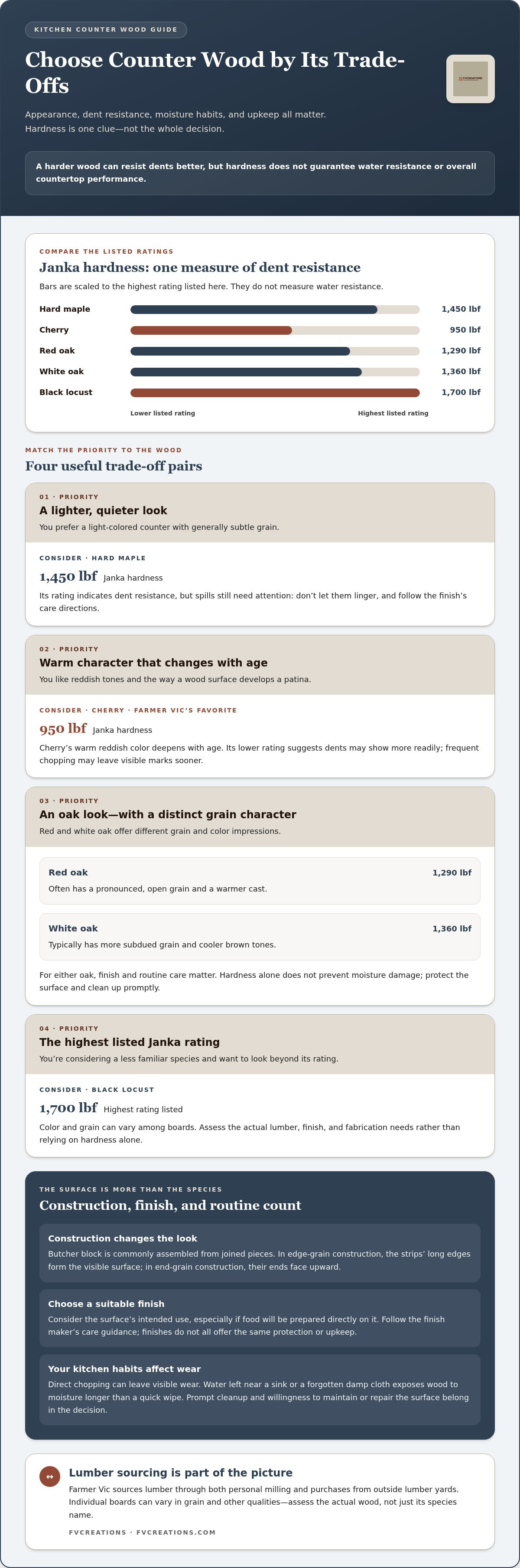
Each species brings a different mix of color, grain, and dent resistance. The Janka ratings below offer one point of comparison for resistance to indentation, not a verdict on water resistance or overall countertop performance.
| Wood | Appearance | Janka hardness | Care considerations | May suit priorities like |
|---|---|---|---|---|
| Hard maple | Light-colored, generally subtle grain | 1,450 lbf | Keep spills from lingering and follow the finish’s care directions. | A lighter, relatively understated look |
| Cherry | Warm reddish tones that deepen with age | 950 lbf | Its lower rating suggests dents may show more readily; its changing color is part of its appeal. | Warm character and a surface that develops a patina |
| Red oak | Often has a pronounced, open grain and warmer cast | 1,290 lbf | As with any wood, protect the surface with an appropriate finish and prompt cleanup. | A distinct, visible grain pattern |
| White oak | Typically has a more subdued grain and cooler, brown tones | 1,360 lbf | Finish and routine care still matter; hardness alone doesn’t prevent moisture damage. | An oak look with a different grain and color character |
| Black locust | Color and grain can vary among boards | 1,700 lbf | Assess the actual lumber, finish, and fabrication needs rather than relying on hardness alone. | Considering a less familiar species and its individual character |
Maple and cherry: clean grain versus warm character
Hard maple’s lighter color and quieter grain can give a counter a calm appearance. Its 1,450 lbf Janka rating offers a useful indication of dent resistance, but the finish and kitchen routine still shape how the surface wears. Cherry is my favorite wood. I love its warmth and the way its color deepens over time. It’s softer than the other species shown here, so a kitchen with frequent chopping may show marks sooner. That’s a real trade-off, not a reason to rule it out.
Red oak, white oak, and black locust compared
Red and white oak are both recognizable by their grain, but they aren’t interchangeable. Red oak often reads warmer and more pronounced, while white oak tends toward a more restrained look. Their Janka ratings are 1,290 and 1,360 lbf, respectively. Black locust has the highest listed rating, but that number alone can’t determine whether a particular board is a sensible countertop choice. Consider its grain, appearance, availability, and fabrication needs.
No single species suits every kitchen; the right choice balances the look you love, the wear you’ll accept, and the care you’ll give the surface. That’s how I’d approach choosing the best wood for kitchen counters: use ratings as one clue, then compare the wood’s full character with your daily habits.
Is Harder Wood Always Better for a Kitchen Counter?
No. A harder species can resist dents better, but that doesn’t make it the right choice for every kitchen. A counter also needs to suit your preferred look, how you use it, and how comfortable you are with visible wear and ongoing care. Cherry, for example, is softer than several common countertop woods, yet its warm color and developing patina may be exactly what you want.
What a wood-hardness rating can and cannot tell you
The Janka scale measures the force needed to press a steel ball halfway into a wood sample. It gives you a consistent way to compare resistance to indentation: the figures in the previous species comparison show that black locust rates harder than cherry. But the test doesn’t measure waterproofing, stain resistance, or how a finished counter will perform in a particular kitchen. Treat hardness as one useful clue, not a complete scorecard.
A more dent-resistant surface may still show damage from sharp impacts, while a softer wood may collect marks that become part of its lived-in character. Whether those marks bother you is personal. Repairability matters, too, but don’t assume every dent or finish problem can be fixed in the same way. Construction and finish affect what maintenance or repair may involve.
How moisture, wear, and maintenance change the comparison
Wood and standing water are a poor combination. Spills near a sink, wet items left on the surface, and delayed cleanup can expose the wood and finish to moisture. Hardness won’t prevent that. Wipe spills promptly, avoid leaving damp materials on the counter, and follow the care guidance for the finish on the surface.
Regular, suitable care helps keep a surface in better shape than neglect, but it can’t promise a mark-free counter. Finish, construction, installation conditions, and the kitchen environment all affect real-world performance. That’s why I consider the actual lumber, whether it comes from personal milling or an outside lumber yard, along with how the finished surface will be used.
- Harder wood: may suit you if resisting everyday dents is a priority, but it still needs protection from moisture and routine care.
- Softer wood: may show marks sooner, but those marks and a changing patina can suit a kitchen where character matters more than a pristine look.
- Any species: needs a suitable finish, thoughtful installation, and care that matches its use.
The best wood for kitchen counters isn’t a hardness contest. Choose the trade-off you can live with: fewer dents, a warmer look, visible signs of use, or a surface whose care fits your routine.
How to Choose the Best Countertop Wood for Your Kitchen
A useful way to choose is to start with your kitchen, not a species chart. The best wood for kitchen counters is the one that fits your cooking habits, preferred look, and willingness to care for the surface. Work through these steps before settling on a material:
- Define how you’ll use the counter. Think about daily meal prep, chopping, serving, and how often water or food spills are likely. A lightly used surface and a busy worktop may call for different priorities.
- Set your care expectations. Decide whether you’ll wipe up spills promptly and follow the finish’s routine care guidance. If you’re comfortable with visible marks and a surface that develops character, you may consider different options than if you want a consistently pristine appearance.
- Compare grain and color. Consider whether you prefer a quiet, light surface or stronger grain and warmer tones. Wood samples can help you picture how the pattern and color will sit alongside your cabinets and other finishes.
- Evaluate species and construction. Use hardness as one point of comparison, then weigh appearance, intended use, and how the boards will be assembled. No single species wins on every measure.
Match the species to your priorities
Hard maple is worth considering if you want a light, relatively subtle look. Cherry brings warmer color and is my personal favorite, though its softer feel means it may show dents sooner than harder options. Red oak and white oak offer distinct grain and color character, while black locust’s higher Janka rating is only one consideration. Choose by the look you enjoy and the wear you’re comfortable seeing, not by a universal ranking.
Check the lumber, build, and care plan
Species names don’t tell the whole story. Individual boards vary in grain and character, and the construction style affects the finished surface’s appearance. I work with lumber from both personal milling and purchases from outside lumber yards, considering the wood in front of me as well as its intended use. Plan for suitable finish care before choosing. For another example of how grain and craftsmanship come together in a food-serving piece, take a look at the handcrafted cutting board collection.
Before deciding, picture an ordinary week in your kitchen: what gets prepared, where moisture tends to collect, and how much visible wear feels acceptable. That practical check can help you choose a wood surface you’ll enjoy living with.
A Maker’s Perspective on Wood, Sourcing, and Long-Term Care
As a maker, I see each board as its own piece of the tree. Grain, color, and other natural differences give wood its character, making the choice more personal than a comparison of ratings alone. I source lumber in two ways: I mill some myself, and I also purchase lumber from outside lumber yards. Either way, the individual boards matter. Their appearance and workability help shape what a finished piece can become.
Why cherry earns a special place in the conversation
Cherry is my favorite wood. I’m drawn to its warm reddish color and the way its appearance can deepen and develop character over time. That’s a personal preference, not a technical verdict. Cherry is softer than some of the other countertop species discussed, so the possibility of visible dents is part of the trade-off. You might love the warmth; someone else might prefer maple’s lighter look or the distinct grain of oak. Your favorite should suit your kitchen, not mine.
Choose wood thoughtfully, then care for it thoughtfully
Whether lumber comes from personal milling or an outside yard, each board has its own grain and character. Construction and finish influence how those boards come together and how the surface feels and looks. Before choosing a wood surface, think through its intended use and the care its finish calls for. Select maintenance products for that specific finish and use, rather than assuming one product suits every wooden surface.
I bring the same appreciation for wood’s individual character to the pieces I make. If you’d like to see another example of grain and craftsmanship in a food-serving piece, you can explore handcrafted cutting boards. It’s a reminder that the right wood choice is the one whose look, use, and care feel right to you.
Choose a Countertop Wood That Feels Right for Your Kitchen
The best wood for kitchen counters is the one that fits your everyday routine, your taste, and the kind of care you’re comfortable giving it. Hardness can help you assess dent resistance, but it doesn’t tell the whole story: grain, construction, finish, moisture, and repair preferences matter, too. Maple, cherry, red and white oak, and black locust each bring different qualities, so there’s no single winner for every home.
Cherry is my favorite for its warm character, though another species may suit your kitchen better. I source lumber through both personal milling and purchases from outside lumber yards, and I appreciate the individuality each board brings. Caring for wood thoughtfully starts with matching maintenance supplies to the specific finish and intended use. I personally approve selected woodworking maintenance supplies with that care in mind.
Explore handcrafted woodwork and woodworking supplies at FVCreations. Choose the qualities that matter to you, and enjoy the natural character wood brings to the kitchen.
Frequently Asked Questions
What is the best wood for kitchen counters?
There’s no single best species for every kitchen. The best wood for kitchen counters depends on how you use the surface, the look you want, and the upkeep you’re comfortable with. Maple, cherry, red oak, white oak, and black locust each have different appearances and hardness ratings, but hardness alone doesn’t determine suitability. Consider construction, finish, moisture exposure, and how you feel about visible wear before choosing.
Is maple a good wood for kitchen countertops?
Yes, maple can be a good choice if you want a light-colored counter with relatively subtle grain. Hard maple has a Janka hardness rating of 1,450 lbf, a useful measure of resistance to indentation, though it doesn’t predict water or stain resistance. Consider your kitchen routine, finish, and care expectations, too. A hard surface still needs prompt cleanup and maintenance suited to its finish.
Is white oak better than red oak for countertops?
Not automatically. White oak has a Janka rating of 1,360 lbf, compared with 1,290 lbf for red oak, but that difference doesn’t make it the right choice for every counter. The two species have distinct grain and color character, so compare the actual boards with your kitchen’s style. Also consider how you’ll use and care for the surface. Neither hardness rating measures waterproofing.
Can cherry wood be used for kitchen counters?
Yes, cherry can be used for a kitchen counter if its appearance and expected wear fit your priorities. Its warm reddish color can deepen with age, and that developing character is part of its appeal. Cherry has a Janka rating of 950 lbf, lower than the other species compared here, so dents may be more noticeable. Farmer Vic considers cherry his favorite, though that personal preference won’t suit every kitchen.
Is black locust suitable for a wood countertop?
Black locust is a species to consider, but its Janka rating of 1,700 lbf isn’t enough on its own to decide countertop suitability. Look at the lumber’s grain and appearance, the intended construction, and the care the finished surface will need. Workability and the boards available for a project matter, too. Lumber can come from personal milling as well as purchases from outside lumber yards.
How do you protect a wood kitchen counter from water?
Wipe spills promptly and don’t leave standing water, damp cloths, or wet items on the surface. Moisture can affect wood and its finish, particularly if it sits for a while. Choose a finish suited to the counter’s intended use, then follow its care instructions. Regular attention helps you notice wear or areas needing care, but no routine can promise a completely mark-free surface.
Does harder wood make a better kitchen countertop?
No. Hardness offers a useful comparison of dent resistance, but it doesn’t measure waterproofing, stain resistance, or ease of repair. A harder species may suit someone who wants to limit dents, while a softer wood such as cherry may appeal to someone who values its color and accepts visible marks. Construction, finish, installation conditions, and everyday care also affect how a counter performs.
What finish is safe for a kitchen counter?
The appropriate finish depends on how the counter will be used, especially whether food will be prepared directly on it. Check the product’s labeling and manufacturer’s guidance to confirm it’s intended for that use, and follow the application and care directions. Don’t assume that a finish suitable for one wooden item is suitable for every counter. The finished surface’s intended use should guide your choice.