

What are Cedar Raised Garden Beds? The 2026 Artisan Guide to Organic Gardening
Why spend your hard-earned weekends building a garden that's destined to rot before your first heirloom tomatoes even ripen? I've seen too many folks struggle with back and knee pain from ground-level plots only to have their pressure-treated wood leach chemicals into their organic soil. That's why I'm such a believer in cedar raised garden beds. They aren't just containers for dirt; they're a long-term investment in your family's health and your home's beauty. In my workshop, I combine lumber I've milled myself from local logs with select pieces from the lumber yard to ensure every bed is built to last decades, not just a season or two.
You're probably looking for a garden that doesn't force you to choose between durability and safety. I'll show you exactly why cedar is the gold standard for longevity and help you understand the differences between wood species. We'll talk about why white oak stands up to moisture while red oak fails, the limits of maple, the incredible strength of black locust, and why I personally think cherry wood is the most beautiful material I work with. By the time we're done, you'll know how to choose a handcrafted structure that adds real value to your landscape and keeps your organic harvest pure.
Key Takeaways
- Learn how raised structures improve drainage and soil temperature to give your organic crops a healthy head start.
- Understand why handcrafted cedar raised garden beds provide superior longevity and chemical-free safety compared to thin-slat retail kits.
- Discover the crucial differences between wood species, including why black locust and white oak are garden champions while red oak and maple are prone to early decay.
- Explore my dual sourcing method and find out why I give special attention to cherry wood, my favorite species for artisan craftsmanship.
- Identify whether an inground bed or an elevated planter is the right choice for your specific crops and physical comfort.
Defining the Cedar Raised Garden Bed: Beyond the Basics
A cedar raised garden bed is more than just a box of dirt sitting in your yard. It's a controlled environment designed to give your plants the best possible life. By lifting the soil above the ground level, you gain immediate control over the growing medium. This system, often referred to as raised-bed gardening, allows the soil to warm up much faster in the early spring, extending your growing season. It also ensures that heavy rains don't drown your roots, as the elevated structure provides superior drainage. Cedar possesses a natural superpower called thujaplicins, which are organic compounds that serve as a built-in preservative to repel fungus and wood-boring insects. This makes cedar raised garden beds the ultimate choice for anyone who cares about the purity of their food.
The Anatomy of a High-Quality Garden Bed
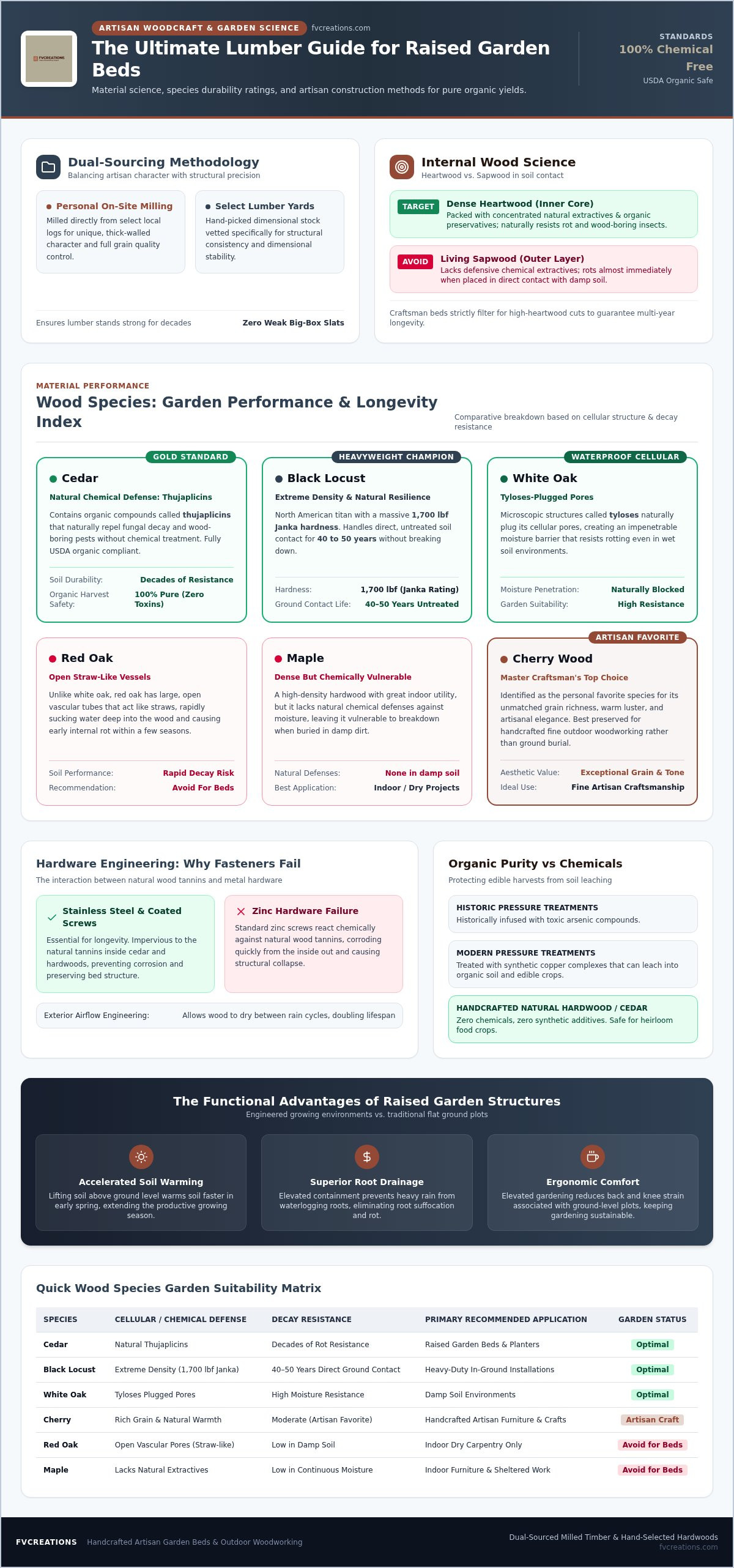
If you've ever bought a kit from a big-box store, you know how flimsy those thin slats can be. They bow under the weight of wet soil and rot through in a few years. I build my beds with thick-walled lumber because I want them to stand tall for decades. I source my materials through a dual approach, milling some logs myself and hand-picking the rest from local lumber yards to ensure quality. It's also vital to use the right hardware. I only use stainless steel or high-quality coated screws. Zinc screws will corrode against the natural tannins in the wood, leading to structural failure. Proper airflow around the exterior also keeps the wood dry between rain cycles; this is a simple trick to double the life of your garden.
Organic Integrity: Avoiding Pressure-Treated Chemicals
Decades ago, pressure-treated wood was loaded with arsenic. While modern treatments use copper, I still don't want those chemicals anywhere near my organic tomatoes. Cedar offers a safe, natural alternative that meets USDA organic standards without any synthetic additives. When I'm selecting wood for my outdoor items, I'm looking for species that can handle the elements on their own. While I'll always tell you that cherry is my absolute favorite wood for its incredible grain and warmth, it doesn't belong in the ground. For garden beds, you need the rot-resistance of cedar, white oak, or the legendary black locust. Avoid red oak and maple. They'll soak up water like a straw and rot from the inside out within a few seasons. Artisan beds give you the transparency to know exactly what's touching your soil and your family's food.
The Material Science: Why Wood Species Defines Your Garden's Life
Understanding wood starts with the tree's internal life cycle. Heartwood is the dense, inner core of the tree that's packed with natural preservatives, while sapwood is the living outer layer that rots almost instantly when it touches the dirt. When I'm building cedar raised garden beds, I'm specifically hunting for that rot-resistant heartwood. My sourcing process is a hybrid; I mill logs right here on my property for one-of-a-kind pieces, but I also hand-select dimensional lumber from trusted yards to ensure every bed is structurally sound. This dual approach allows me to vet every board for quality before it ever touches your soil. It's the only way I can be sure the wood will stand up to the elements for decades.
If you're looking for a material that rivals cedar, black locust is the undisputed heavyweight champion of North American woods. It's practically indestructible, with a Janka hardness of 1,700 lbf, and it can often last 40 to 50 years in direct ground contact without a drop of synthetic chemicals. For a deeper look into how these materials affect your harvest, this University of Minnesota Extension guide to raised bed gardens offers great insights into soil and structural management. Choosing the right species isn't just about looks; it's about the physics of how the wood handles water.
Hardwood Alternatives: Oak, Maple, and Beyond
White oak is a fantastic choice for moisture because its cellular structure is naturally plugged with tyloses, making it nearly waterproof, whereas red oak has wide, open vessels that act like straws, sucking up moisture and rotting in just a few years. Maple is a beautiful, dense hardwood, but it lacks the natural chemical defenses found in cedar or locust. It's better suited for indoor projects or protected areas rather than sitting in damp soil for years on end. Your local climate matters too. In humid regions, the cellular density of white oak or the natural oils in cedar are non-negotiable for garden longevity.
The Artisan's Choice: The Beauty of Cherry Wood
I have to tell you, cherry wood is my absolute favorite species to work with in the shop. There is something magical about the way it smells when it's being cut and how it transforms over time. It starts with a delicate pink hue and, as it ages in the sun, it develops a deep, rich patina that no stain can replicate. While I wouldn't put a cherry board directly in the mud, it's a stunning choice for the trim or caps on a decorative garden structure. If you appreciate the look of fine grain as much as I do, take a look at my handcrafted outdoor items to see how these different species come together in a finished piece.
Choosing Your Configuration: Elevated vs. Inground Cedar Beds
Deciding between an inground bed and an elevated planter is really about matching your gardening style to your physical needs. Inground cedar raised garden beds are the classic choice for anyone looking to grow deep-rooted crops like carrots or parsnips. They offer a direct connection to the native soil, which is great for inviting beneficial worms and microbes into your growing area. Inground beds maintain a more stable soil temperature thanks to the thermal mass of the surrounding earth, while elevated planters warm up quickly in the spring but are more prone to temperature swings during summer heat. Whether you're working in a sprawling backyard or a tight suburban lot, the right configuration makes all the difference for your harvest.
When to Choose Cedar Planters with Legs
If you're tired of the back and knee pain that comes with traditional ground-level gardening, elevated planters are a lifesaver. These are perfect for urban spaces, balconies, or even just keeping your herbs away from hungry rabbits and other small critters. Because they sit off the ground, drainage is even more critical; I design mine to shed water efficiently so the soil doesn't become waterlogged. You can browse our heavy-duty cedar planters with legs to see how we handle these structural requirements. According to the University of Minnesota Extension's guide to raised bed gardens, elevated systems are excellent for accessibility but require more frequent watering than their inground counterparts. I always recommend these for patio gardeners who want fresh greens within arm's reach of the kitchen.
Standard Raised Beds for Large-Scale Organic Growth
For those with plenty of backyard space, a standard inground bed provides the maximum soil volume needed for heavy feeders like tomatoes and peppers. I build these using the same dual-sourced approach I use for all my work, mixing property-milled timber with high-grade boards from the yard. While cedar is my go-to for these, I've seen customers request white oak or even black locust for their incredible longevity. Even though cherry wood is my personal favorite species to work with for its beauty, I usually save it for the decorative caps on these larger beds where it won't be sitting in wet soil. Bespoke lengths allow you to fit these beds into the natural curves of your landscape, creating a garden that looks like it was always meant to be there. This direct ground contact is the best way to build long-term soil health over several seasons.
Setting Up for Success: Soil, Drainage, and Maintenance
I've spent many days in my workshop milling local logs and hand-selecting boards from the yard to ensure your beds are built to last. Once your cedar raised garden beds are in place, the real magic happens in the soil. I recommend a mix of one-third high-quality compost, one-third peat moss or coconut coir, and one-third vermiculite. This blend stays light and airy. It prevents the compaction that kills roots. I often get asked if you should line the inside of the bed. My advice is to skip the plastic. It traps moisture against the wood. That can actually speed up decay. If you're worried about grass, a thick layer of plain brown cardboard at the bottom is a better, organic-friendly solution. It eventually breaks down into the earth.
Drainage and Airflow Essentials
There's an old myth that you should put a layer of gravel at the bottom of your beds for drainage. In reality, this creates a "perched water table" that keeps water sitting right at the root level. It's much better to fill the entire bed with a consistent soil mix. Always make sure your ground is level before you fill it. An uneven base puts unnecessary stress on the corners and joints. That can lead to bowing over time. For my elevated planters, I ensure there's enough space for water to weep through without leaving stains on your patio. Proper airflow around the outside of the bed is just as important as what's happening inside. It lets the wood dry out between rainstorms. This is why I don't recommend pushing your beds directly against a solid fence or wall.
Maintaining the Natural Glow of Cedar
Left to the elements, cedar will eventually transition to a beautiful, weathered silver-gray. This is purely aesthetic. It doesn't mean the wood is failing. However, if you prefer that warm, honey-colored glow I love so much in my cherry wood projects, you'll need to apply a finish. While species like white oak and black locust are naturally tough, and maple is best kept for indoor use, cedar needs just a little help to stay vibrant. Between growing seasons, take a moment to brush out any old debris. This simple bit of hygiene prevents pests from overwintering in the corners. To keep your garden structures looking their best for years, you can protect your wood with Outdoor Defense Oil. It's a natural way to seal out moisture while keeping your organic food safe.
Why Artisan Craftsmanship Beats Mass-Produced Garden Kits
It's tempting to grab a flat-pack kit from a big-box store. Those kits promise a garden in ten minutes. But those thin, 5/8-inch slats usually bow under the weight of wet soil by the middle of the first summer. When I build cedar raised garden beds, I use thick-cut lumber that actually has the structural integrity to hold its shape. Factory production focuses on speed and shipping costs; I focus on how that bed will look in your yard ten years from now. I take pride in every joint and cut because my name is on the final product. It's the difference between a temporary box and a permanent piece of your home's landscape.
Hand-milling allows me to see the character in every board. Mass-produced kits use whatever wood is cheapest and easiest to process. In my workshop, I look for unique grain patterns and the natural strength of the wood. This isn't just about building a box. It's about respecting the raw material and making sure it serves you well. Every artisan bed tells a story of the tree it came from and the hands that shaped it.
Sustainability and Sourcing
My approach to wood is a bit different than most. I use a dual-sourcing method that keeps my carbon footprint low and my quality high. I mill some of the lumber right here on my property from fallen logs. For the rest, I hand-select boards from local lumber yards. This mix ensures I always have the right material for the job. Whether it's the rot-proof toughness of black locust for ground contact or the water-tight nature of white oak, I vet every piece personally. I don't rely on a middleman to tell me what's good; I see it for myself on the saw bench.
This small-batch mindset means I can catch defects that a factory machine would miss. I know that while maple is beautiful for furniture, it won't survive the damp soil like cedar does. I also know the difference between white oak and red oak; I'd never use red oak for a garden bed because its open pores lead to early rot. I also love giving special attention to cherry wood. It's my absolute favorite species. Even though it's not for ground contact, its beauty is unmatched for decorative elements or trim. This level of detail is only possible with small-scale production where quality beats quantity every time.
Getting Started with FVCreations
When you choose FVCreations, you aren't just a transaction. You're working with a neighbor. I'm transparent about my lead times and inventory because I'm just one guy in a workshop, not a giant warehouse. This personal service means we can talk about custom dimensions to fit your specific garden layout. If you're ready to move beyond flimsy kits, you can explore our full collection of handcrafted outdoor items. Once you place an order, I'll get to work selecting the best cedar, oak, or locust to build a garden that truly lasts. I'll guide you through the process from the first cut to the final finish.
Grow Your Legacy in a Garden Built to Last
Choosing the right structure for your home is an investment in your family's health and your own peace of mind. We've covered how the right material science, like opting for white oak or black locust over red oak and maple, keeps your soil healthy for years. You know why thick-cut, artisan cedar raised garden beds outperform mass-produced kits that simply can't handle the weight of a successful harvest. My process of blending property-milled timber with hand-picked yard wood ensures that every piece I build meets the high standards of organic gardeners nationwide.
Whether you need an inground bed for deep roots or an elevated planter to save your back, I'm here to help you get the exact dimensions your space requires. I'll even find a way to work in some of that beautiful cherry wood I love so much if you want a touch of artisan flair. It's time to stop replacing flimsy boxes every two seasons and start growing in a structure that adds real value to your landscape. Build your dream garden with Farmer Vic’s handcrafted cedar beds and enjoy the satisfaction of a harvest grown in a bed built with care. Happy gardening!
Frequently Asked Questions
How long do cedar raised garden beds typically last?
Cedar raised garden beds typically last between 15 and 25 years when built with high-quality heartwood. The exact lifespan depends on your local climate and the thickness of the boards. I use heavy-duty lumber that I've either milled on my property or hand-selected from local yards to ensure maximum durability. Unlike thin kits that rot in a few seasons, these artisan beds stand up to moisture and soil contact for decades.
Do I need to treat my cedar garden bed with oil or stain?
You don't have to treat cedar because it's naturally rot-resistant, but many folks choose to for aesthetic reasons. Without treatment, the wood will eventually turn a beautiful weathered silver. If you want to keep that warm glow, I recommend using a non-toxic finish like Outdoor Defense Oil. It provides extra moisture protection without leaching chemicals into your organic soil. I personally vet every finish I use to ensure it's safe for your family.
What is the best wood for a raised garden bed besides cedar?
Black locust is the undisputed champion for ground contact, often lasting over 40 years. White oak is another excellent choice because its closed cellular structure naturally blocks water. I always tell my customers to avoid red oak and maple; they'll rot far too quickly in a damp garden. While cherry wood is my absolute favorite species for its rich patina, I only recommend it for decorative trim rather than direct soil contact.
Is it safe to use cedar for growing edible vegetables?
Cedar is one of the safest materials you can use for growing edible vegetables. It doesn't require the toxic chemical treatments found in pressure-treated lumber, which can leach into your food. My cedar raised garden beds meet USDA organic standards naturally. You can grow your tomatoes and greens with total peace of mind, knowing that only natural oils are protecting the wood from decay and pests.
What should I put at the bottom of my cedar raised garden bed?
The best thing to put at the bottom is a simple layer of plain brown cardboard. It smothers weeds and eventually breaks down into organic matter. I strongly advise against using gravel, as it actually hinders drainage by creating a perched water table. If you're building an inground bed, leaving the bottom open to the earth allows beneficial worms and microbes to move freely into your garden soil.
How deep should a cedar raised garden bed be for tomatoes?
For heavy feeders like tomatoes, your bed should be at least 12 to 18 inches deep. Tomatoes have extensive root systems that need plenty of room to spread out and find nutrients. A deeper bed also holds moisture more consistently during the heat of summer. If you're using one of my elevated planters, the extra depth ensures your plants have the structural support they need to grow tall and produce a heavy harvest.
Can I leave my cedar planter outside during the winter?
You can absolutely leave your cedar planter outside all winter long. Cedar is remarkably stable and handles freeze-thaw cycles without warping or cracking like plastic or ceramic might. The natural oils in the wood protect it from snow and ice. I build these beds to be permanent fixtures in your landscape. You don't need to move them into a garage or shed when the temperature drops; they'll be ready for planting come spring.
Does cedar wood attract or repel insects in the garden?
Cedar naturally repels many common garden pests, including termites and certain types of beetles. The wood contains organic compounds called thujaplicins that act as a natural deterrent. This helps protect the structure of your bed from insect damage without the need for synthetic pesticides. While it won't keep every bug off your plants, it creates a much cleaner and more durable environment for your organic gardening efforts to thrive.