

What to Put on a Cheese Board Besides Cheese: Best Wood and Food Pairings (2026)
A truly memorable gathering doesn't start with the cheese; it starts with the foundation you build it on. You might think any flat surface will do, but the wrong choice can leave your spread looking a bit "grocery store" or, worse, end up stained and warped after just one use. I've spent years in my workshop milling timber from my own property and local yards, and I've learned that choosing the best wood for charcuterie board displays is what separates a cheap tray from a lifelong heirloom.
I know how it feels to worry about ruining a beautiful piece of craftsmanship with a stray beet or a soft brie. It's a common frustration, but it shouldn't stop you from hosting with pride. In this guide, I'll share my personal insights on why I favor species like Cherry and Black Locust, and how you can pair artisan ingredients to create a conversation-starting spread. We'll cover everything from wood safety and durability to the creative pairings that make your board the hero of the room. By the time we're done, you'll have the knowledge to select a durable, food-safe board and the inspiration to fill it beautifully.
Key Takeaways
- Discover how to layer artisanal meats with essential "brine factors" like cornichons and pickled onions to balance every bite.
- Learn why unexpected textures like dark chocolate and roasted chickpeas are the secret to a modern, conversation-starting display.
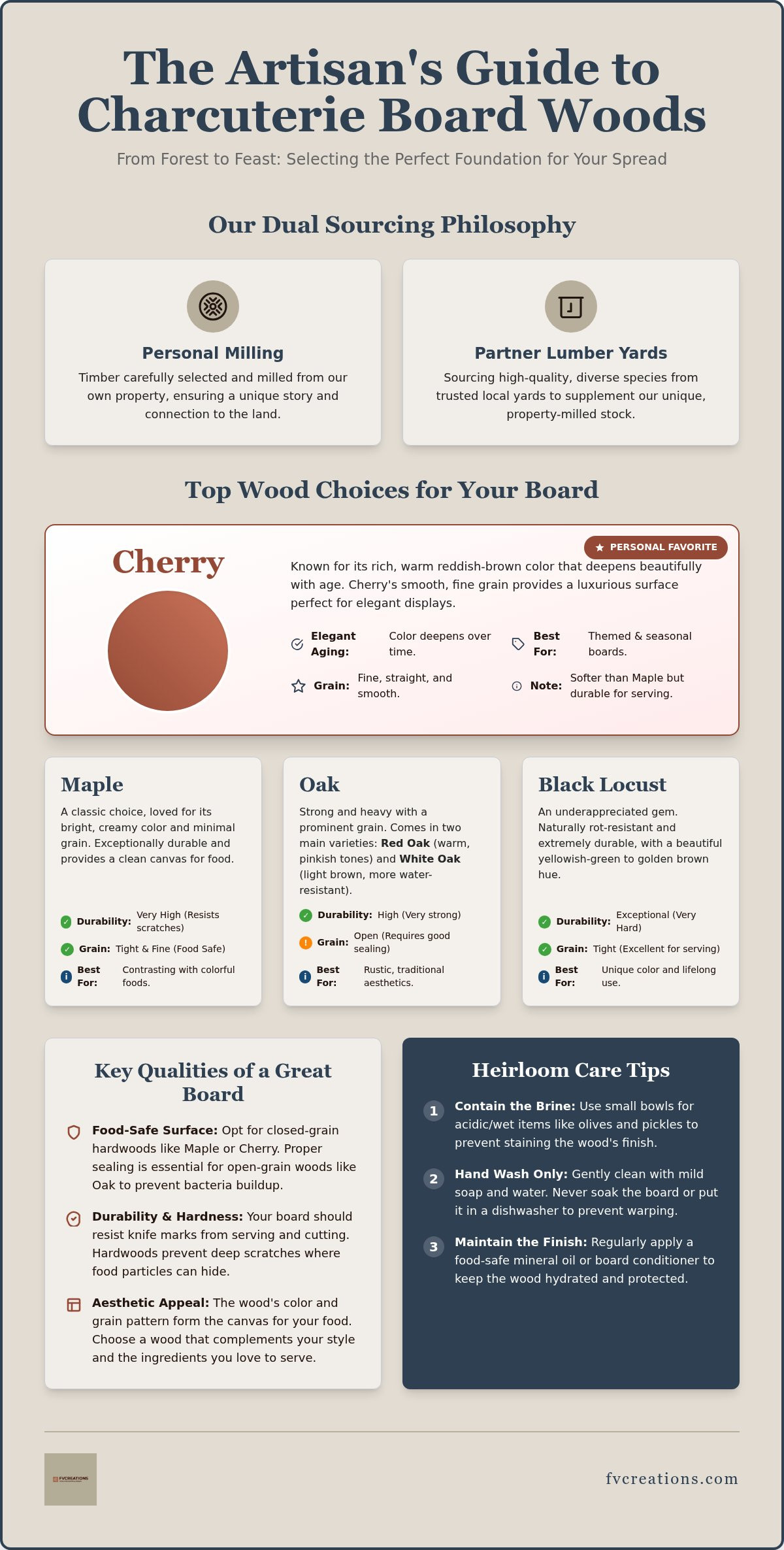
- Master the technical side of hosting by selecting the best wood for charcuterie board use, including durable species like Maple, Oak, and Cherry.
- Gain confidence in maintaining your board with food-safe finishes that protect the wood from stains while highlighting its natural, property-milled beauty.
Beyond the Basics: Why Custom Charcuterie Means More Than Just Cheese
Hosting has changed quite a bit over the last few years. By 2026, the standard "meat and cheese" tray has evolved into something much more personal and storied. It's no longer just about putting out a snack; it's about creating an experience that starts the moment your guests walk into the room. If you're curious about the history of this shift, What is a Charcuterie Board? gives a great overview of how these spreads moved from simple meat preservation to the centerpieces they are today. I've found that the foundation you choose—the board itself—is what really sets the tone for the evening.
I've spent many hours in my workshop milling timber from my own property and sourcing high-quality pieces from outside lumber yards. Whether I'm working with White Oak, Maple, or Black Locust, I'm always thinking about how the grain will look under a spread of artisan food. Finding the best wood for charcuterie board use is about more than just picking a pretty plank. It's about finding a durable, food-safe surface that acts as a hero for your gathering. You don't need a professional culinary degree to make this work. You just need a bit of confidence and a board that tells a story of its own.
The Role of Texture and Color in 2026
We're seeing a big move away from the basic yellow cheddars of the past. Today, it's all about vibrant, natural colors that pop against the wood. Think about the deep, earthy tones of Red Oak. That wood has a character that calls for bright contrasts like pomegranate seeds or roasted beets. I like to balance hard textures, like a crusty baguette or local nuts, with soft elements like goat cheese or honey. This variety keeps your guests engaged and makes the board feel like a complete sensory experience rather than just a quick bite.
Creating a Theme for Your Artisan Board
I always recommend starting with a theme to keep your shopping focused. A "Seasonal Harvest" theme is a great way to use what's growing around you, like dried fruits and walnuts. If you prefer something more classic, a "Savory Artisan" theme focusing on small-batch salamis and briny olives never fails. Because I handcraft my Charcuterie Boards in various sizes, you can easily match your board to your guest count. Cherry is my personal favorite species for these themes because its warm color only gets better with age. No matter what you choose, a custom-sized, property-milled board ensures your display looks intentional and high-end every single time.
The Savory Foundation: Selecting Meats, Brines, and Crunch
Once you've picked out your piece of timber, it's time to talk about the food. I usually start with the savory elements because they provide the "salt" that makes everything else stand out. High-quality cured meats like Prosciutto, Sopressata, and small-batch salamis are my go-tos. These aren't just snacks; they're the anchor of your display. I always suggest letting your meats sit at room temperature for about 15 to 20 minutes before guests arrive. This helps release the natural fats and flavors that can get muted when they're straight out of the fridge.
Adding a "brine" factor is just as important. Olives, cornichons, and pickled red onions act as palate cleansers between different bites of cheese and meat. However, as an artisan, I have to give you a bit of a warning about your wood. Acidic or vinegary liquids can be tough on even the most durable finishes. I always recommend using small ceramic or glass bowls for these items. It keeps the moisture contained and protects your investment from unwanted marks. If you're curious about the science of keeping things clean, the USDA cutting board safety guidelines offer great advice on material choice and sanitation.
To finish the savory side, you need a bit of "crunch." Marcona almonds or my personal favorite, candied pecans, add a layer of texture that guests love. Artisan sourdough crisps are also a great vehicle for the softer cheeses we'll talk about later. Picking the best wood for charcuterie board displays means looking for something that won't absorb those savory oils too quickly, which is why I stick to tight-grained hardwoods like Maple or Oak. These species provide the durability you need for a lifetime of hosting.
Artisan Meats That Pair with Hardwoods
There's a certain harmony between smoky, cured meats and the natural, clean scent of a freshly oiled Maple board. If you're using one of my Live Edge pieces, the visual of draped Prosciutto over the natural curves of the wood is hard to beat. It looks intentional and rustic. I've found that the lighter tones of Maple really make the deep reds of a Sopressata stand out, making the food the star of the show. It's a simple way to make your best wood for charcuterie board selection look like a professional catering setup.
Vegetables as Functional Decor
I like to use vegetables to add a bit of height and color. Blanched asparagus or bright radishes aren't just for eating; they create vertical interest that keeps the eye moving. This "Crudite-style" approach is becoming very popular in 2026 as people look for lighter, fresher options. If you're still deciding which species is right for your hosting style, take a look at my Handmade Charcuterie Boards: The Artisan Guide to Quality and Care (2026) for some expert tips on selection. Getting the wood right is the first step toward a stunning spread, and you can see my current handcrafted charcuterie boards to find your perfect match.
The Sweet Balance: Fresh Fruits and Artisan Spreads
After we've laid down the savory foundation, I like to bring in some brightness. Fresh fruit isn't just filler; it acts as the perfect palate cleanser. Grapes, sliced pears, and seasonal berries cut through the richness of the meats and cheeses we discussed earlier. When I'm selecting the best wood for charcuterie board use in my workshop, I often think about how these colors will play against the natural grain. For instance, dark blackberries or deep red cherries pop beautifully on a light Maple board. It's those little visual details that make your spread feel like a professional work of art rather than just a snack tray.
The "spread" is where you can really get creative and add layers of flavor. Fig jam, hot honey, and a good coarse grain mustard are staples on my personal boards. If you want a high-end, rustic look that gets everyone talking, try adding a piece of real honeycomb. It's tactile, beautiful, and tastes incredible when paired with a sharp cheddar or a creamy brie. These sweet and tangy accents bridge the gap between your savory meats and your artisan cheeses, creating a balanced bite every time.
Seasonal Fruit Selection for Artisan Displays
I always look to what's growing around me to guide my choices. In Spring and Summer, I'm reaching for stone fruits like peaches or bright citrus accents. Fresh figs are a must when they're in season. Come Fall and Winter, I swap those out for dried apricots, pomegranate seeds, and sliced persimmons. Using fruit inspired by your own property or a local farmers market gives the board a grounded, authentic feel that store-bought trays just can't match. It connects the food to the season and the wood it's served on.
Dips and Spreads That Protect Your Board
I want to share a quick tip on keeping your board in good shape for years to come. I generally prefer thick preserves over runny syrups. Runny liquids have a habit of seeping into the grain, which can cause staining or warping if the wood isn't treated right. I always use Real Milk Paint Co. food-safe finishes on my boards because they create a natural moisture barrier that stands up to regular use. Even with a good finish, it's a smart move to use small ramekins for honey and jams. It keeps the surface clean and makes maintenance a breeze after the party is over.
While I specialize in hardwoods like Oak, Maple, and Cherry, you should be aware that not all timber is created equal. There are several unsafe woods for charcuterie boards that can leach toxins or unpleasant odors into your food. Sticking to the best wood for charcuterie board standards ensures your sweet balance doesn't end up damaging your artisan investment or affecting the taste of your carefully selected spreads.
Farmer Vic’s Wildcard Ideas: Unexpected Textures for 2026
Once you've got your basics down, it's time to have a little fun. I've always been a believer that a great board should surprise your guests. In 2026, we're seeing a shift away from generic store-bought snacks toward items that tell a more artisan story. One of my favorite tricks is adding dark chocolate chunks. When you pair a piece of bitter dark chocolate with a sharp, aged cheddar or a smoky Gouda, it creates a flavor profile that people just don't expect. It's bold, it's different, and it makes your best wood for charcuterie board choice look like a professional display. For those who want to take the flavor experience even further, serving these rich pairings alongside a specialty roast from Blackhand Coffee Co is a fantastic way to round out a sophisticated evening.
Texture is everything. I like to toss in some roasted chickpeas or edamame for a unique "pop" that breaks up the softer cheeses. For that true "property-harvested" look, I often garnish with edible flowers from around the workshop. It mimics a wildflower meadow and adds a level of sophistication that guests love. And don't forget the bread. While crackers have their place, a sliced, crusty baguette is the real hero of an artisan board. It has the structure to hold heavier spreads and feels much more intentional than a standard box of crackers.
If you really want to get people talking, try pairing a spicy Sopressata with a bit of sweet honeycomb. This "flavor-tripping" experience is a huge hit at gatherings. Many people are also reaching for small-batch "Hot Honey" as a wildcard dipping option. It adds a kick that balances out the creaminess of a brie without overwhelming the more delicate flavors on the board. I always suggest keeping these bold items near the center of the board so they don't get lost in the shuffle. For hosts who want to bring that same bold energy to their personal style—especially for a New York game day—Flavor First Sports provides inspiration for a look that matches the vibrant spirit of your event.
How to Style Your Wildcards Like a Pro
Putting it all together is where the magic happens. I follow a simple four-step method to make sure every board looks like a masterpiece:
- Step 1: Place your largest anchors first. This means your small bowls of honey and your main blocks of cheese.
- Step 2: Create a flowing "river" of meat. Drape your salamis or prosciuttos through the center of the display to guide the eye.
- Step 3: Tuck your wildcard textures into the remaining gaps. This is where the dark chocolate, chickpeas, and fruit fill things out for a lush, full look.
- Step 4: Garnish with fresh herbs. I love using rosemary because it provides a "just-from-the-workshop" scent that complements the wood.
Choosing the best wood for charcuterie board use means finding a surface that can handle this variety of textures without looking crowded. Whether it's the tight grain of White Oak or the warm tones of my favorite Cherry, a well-styled board is the ultimate conversation piece. If you're ready to start your own artisan hosting journey, you can browse my latest handcrafted charcuterie boards to find the perfect canvas for your wildcard ideas.
Selecting the Best Wood for Your Charcuterie Board: Sourcing and Care
I've spent a lot of time in my workshop, and I can tell you that the foundation of a great hosting experience is the timber itself. When I'm hunting for the best wood for charcuterie board projects, I use a mix of property-harvested lumber and select pieces from outside lumber yards. This mix allows me to find unique grain patterns that you just won't see in mass-produced boards. Every piece I mill personally has a story, from the tree it came from to the way it sits on your table. It's about bringing a piece of the land into your home.
The Artisan Difference: Oak, Maple, and Black Locust
Choosing between species isn't just about looks; it's about how the wood behaves when it meets food. White Oak is a standard for durability because its grain is much denser than Red Oak. It has a natural resistance to liquids that makes it a reliable choice for years of hosting. If you want a bright, modern look that lets the colors of your fresh berries and cheeses pop, Maple is the cleanest canvas you can find. For those who host large outdoor gatherings or want something with a bit more "heft," I often recommend Black Locust. It's a heavy-duty, rugged wood with a character that stands up to heavy use and looks better the more you use it.
Then there's Cherry. If you ask me, it's the absolute king of hardwoods. It has a warm, aging glow that deepens over time, turning a rich reddish-brown that looks incredible under candlelight. It's my favorite species to work with because it feels personal and grounded. Every time you pull a Cherry board out, it feels like an occasion.
Long-Term Care for Your Handcrafted Investment
Once you have a handcrafted board, you'll want to keep it looking its best for the long haul. I always finish my pieces with a food-safe seal to protect the grain. To maintain that barrier at home, I recommend using Outdoor Defense Oil. It penetrates deep into the fibers to keep moisture from seeping in and causing cracks. When it comes to cleaning, keep it simple. Hand wash with warm, soapy water and dry it immediately with a towel. Never soak your board in the sink, and please, keep it far away from the dishwasher. High heat and standing water are the enemies of artisan wood.
If your board starts to show some knife marks or looks a bit dull after years of service, don't worry. A light sanding with fine-grit paper and a fresh coat of oil will bring that luster right back. It's an investment that's meant to last for decades, growing more beautiful with every conversation and every gathering you host.
Elevate Your Next Gathering with an Artisan Foundation
Hosting a great gathering is about the small details that make people feel welcome. We have explored how to balance the savory crunch of almonds with the sweetness of honeycomb and the bold surprise of dark chocolate. But none of those artisan pairings shine without the right foundation. Choosing the best wood for charcuterie board use ensures your spread is safe, durable, and beautiful enough to be the hero of the room. Whether you prefer the warm glow of Cherry or the rugged strength of Black Locust, your board is a piece of the land that tells its own story.
I take a lot of pride in every piece I create in my workshop. Each board is hand-milled on my own property and finished with food-safe natural oils to ensure it lasts for generations of hosting. I even offer custom sizes available for any gathering, from intimate dinners to large parties. If you're ready to move beyond basic trays and invest in a real artisan piece, I'd love for you to Shop Farmer Vic’s Handcrafted Charcuterie Boards. Let's make your next event a conversation piece guests won't soon forget.
Frequently Asked Questions
What can I put on a charcuterie board besides meat and cheese?
You can fill your display with plenty of savory and sweet items that aren't just protein. I like adding Marcona almonds, candied pecans, and fresh fruits like sliced pears or seasonal berries. Spreads like fig jam or a bit of local honeycomb add a high-end touch. For a little surprise, try dark chocolate chunks or roasted chickpeas. These textures make the spread feel more like a personal story than a grocery store tray.
How do I keep my custom wood board from getting stained by berries or beets?
Berries and beets have strong pigments that can leave a mark if the wood is thirsty. I recommend using small ceramic bowls or glass ramekins for these items to keep the juices contained. It's also vital to have a solid finish. I use food-safe oils from the Real Milk Paint Co. to create a natural moisture barrier. This prevents liquids from soaking deep into the grain and keeps your investment looking fresh.
Is it safe to put wet food directly on a handcrafted wood board?
It is perfectly safe as long as the board is properly sealed. Hardwoods like the ones I mill are naturally dense and resist bacteria well. However, I usually suggest placing very wet or acidic items, like pickles or juicy citrus, in small dishes. This isn't just about safety; it is about keeping the wood finish intact. If you do put wet food directly on the wood, just wipe it down promptly after use.
What is the best wood for a charcuterie board: Oak, Maple, or Cherry?
Selecting the best wood for charcuterie board use depends on your personal style. I often suggest Maple for a clean, modern look, but White Oak is a real workhorse for long-term durability. My personal favorite is Cherry because of that deep, warm glow it gets as it ages. I mill these species myself from trees on my property or source them from trusted yards to ensure every board is food-safe and built to last.
How do I clean my charcuterie board after a party without damaging the wood?
Cleaning is simple if you stay away from the machine. I always tell my customers to hand wash their boards with warm, soapy water and a soft cloth. You should dry it off immediately with a clean towel instead of letting it air dry. Never put your artisan board in the dishwasher or leave it soaking in the sink. A little regular maintenance with food-safe oils keeps the grain healthy and prevents the wood from warping.
Can I use a regular cutting board for charcuterie service?
You certainly can, but there is a difference in the experience. A standard utility board is often scarred from heavy chopping, which can harbor bacteria if not cleaned well. My charcuterie boards are designed to be the hero of your gathering, featuring unique grain patterns and property-milled character. While any food-safe hardwood works, an artisan board acts as a conversation piece that elevates the food you've carefully selected for your guests.
What are some vegetarian-friendly charcuterie board ideas for 2026?
For a modern 2026 vegetarian spread, I focus on vibrant colors and hearty textures. You can use roasted edamame, blanched asparagus, and colorful radishes to create a "crudite-style" section. Pairing these with dark chocolate, various nuts, and artisan breads ensures nobody misses the meat. I love using seasonal fruits like persimmons or pomegranates to add brightness. It is a lighter way to host that still feels incredibly indulgent and thoughtful for everyone at the table.
How much food do I need per person for a balanced charcuterie board?
For a balanced appetizer board, I usually suggest planning for about two ounces of meat and two ounces of cheese per guest. If the board is the main meal, you'll want to double that amount. The secret is to fill the rest of the space with "fillers" like crackers, sliced baguette, fruits, and nuts. This keeps the board looking lush and full without needing an overwhelming amount of expensive artisan meats and cheeses for your gathering.