

Benefits of Elevated Planter Boxes for Easier Gardening
An elevated planter can make gardening easier, but its design matters. The benefits of elevated planter boxes include less bending, better control over soil and drainage, and fewer weeds to contend with. For a mixed planting, plan on at least 12 inches of soil depth so a range of plants has room to grow.
The benefits of elevated planter boxes are easy to see: bringing plants closer can make everyday tending more comfortable, and a raised growing space can work where there is no garden soil. The key is knowing how an elevated, enclosed planter differs from an open-bottom raised bed. This guide explains how each design affects drainage, weeds, planting comfort, material choice, and the growing season, so you can choose a setup that suits your plants and space.
Key Takeaways
- Use a raised planter to create a more suitable growing space when ground soil is compacted, clay-heavy, or contaminated.
- Plan drainage around the planter’s base and soil mix to help prevent water from lingering around plant roots.
- Choose a planter height and durable material that suit your comfort, crops, and outdoor conditions.
- Take advantage of soil that warms earlier in spring, while keeping in mind that an earlier start doesn’t remove the need to consider local growing conditions.
- Decide between an open-bottom raised bed and an enclosed planter by considering where roots can grow and how you want the planting space contained.
1. Why Choose a Raised Planter Garden Box?
A raised garden box gives you control over the soil when the ground beneath it is compacted, clay-heavy, or contaminated. Rather than trying to improve a difficult patch of yard, you can fill the planter with clean, nutrient-rich soil suited to the crops you want to grow. That separation is useful in a paved outdoor space, too, where there is no existing soil for a garden bed. It also lets you adjust the soil’s texture, nutrients, and drainage instead of relying on what is already underfoot.
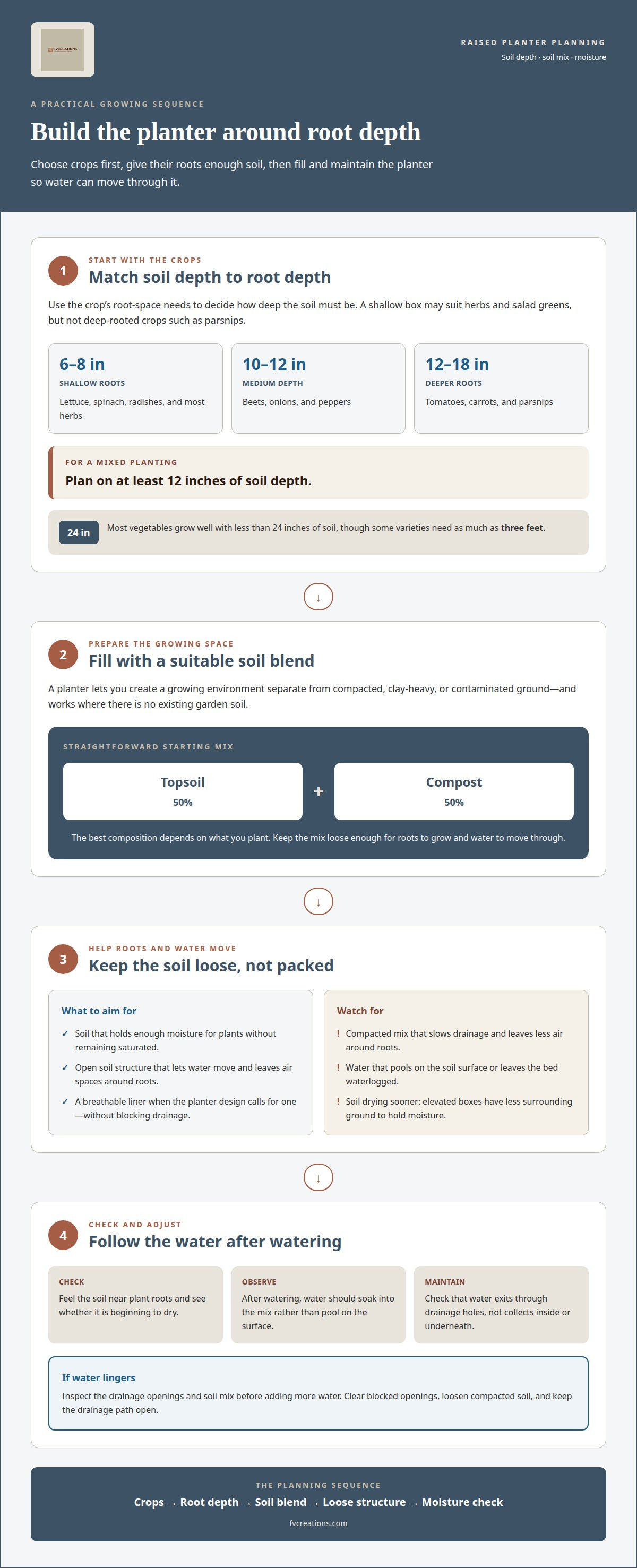
Start with root depth, then choose a planter that can hold enough soil. Shallow-rooted lettuce, spinach, radishes, and most herbs need 6-8 inches. Beets, onions, and peppers need 10-12 inches, while tomatoes, carrots, and parsnips need 12-18 inches. For a mixed planting, use at least 12 inches of soil depth as a practical starting point. Most vegetables grow well with less than 24 inches of soil, though some varieties need as much as three feet. A compact box can suit herbs and salad greens, while deeper soil gives larger crops more room.
For a straightforward soil mix, combine topsoil and compost in a 50/50 ratio. This nutrient-rich starting blend can support a range of vegetables, but the best composition depends on what you plant. For example, leafy greens and radishes have shallower roots than carrots or tomatoes, so depth matters alongside soil quality. Keep the mix loose enough for roots to grow and water to move through. Filling a planter with clean soil also gives plants a distinct growing environment from poor-quality or contaminated ground.
There are trade-offs. Soil in an elevated box has less surrounding ground to hold moisture, so sun, wind, and the planter’s soil volume can make it dry out sooner. Check the soil near plant roots and water when it begins to dry. Lettuce and tomatoes, for instance, may need different attention in the same outdoor space. Root depth is another limit: a shallow box will not suit deep-rooted crops such as parsnips. Match the box depth to the plants, or use shallow areas for herbs and compact crops.
Are there local rules or accessibility guidelines for elevated garden beds? Gardening recommendations are practical growing advice, not a substitute for local building or accessibility requirements. For easier access, choose a working height that reduces bending and kneeling, and leave enough approach space for the gardener’s mobility needs.
To choose a box, list the crops first, then match their root depth to the soil space available. A mixed garden needs at least 12 inches; tomatoes and carrots benefit from 12-18 inches. That simple step helps the benefits of elevated planter boxes work for the plants you actually want to grow.
2. Drainage and reduced weed intrusion
A well-drained garden bed gives excess water somewhere to go instead of leaving roots in soggy soil. Elevated beds generally drain better than many ground plots, where compacted earth or clay can hold water after rain. This matters for vegetables because persistently wet soil can encourage root rot, mold, and fungus. A planter’s height alone is not enough, though. Its base, drainage openings, liner, and soil mix all affect how water moves.
Start with the bottom. An enclosed planter needs a solid or slatted base with drainage holes, while an open-bottom bed lets water pass into the ground below. For a planter box, drainage holes should be about 9 inches apart and at least ¾ inch in diameter. Keep openings clear so water can escape rather than collecting against the base. On a balcony or paved surface, make sure the planter’s drainage won’t leave standing water beneath it or send runoff where it causes problems.
Soil structure matters, too. A compacted mix can slow drainage and leave less air around plant roots. Choose a suitable potting mix, and use a breathable liner if the planter design calls for one. Avoid packing the soil down as you fill the box; loose soil allows water to move while leaving the air spaces roots need. If a bed stays waterlogged after watering, inspect the drainage openings and soil mix before adding more water.
Drainage also affects root health. Waterlogged soil can deprive roots of air, while well-drained soil lets excess moisture escape. That does not mean roots should dry out. The goal is balance: soil that holds enough moisture for plants without remaining saturated. After watering a bed of greens, for example, water should soak into the mix rather than pool on the surface. Check how the soil behaves after rain, since a sheltered patio and an exposed space can dry differently.
Fresh soil in a raised planter can also reduce weed intrusion. It starts separate from the existing seed bank in the ground, and the higher planting surface can make it harder for some weeds to spread directly into the bed. A breathable liner can help separate the soil from the base, but it should not block drainage. Pull weeds while they are small, before they set seed among herbs or vegetables.
For a practical check, look beneath the box after watering. Water should exit through the drainage holes, not pool inside or underneath. Clear blocked openings, loosen compacted soil, and keep the drainage path open. These simple checks help keep a raised garden bed productive in a yard, on a patio, or on a balcony.
3. Choosing planter height and durable materials
Plan the planter height around both your body and the crops you want to grow. A height of 12-18 inches works for most vegetables, while 24-36 inches can reduce bending and make planting more comfortable. Those measurements describe the planter’s height, not necessarily the soil depth available for roots. Check the actual planting depth before settling on a design. An elevated garden should make routine jobs, such as watering, thinning seedlings, and harvesting, easier to reach.
For a backyard with limited room, consider how the planter fits the ground and surrounding space. A taller box can make tending easier, but its position still affects sunlight and access. Place it where plants receive 6-8 hours of direct sunlight, then leave enough room to reach the planting surface and move around it. A box beside a path, for example, should not make watering or harvesting awkward. These practical details help match planter height to daily use.
Which materials are safest and most durable for elevated planter boxes? Cedar and redwood naturally resist moisture and decay, making them useful wood choices for outdoor planting. Cedar and composite boards also resist rot better than untreated pine. These are durability considerations, not guarantees of chemical safety. Choose materials intended for their use, and do not assume every treatment is suitable around edible crops.
Material choice affects upkeep as well as weather resistance. Rain, damp soil, and repeated watering expose a planter to moisture, so a decay-resistant material can reduce the risk of premature rot. Untreated pine may need closer attention than cedar or composite boards in the same conditions. Consider the planter’s exposure, too: a sheltered patio and an open backyard place different demands on its surfaces. Check for wear and keep the box in sound condition so you can spot problems early.
Budget is part of the decision, but the lowest initial cost does not tell the whole story. Compare a material’s maintenance needs with how much time you want to spend caring for the planter. A wood box may weather over time, while composite offers a different material option. There is no need to choose a taller planter than your crops and comfort require. Select a height and material that suit your garden, then make sure the planting depth works for the vegetables inside.
Before filling the box, make three checks: measure the planter’s working height, confirm the usable soil depth, and consider its exposure to rain and sunlight. For most vegetables, 12-18 inches of planter height is a practical starting point; for less bending, 24-36 inches offers a higher working surface. Choosing cedar, redwood, or composite can also help the planter stand up to outdoor moisture.
4. Earlier planting and longer growing seasons
Soil in a raised bed warms earlier in spring than soil at ground level, giving gardeners a chance to begin planting sooner. Because the planting area sits above the surrounding ground, it can warm as spring sunlight reaches it. That head start can help you make the most of a short growing season. Choose planting dates according to local conditions and the needs of each crop.
Raised beds may offer some extra warmth in fall, potentially giving plants more time to grow and harvest. Raised beds can stay warmer later in fall, potentially giving crops more time before colder weather slows growth. The effect depends on the garden’s exposure and the season, so use the soil and plants as your guide rather than relying on a calendar alone.
Are elevated planter boxes suitable for growing vegetables, herbs, and flowers? Yes. They can support all three, as long as the soil depth, moisture, and sunlight suit the plants. You can keep herbs close to the kitchen, grow vegetables on a patio, or give flowers a defined spot in a compact outdoor space.
Plan the growing space around the plants’ needs and the work you want to do. A planter near the kitchen door makes it convenient to harvest herbs for a meal. A box on a patio can bring vegetables within reach where a traditional garden plot will not fit. Keep taller plants from shading shorter ones, and arrange the planter so you can water and harvest across its surface without stepping into the bed.
Season extension is one benefit, but the box still needs thoughtful care. Soil in an elevated container can lose moisture faster than soil surrounded by the ground, especially in sunny or windy conditions. Check the soil regularly during warm spring days and again in fall, when cooler nights can affect plant growth. Water according to the soil’s condition, not simply because the calendar says it is time. A sturdy planter helps keep the growing space in place through changing weather.
For a longer harvest, use the extra spring warmth to plan an earlier start, then keep fall crops growing while the raised soil remains warm. Consider what you want to harvest and when, and leave room to reach each plant for watering or picking. Planter boxes make this sequence easier to organize: herbs can stay close at hand, flowers can brighten patios, and vegetables can grow in a separate bed. The advantage is a growing area that is easier to manage across more of the season.
5. Raised beds versus enclosed planter boxes
The clearest difference is underneath: a raised garden bed usually has an open bottom, while an enclosed planter has a contained base. A raised bed sits above ground level, often with sides that hold the soil in place. Set directly over a backyard plot, its roots can grow down into the soil below. This connection can suit a garden with usable ground where plants would benefit from access beyond the bed’s walls.
An enclosed planter box keeps the growing medium within its own structure. It may have a solid or slatted bottom, with drainage holes that let excess water escape. This design can work on patios, balconies, and paved spaces where there is no garden soil beneath the planting area. It also makes it easier to separate the planter’s soil from compacted or poor-quality ground, since roots stay in the contained mix.
Consider the site before choosing. An open-bottom raised bed on a lawn, for example, lets roots reach the earth below but does not separate them from that ground. A box on a paved surface needs its own soil and a way for water to drain. In either design, root space depends on the available soil depth. Match that depth to the crops instead of assuming a raised planting surface guarantees deep soil.
The bottom changes how you manage the bed, too. With an open base, water can drain into the ground and roots can spread beneath the frame. With an enclosed base, drainage holes, soil mix, and their placement become part of the design. Keep the openings clear, and consider where runoff will go on a balcony or paved patio. These practical differences matter more than the names used for the two structures.
Choose an open-bottom bed when it will sit on suitable ground and you want roots to connect with the soil below. Choose an enclosed planter when you need a self-contained growing space, such as over paving, or want soil separated from the ground. In a backyard with both lawn and hard surfaces, the best option can vary by location: use an open bed over good soil and an enclosed box where the surface offers no growing medium.
Before settling on either option, decide where the bed will sit, whether roots should reach the ground, and how water will drain. Then match the structure to the site. An open-bottom raised garden bed connects the planting area to the earth; an enclosed box creates a defined container. The useful takeaway is simple: choose based on the surface beneath it and the root access you want.
FVCreations
FVCreations makes custom indoor furniture, including tables designed around your space and how you will use them. A made-to-fit table can be a thoughtful choice for a housewarming, birthday, or an awkward corner that needs a useful surface. Custom designs and sizes can help a piece feel at home in your room.
If you’re considering a custom table for your home, contact FVCreations to discuss your furniture idea. Share what the space needs, and we can start the conversation from there.
Make Your Growing Space Work for You
The best garden setup is one you will enjoy tending throughout the season. Think about where you naturally spend time outdoors, what you like to grow, and how you want planting to fit into your routine. A convenient, comfortable space can make it easier to keep gardening part of everyday life.
The benefits of elevated planter boxes are practical, but choosing the right planter also comes down to how it suits your home and habits. FVCreations offers sturdy wooden planters designed to enhance your backyard or patio. If you’re considering a planter for your space, contact FVCreations to discuss planter boxes. A thoughtful place to grow can be a welcome addition to your outdoor routine.
Frequently Asked Questions
Why Choose a Raised Planter Garden Box?
Choose an elevated planter when you want a defined growing area that is easier to organize than a traditional garden plot. For example, one box can keep salad greens and kitchen herbs together near a back door, while another holds larger crops. It also lets you plan the soil around your plants instead of adapting every crop to the existing yard. Start by deciding what you want to grow and where you will tend it.
What Is a Raised Bed?
A raised bed is a planting area held above ground level by a frame or container. Many are open at the bottom, so roots can extend into the earth beneath them when they sit on soil. An elevated planter box is typically more contained and may stand on legs or have a base. The terms are sometimes used loosely, so check whether a specific design has an open bottom.
Which Is Better for Growing Vegetables?
Neither design is automatically better; the right choice depends on the site and the vegetables you plan to grow. An open-bottom bed suits a yard with usable ground, while an enclosed planter works on paving or a balcony where plants need contained soil. Carrots, for example, need more root space than lettuce, so compare crop depth needs with the soil volume the box provides before planting.
What are the main benefits of elevated planter boxes?
The benefits of elevated planter boxes include a more comfortable working height, control over the growing mix, and a defined planting area. For someone gardening on a paved patio, a planter provides a place to grow without digging into the surface. Elevated soil can also warm earlier in spring and later in fall, giving gardeners an opportunity to plan for a longer growing period.
How do elevated planter boxes reduce bending and make gardening easier for people with mobility issues?
Raising the planting surface can bring routine tasks closer to a standing or seated gardener. That can make sowing seeds, pinching herbs, and harvesting lettuce less dependent on kneeling at ground level. Comfort depends on the person and the setup, so consider working reach, approach space, and whether you can use tools comfortably. A planter on legs may suit a different routine than a low framed bed.
Do elevated planter boxes improve drainage and soil quality?
They can help manage both by giving excess water an exit and letting you choose the soil inside. For example, a planter filled with a loose mix can provide different conditions from dense yard soil. Check that drainage openings stay clear, especially after adding soil or moving the box. Fresh soil also gives seedlings a defined growing area, though it still needs appropriate watering and care.
How much soil do elevated planter boxes need, and what are typical dimensions?
Soil depth depends on the crop: shallow-rooted lettuce and herbs need 6-8 inches, while tomatoes and carrots need 12-18 inches. A mixed planting should have at least 12 inches. A compact bed might measure 4 by 4 feet; a larger layout may be 4 by 8 feet or more. Think about both planting depth and the footprint available in your yard.