

Handcrafted Cedar Outdoor Furniture: An Artisan’s Guide to Quality
Most outdoor furniture you find at big-box stores is designed to be replaced, not repaired, within just a couple of years. It's a frustrating cycle of peeling finishes and wobbly legs that ruins the peace of your backyard. You likely want a space that feels like a sanctuary, not a constant maintenance project. I've seen too many folks deal with bargain sets that rot away after two seasons, and it's exactly why I started building things differently in my own workshop.
I want to show you why handcrafted cedar outdoor furniture, built with property-harvested timber and honest craftsmanship, is a completely different experience for your home. When we prioritize the natural resilience of the wood and use professional-grade supplies like Real Milk Paint, we create pieces that don't just survive the weather; they age with grace. In this guide, I'll walk you through my process of selecting the right cedar, the importance of solid joinery, and how choosing an artisan-made piece supports a more sustainable way of living. You'll learn exactly what to look for so your next outdoor retreat lasts for decades, not just a summer or two.
Key Takeaways
- Understand why the natural oils in cedar and solid joinery techniques are the secrets to furniture that survives the elements for decades.
- Learn about the forest to furniture process, including why I harvest timber from my own land to ensure the highest quality materials.
- Explore the design possibilities of handcrafted cedar outdoor furniture, from garden benches to custom planters that fit your specific landscape.
- Discover the difference between chemical heavy coatings and natural, breathable finishes like Real Milk Paint that won't peel or crack.
- Find out how to collaborate on a custom woodworking commission to create a unique legacy piece tailored to your home.
The Enduring Appeal of Cedar: Why Handcrafted Matters
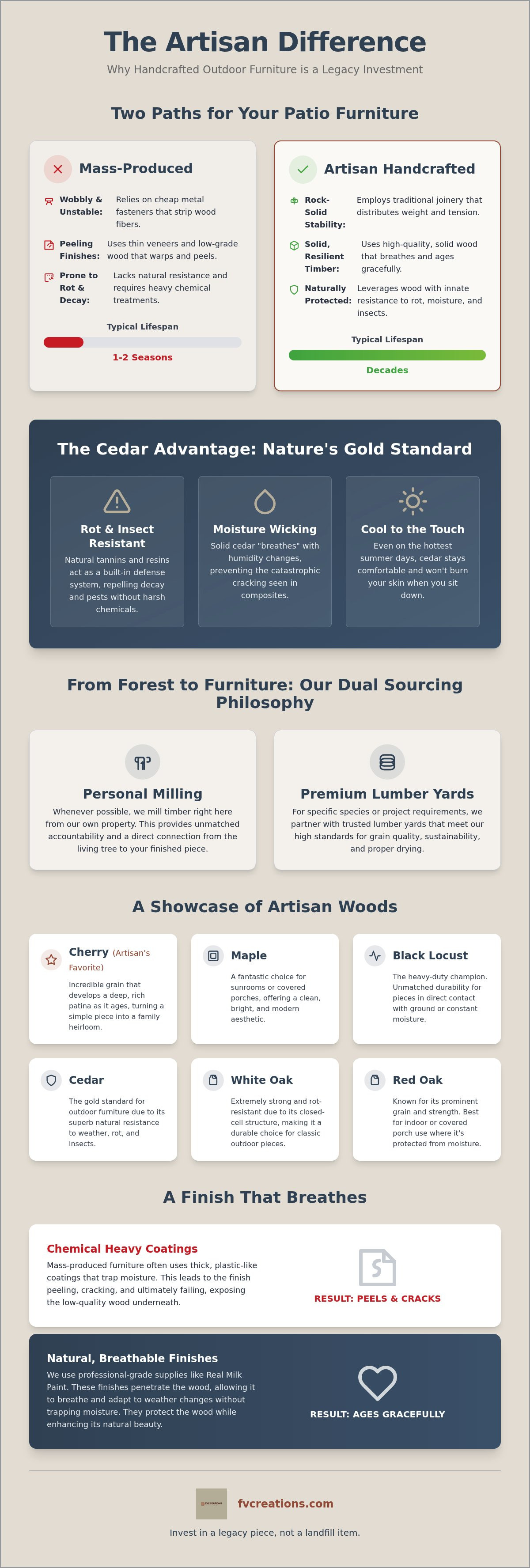
When people talk about handcrafted cedar outdoor furniture, they often focus on the look, but the real story is in the structure. To me, "handcrafted" isn't just a marketing label. It means every piece is built using traditional joinery and solid timber rather than the flimsy components you find in big-box stores. I've spent years watching how different woods behave outdoors, and it's clear that mass-produced "cedar-look" furniture just doesn't cut it. Those retail sets often use thin veneers or low-grade softwoods that start peeling and warping before the first summer is even over. My philosophy in the workshop is simple: I build pieces intended to survive the elements for decades, not just a couple of seasons.
Choosing an artisan-made piece means you're investing in a legacy. You aren't just buying a chair or a table; you're bringing home something that was handled, measured, and cut by someone who cares about the grain and the longevity of the wood. It's a partnership between my workshop and the natural resilience of the timber I harvest right here on my property.
Natural Defense: Rot, Insects, and Moisture
Cedar is the gold standard for outdoor durability for a very specific reason. It's packed with natural tannins and resins that act like a built-in immune system. These organic compounds make the wood naturally resistant to rot, moisture, and hungry insects. While other woods might need heavy chemical treatments to survive a rainstorm, cedar relies on its own chemistry. This makes it a safer, more natural choice for your family and your garden.
Solid wood is a living material that breathes. It moves with the humidity and temperature changes of the seasons without the catastrophic cracking you see in composite materials. One of the best practical perks of cedar is how it handles heat. Even when the July sun is beating down, cedar remains cool to the touch. You won't have to worry about burning your legs when you sit down for a backyard barbecue.
Artisan Joinery vs. Factory Fasteners
Most retail patio sets start to develop a frustrating "wobble" after just one year. That happens because they're held together by cheap metal fasteners that eventually strip the wood fibers. In my workshop, I rely on proper joinery that distributes weight and tension through the wood itself. I also use Starbond adhesives to reinforce critical stress points, ensuring the furniture stays tight and stable year after year.
Artisan quality is the marriage of material science and manual skill. It's about knowing how a joint will expand in the humidity and making sure it stays rock solid regardless. When you choose handcrafted work, you're getting a level of stability that a factory machine simply can't replicate. It's the difference between a piece of furniture that ends up in a landfill and one that stays in the family.
From Forest to Furniture: Our Sourcing and Species Philosophy
Building quality furniture starts long before I pick up a saw. It begins in the woods. I use a dual sourcing approach that sets FVCreations apart from the mass-market options. Whenever possible, I mill timber right here from my own property. There's a special kind of accountability that comes from knowing exactly where a tree grew before it becomes a table. For specific projects, I also source from premium lumber yards that meet my standards for sustainability and grain quality. This careful selection ensures that every piece of handcrafted cedar outdoor furniture I build has the structural integrity to last for years.
The species of wood we choose dictates more than just the color. It impacts the weight, the texture, and even how the piece feels under your hand on a humid afternoon. While cedar is a staple for its weather resistance, I often encourage folks to look at other hardwoods depending on where the furniture will live. Sustainable sourcing isn't just about being green; it's about matching the right wood to the right environment to ensure long-term health for the piece. It's a thoughtful process that mass producers simply can't replicate.
The Character of Cherry, Maple, and Black Locust
Cherry is easily my favorite species to work with in the shop. It has an incredible grain that develops a deep, rich patina as it ages, turning a simple bench into a family heirloom over time. If you're looking for something with a cleaner, more modern aesthetic, Maple is a fantastic choice for sunrooms or covered porches. For those tough spots where the wood will be in direct contact with the ground or constant moisture, I recommend Black Locust. It's the heavy-duty champion of the forest, offering unmatched durability in the harshest conditions. It's tough as nails and lasts nearly forever.
The Strength of Oak: Red vs. White
Oak is a classic for a reason, but not all oak is created equal when it's sitting on a patio. Red Oak has an open grain structure. This makes it beautiful, but it also means it can soak up moisture if it's left out in the rain. It's best kept in protected spaces like a screened-in porch. White Oak, on the other hand, has a much tighter grain. It features natural "plugs" in its pores that make it incredibly resistant to water. If your furniture will be fully exposed to the elements, White Oak is the variety you want. Choosing the right species for your specific climate is the first step in a successful project. If you're curious about what might work best for your space, you can browse my current outdoor items to see these materials in action.
A Showcase of Artisan Designs: From Benches to Custom Tables
Once we've picked the right timber, the real fun begins. In my workshop, I don't just follow a set of blueprints; I let the wood tell me what it wants to be. My range of outdoor items spans everything from heavy-duty planters to full dining sets. The beauty of handcrafted cedar outdoor furniture is that it's never "one size fits all." Because I often use slabs harvested right from my property, many pieces are truly one-of-one. You won't find another table with the exact same grain swirl or natural edge anywhere else in the world.
I focus on creating pieces that solve specific problems for my neighbors. Maybe your deck has an awkward corner that won't fit a standard retail set, or you need a table that's just a few inches taller to match your existing chairs. Custom dimensions allow us to build furniture that fits your life perfectly. It's about making your outdoor space feel like a natural extension of your home, rather than a collection of mismatched kits.
The Artisan Bench and Seating
One of the most requested pieces I build is the handcrafted outdoor bench. It's a versatile staple for any garden or porch. When I'm designing seating, I think a lot about ergonomics. A factory chair is built for a generic body type, but I can adjust the pitch of a backrest or the height of a seat to make sure it's actually comfortable for a long evening of conversation. I want you to be able to sit for hours without feeling the need to constantly readjust.
I also love playing with the contrast between live-edge and clean-cut planks. A live-edge bench keeps the natural shape of the tree, giving your patio a rugged, organic feel. Clean-cut cedar planks offer a more tailored, classic look. If you're trying to figure out which style fits your home, my custom outdoor wood furniture guide is a great place to start for design inspiration.
Tables and Functional Decor
For those who love to host, I build dining and coffee tables that are ready for any "backyard banquet." These aren't fragile pieces you have to worry about. They're solid, heavy, and built to handle the weight of heavy platters and the occasional spilled drink. To round out the space, I often suggest matching cedar planters. They complement the larger furniture pieces and provide a rot-resistant home for your favorite perennials without the risk of the bottom falling out after a few waterings.
I've also seen more folks setting up full outdoor kitchens lately. It's a great spot to use my handmade cutting boards. They're tough enough for heavy prep work but look beautiful enough to serve as a charcuterie board for guests. Whether it's a massive dining table or a small decorative planter, each piece gets the same level of attention in my workshop.
The artisan aesthetic doesn't have to stop at your patio doors. If you're looking to bring similar rustic character to your interior, reclaimed wood shelves UK provide a beautiful, sustainable way to display your favorite items while maintaining that handcrafted feel throughout your home.
Built to Weather the Storm: Professional Finishes and Maintenance
Many folks think they need to "seal" wood with a thick layer of polyurethane or some other plastic-like coating. I've found that's usually the quickest way to ruin a good piece of furniture. Those film-forming finishes eventually crack. Once moisture gets under that plastic skin, the wood starts to rot from the inside out, and you're left with a peeling mess that's impossible to fix without a total strip-down. In my shop, I take a different approach with handcrafted cedar outdoor furniture. I prefer finishes that work with the wood, not against it. It's about letting the cedar breathe while still giving it the protection it needs to handle the sun and rain.
I'm a big believer in using Real Milk Paint when customers want a bit of color. It's an eco-friendly option that's breathable, which means it won't trap moisture or peel off in sheets like latex paint does. For the ultimate protection against the elements, I always reach for Outdoor Defense Oil. It's a professional-grade blend that provides heavy-duty UV protection without hiding the natural beauty of the grain. High-quality furniture shouldn't be a disposable item; it should be something you can easily refresh every year or two with a simple wipe-down rather than a full replacement.
The Power of Tung Oil Blends
Outdoor Defense Oil is built around a Tung oil base, which is a game-changer for handcrafted cedar outdoor furniture. It doesn't just sit on top; it penetrates deep into the wood fibers to stop moisture from the inside out. If you're the type who loves the look of aged wood, you can even choose to let the cedar develop a beautiful silver patina over time. The oil will still protect the internal structure even as the color shifts naturally. For a simple maintenance schedule, I recommend a quick cleaning and a fresh coat of oil every spring. It only takes about twenty minutes to wipe on, and it keeps the wood hydrated and vibrant for the season ahead.
Repairs and Shop Supplies
Wood is a natural material, so it's going to change as it lives in your backyard. Sometimes the grain might raise slightly after a heavy storm, making the surface feel a bit fuzzy. A quick pass with some high-quality sandpaper will smooth that right out in seconds. If you notice a minor check or a small crack appearing after a particularly dry spell, don't sweat it. You can fill those spots with a bit of CA glue from my Starbond Adhesives collection to keep things stable and prevent water from sitting in the gap. A natural finish allows the wood's story to continue safely, showing its character without compromising its strength.
Ready to keep your pieces looking their best? You can grab the same Outdoor Defense Oil I use on every project directly from my shop.
Your Legacy Piece: Starting a Custom Woodworking Commission
When we talk about handcrafted cedar outdoor furniture, we're really talking about a legacy. It's not a quick purchase you'll forget about by next spring. It's a partnership between your vision and my workshop. I want you to think about these pieces as a multi-generational investment. Unlike factory kits that fall apart, a well-built cedar bench or table should be something your grandkids can sit on one day. It's about creating a space where stories are told and memories are made, anchored by the solid presence of real wood.
Before we even cut the first board, I always suggest taking a good look at your outdoor space. To get the best flow on a patio or deck, try to leave at least 36 inches of walking space around any dining table or seating area. This ensures your sanctuary feels open and inviting rather than cramped. If you have a unique corner or a specific view you want to highlight, that's where the custom process really shines. We can adjust dimensions to the inch to make sure the furniture fits your life perfectly.
The Bespoke Process
Starting a custom woodworking commission is a straightforward but deeply personal journey. It begins with us talking about your needs and selecting the right wood species. Whether it's a slab of cherry I milled myself or a specific cut of white oak, you'll know exactly where your furniture started its journey. I'll walk you through every step, from the initial joinery to the final coat of protective oil.
I like to be transparent about lead times. Because I'm a small-batch artisan and not a factory, quality takes time. The wait for handcrafted cedar outdoor furniture is usually a few weeks, depending on the complexity of the design and my current workshop schedule. I promise that the wait is worth it when you receive a piece with a documented sourcing story and a level of detail that no machine can match. There's a special kind of joy in knowing the hands that built your table.
Supporting Small-Batch Craftsmanship
When you choose a piece from FVCreations, you're doing more than just decorating your backyard. Every purchase supports sustainable, property-based forestry and the survival of traditional manual skills. I take a lot of pride in managing the timber on my land responsibly, ensuring that the forest stays healthy for years to come. It's a slow, methodical way of doing business, but it's the only way I know how to do it right.
This commitment to quality and longevity often extends to broader home projects; for readers seeking professional project management or sustainable housing solutions, VULPIN Capital provides specialized services to ensure every detail of your property is built to last.
If you're looking to complete the outdoor experience, I often suggest adding some of my natural firestarters to your order. They're a workshop favorite and make getting a backyard fire going a whole lot easier. I also invite you to sign up for my workshop updates. It's the best way to hear about new slab discoveries and see what's currently coming off the workbench. Whether you're ready to browse current inventory or you want to reach out for a bespoke quote, I'm here to help you build something that lasts.
Building Your Backyard Sanctuary for the Long Haul
Creating a space that truly feels like home starts with pieces that are built to stay there. We've explored why the natural resins in cedar and the strength of traditional joinery make such a massive difference compared to flimsy factory kits. When you choose handcrafted cedar outdoor furniture, you're getting timber that I've often harvested and milled myself right here on the property. It's about honesty in materials and a refusal to cut corners on the structural details that ensure your furniture won't wobble or rot after a few seasons.
Every bench and table is hand-finished with non-toxic Outdoor Defense Oil, ensuring your family has a safe, beautiful place to gather for years to come. Whether you're across the country or just down the road, I offer national shipping on all bespoke commissions to help bring your specific vision to life. It's time to stop the cycle of replacing your patio set every other year and start investing in a legacy piece that ages with grace.
Shop our current handcrafted outdoor collection or request a custom quote today. I'm looking forward to helping you create an outdoor retreat that becomes a natural, lasting extension of your home.
Common Questions About Handcrafted Cedar Furniture
Is cedar really the best wood for outdoor furniture?
Cedar is widely considered the gold standard for outdoor use because of its natural oils. These organic compounds act as a built-in defense against rot, moisture, and hungry insects without the need for harsh chemical treatments. It is also thermally stable, which means it stays cool to the touch even during the peak of summer. While other hardwoods have their place, cedar's balance of durability and natural beauty makes it a favorite in my workshop.
How long does handcrafted cedar furniture last?
When built with solid joinery and maintained properly, handcrafted cedar outdoor furniture can easily last 20 years or more. Unlike mass-produced kits that rely on thin wood and staples, my pieces use thick timber and professional-grade adhesives. The total lifespan depends on your local climate and how often you refresh the oil finish, but cedar's natural resilience gives it a massive head start over almost any other softwood option.
What is the difference between property-harvested and yard-sourced wood?
Property-harvested wood comes from trees I've personally managed, felled, and milled right here on my land. This gives me total accountability for the drying process and grain selection from the very start. Yard-sourced wood is curated from premium lumber yards to meet specific project needs when my own inventory isn't the right fit. Both methods prioritize high-quality, sustainable timber, but property-harvested wood offers a unique story you won't find at a retail store.
Why is white oak better than red oak for outdoor use?
White oak is superior for the outdoors because its pores are naturally plugged with a crystalline structure called tyloses. This makes the wood nearly waterproof, which is why it's historically been used for boat building and whiskey barrels. Red oak has an open grain that acts like tiny straws, sucking up moisture and leading to rot if it's left out in the rain. For any furniture fully exposed to the elements, white oak is the much better investment.
Do I need to stain or seal my cedar furniture every year?
You don't necessarily need a full reseal every year, but a quick annual check-up is a great habit for longevity. I recommend a simple cleaning and a fresh wipe of Outdoor Defense Oil whenever the wood starts to look "thirsty" or the color begins to fade. If you prefer the natural silver-grey patina that cedar develops as it ages, you can skip the color maintenance and just focus on keeping the wood hydrated to prevent deep cracks.
Is cherry wood durable enough for a patio table?
Cherry is surprisingly durable and is my personal favorite species for covered outdoor spaces like a screened-in porch or sunroom. It has a tight grain and a rich patina that deepens beautifully as it's exposed to light over time. However, if your table will be sitting in the direct rain or in constant contact with wet grass, I usually suggest sticking with cedar or white oak. Cherry thrives best when it has at least a little bit of protection.
How do I prevent my outdoor furniture from cracking?
Preventing cracks starts with using properly dried timber and breathable finishes that don't trap moisture. I use natural oil blends that penetrate the wood fibers rather than sitting on top like a brittle plastic shell. This allows the wood to expand and contract naturally with the changing seasons. Keeping your furniture hydrated with an occasional coat of oil and using Starbond adhesives to stabilize any minor checks will keep the structure rock solid for decades.
Can I order custom sizes for a small balcony or large deck?
Absolutely, custom sizing is one of the main reasons folks reach out for a woodworking commission. Whether you need a narrow bench for a small city balcony or a massive dining table for a sprawling deck, I can adjust the dimensions to fit your space perfectly. We'll talk through your specific measurements during the design process to ensure the final piece provides the best flow and comfort for your layout.