

How to Sanitize a Wood Cutting Board After Raw Meat
The safest cleanup isn’t the harshest one; it’s the right sequence. After raw chicken, beef, or pork touches your board, it’s natural to wonder whether bacteria might remain and whether sanitizing will leave the wood rough or waterlogged. Knowing how to sanitize a wood cutting board after raw meat starts with one important distinction: washing removes food and residue, while sanitizing comes next.
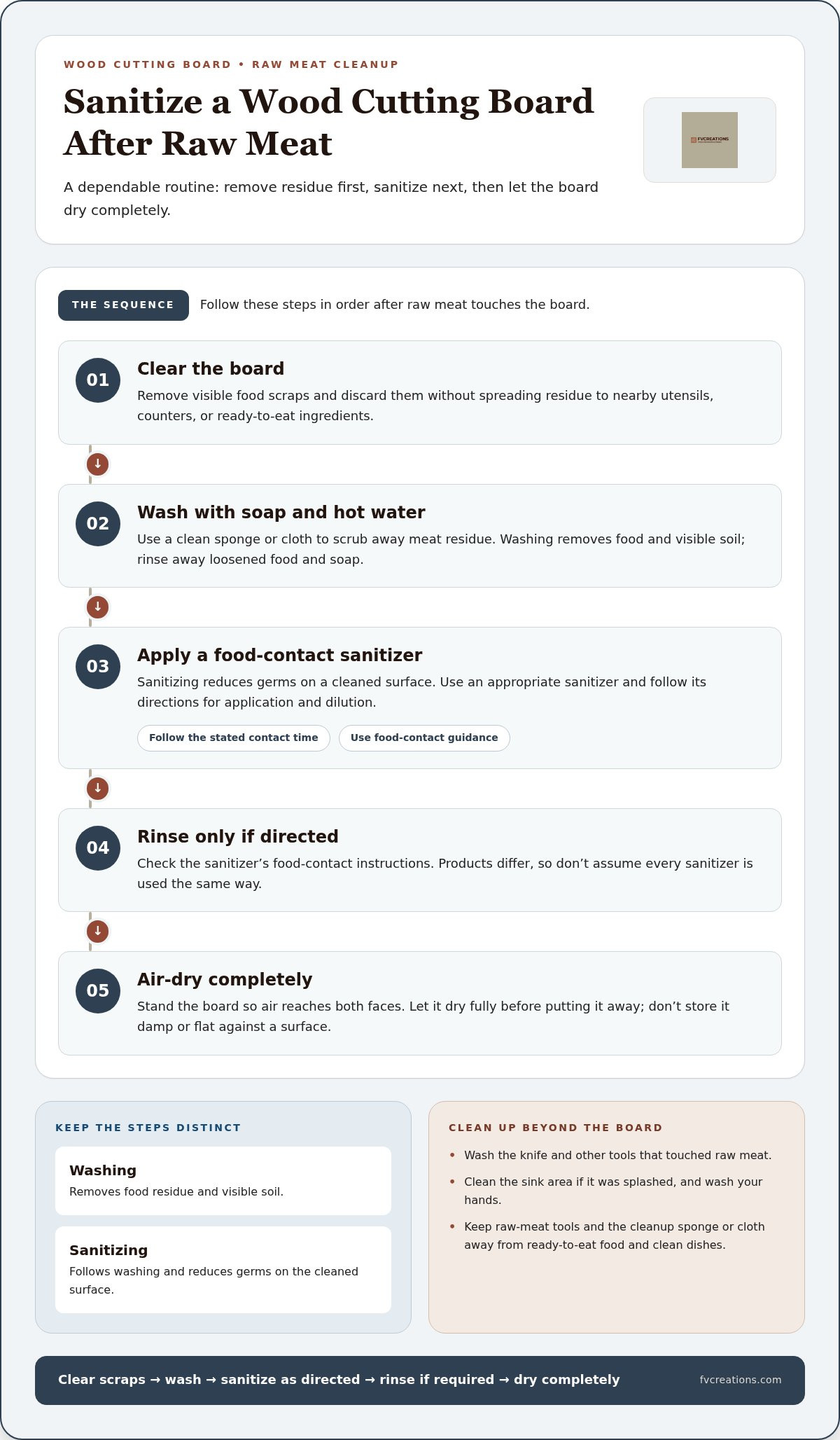
Use a repeatable routine: remove scraps, wash the board with hot, soapy water, rinse it, apply an appropriate sanitizer for the recommended contact time, and let the board dry completely. Follow the sanitizer’s directions for dilution and whether to rinse afterward. This approach addresses food residue and sanitizing without soaking the wood or leaving it wet longer than needed.
Key Takeaways
- Learn how to sanitize a wood cutting board after raw meat by following a clear cleanup sequence and the sanitizer’s directions.
- Keep washing and sanitizing distinct: remove food residue first, then use an appropriate sanitizing method.
- Dry the board fully with air reaching both faces, and avoid putting it away damp or flat against a surface.
- Keep tools used for raw meat separate from items used for ready-to-eat foods to help prevent cross-contamination.
- Use the same before, during, and after routine each time you handle raw meat for a more confident cleanup.
Why a Wood Cutting Board Needs Prompt Care After Raw Meat
After raw meat touches a wood cutting board, clean it promptly, then follow a reliable sanitizing routine. The goal isn’t to scrub the board harshly or leave it soaking. Remove food residue first, then use an appropriate sanitizing step before the board is used again.
That order matters because raw meat can leave contamination you can’t see. Salmonella and Campylobacter are examples of foodborne bacteria associated with raw meat. A board may look clean once scraps are gone, but appearance alone can’t tell you whether it has been properly cleaned and sanitized. The same practical care applies to wood and other board materials: the USDA’s food-safety guidance emphasizes cleaning and sanitizing cutting boards after use with raw meat.
What raw meat can leave on a cutting board
Meat juices and tiny food particles can spread across the board during trimming or cutting, including into knife marks and around the edges. Visible scraps matter, but so does contamination that can’t be seen. This isn’t a reason to assume every meal-prep session leads to illness; it’s a reason to make cleanup a consistent habit.
Cross-contamination happens when germs move from one surface or item to another. For example, a knife used on raw chicken can transfer contamination to a countertop, and hands that handled raw meat can spread it to a drawer pull or ready-to-eat food. Keep the board and tools used for raw meat away from foods that won’t be cooked, and wash your hands after handling raw meat. A general overview of cutting board hygiene also explains why board use and care go hand in hand.
Why washing and sanitizing are separate steps
Here’s the distinction in plain language: Cleaning removes food and other visible soil; sanitizing reduces germs on a cleaned surface. Washing first lifts away meat residue that could get in the way of a sanitizer working as intended. Sanitizing is the follow-up, not a replacement for washing.
So, if you’re learning how to sanitize a wood cutting board after raw meat, don’t skip straight to a sanitizer or rely on a quick rinse. Clear away scraps, wash the board, and then follow the directions for the sanitizing method you’re using, including instructions about contact time and rinsing. Those directions matter because sanitizers differ. A consistent sequence is easier on the board than harsh, improvised treatment and gives you a reliable way to handle cleanup after raw meat.
How to Sanitize a Wood Cutting Board After Raw Meat: Step by Step
A dependable cleanup follows the same order every time: remove scraps, wash the board, sanitize it according to the product’s directions, rinse if those directions call for it, and dry it completely. This keeps the food-safety steps clear without soaking or treating the wood more harshly than needed.
Wash away meat residue before sanitizing
Start by clearing away visible food scraps. Move them to the bin rather than wiping them onto nearby utensils, the counter, or ingredients that are ready to eat. Then wash the board with soap and hot water, using a clean sponge or cloth. Rinse away loosened food and soap. Washing removes residue that could interfere with the sanitizer’s effectiveness.
Continue the cleanup beyond the board. Wash the knife and any other tools that touched raw meat, clean the sink area if it was splashed, and wash your hands before handling ready-to-eat food. Keep the sponge or cloth used for raw-meat cleanup from wiping clean dishes or prepared ingredients.
Apply an appropriate sanitizer and follow its directions
Sanitizers differ, so don’t guess at the product, dilution, or contact time. Use a sanitizer intended for food-contact surfaces and follow its label and applicable food-safety guidance for how to apply it, how long it must remain on the board, and whether the surface needs rinsing afterward. The University of Maine cutting board sanitation research offers additional context on cleaning and sanitizing wood boards.
- Clear the board. Remove food scraps and discard them without spreading residue to nearby items.
- Wash it. Scrub the board with soap and hot water using a clean sponge or cloth, then rinse away loosened food and soap.
- Sanitize it. Apply an appropriate food-contact sanitizer exactly as directed, including its stated dilution and contact time.
- Rinse if required. Follow the sanitizer’s food-contact instructions rather than assuming every product is used the same way.
- Dry thoroughly. Stand the board so air can reach both faces, and let it dry completely before putting it away.
That’s the full sequence: clear scraps, wash with soap and hot water, apply a suitable sanitizer as directed, rinse only if required, and air-dry completely. Don’t substitute vinegar or a homemade mixture for a sanitizer unless current food-contact guidance identifies that specific method as appropriate. A sharp smell or spotless-looking surface isn’t proof that a product was used correctly.
When choosing a board for regular kitchen use, consider the care routine as well as the design. You can browse FVCreations’ wooden cutting board selection.
Which Sanitizing Methods Are Appropriate for a Wooden Board?
For how to sanitize a wood cutting board after raw meat, keep two concerns in view: follow food-safety directions for a food-contact surface, and don’t leave the wood unnecessarily wet. Soap-and-water washing removes food residue; it isn’t the sanitizing step. Use a sanitizer only as directed, including its stated strength and contact time.
Routine washing
Soap and hot water, applied with a clean sponge or cloth, remove food residue and visible soil. This is an essential first step, but it doesn’t replace sanitizing after raw meat.
Sanitizing
A food-contact sanitizer used according to current guidance and its label reduces germs on the already-clean surface. Follow directions for dilution, contact time, and whether rinsing is required.
That distinction helps avoid two common missteps: treating a quick wash as the entire cleanup, or choosing a stronger mixture than the directions call for. A sanitizer is used as specified, not made more suitable by using a harsher mixture. Apply it to the cleaned board as directed, then rinse if required and dry thoroughly. Avoid soaking the board or leaving it wet longer than the instructions require.
Using a bleach solution: verify the exact directions
Plain, unscented chlorine bleach can be used for food-contact sanitizing when diluted according to current food-safety guidance and the product’s directions. The appropriate amount depends on the bleach concentration, so don’t rely on a remembered recipe or assume every bottle is the same. The target cited for food-contact surfaces is 50-100 parts per million, but use the directions applicable to your bleach and intended use to reach the correct strength.
Follow the specified application and contact time, and check the label for whether a potable-water rinse is required. Don’t improvise an extra step or substitute a stronger mixture for a sanitizer intended for food-contact surfaces. If the label and general advice you’ve heard don’t match, use the applicable product directions and current official food-safety guidance rather than guessing.
Why vinegar, dishwashers, and quick wipes need context
Vinegar, lemon, salt, and baking soda may be familiar kitchen ingredients, but familiarity doesn’t establish that they’re validated sanitizers for a board used with raw meat. Don’t count on them as substitutes for a food-contact sanitizer supported by current guidance. A wipe can help remove a spill, but it doesn’t replace washing, a correctly applied sanitizing step, and drying.
A dishwasher isn’t a safe default for a wooden board. Extended exposure to water and heat can stress wood and contribute to warping or cracking, so clean the board by hand and avoid prolonged wetting. The sensible balance is straightforward: sanitize according to verified directions, then let the board dry fully with air reaching both sides. If you’re choosing a board for regular kitchen use, you can also explore the wooden cutting board selection.
Drying, Storing, and Checking the Board After Sanitizing
A board isn’t ready for storage just because the sanitizing step is done. Letting it dry fully completes the routine and helps limit the time wood stays damp. Wood naturally responds to moisture, so let air circulate around the board instead of trapping water against one face or leaving it in a wet sink.
Let the board dry fully before putting it away
After any rinse required by the sanitizer’s directions, set the board upright in a draining rack or another stable spot with airflow around it. Standing it on edge lets air reach both faces; make sure it won’t slip or fall. Don’t store it flat on a counter while damp, or put it away until both faces, edges, and corners feel dry.
There’s no single drying time that fits every board and kitchen. Room conditions, board thickness, and airflow all affect how quickly moisture leaves the wood, so use dryness rather than the clock as your cue. Avoid soaking the board or leaving it in standing water. If one face rests against a surface, moisture can linger there even after the exposed side feels dry.
When cuts or wear make a board harder to clean
Knife marks are a normal part of a working cutting board. The concern is damage so deep, rough, or extensive that food residue becomes difficult to remove. USDA FSIS guidance advises replacing cutting boards that have excessive wear or grooves that are hard to clean. You don’t need to treat every visible cut as a reason to discard a board; consider whether you can clean the surface effectively.
Practical inspection cue: if deep grooves or worn areas hold residue that you can’t remove during normal washing, follow USDA FSIS guidance and replace the board. After washing, check for splintering, cracks, or rough, damaged spots, especially where food tends to collect. If the board is intact and its surface can be cleaned, ordinary knife marks alone don’t necessarily mean it’s at the end of its useful life.
Drying and inspection work together. A board that dries with airflow around it is easier to check on all sides, and a quick look can catch damage before the next meal-prep session. Keep the board in a dry storage spot where air can circulate, rather than wedging it damp between other items or leaving it pressed against a wet surface.
These last steps are part of how to sanitize a wood cutting board after raw meat, not an optional extra: allow it to dry fully, then check that the surface remains cleanable. If you’re choosing a board for your kitchen, explore FVCreations’ wooden cutting boards.
A Simple Raw-Meat Board Routine for Your Kitchen
A steady routine makes raw-meat cleanup easier to remember, even when you’re preparing several parts of a meal at once. Set aside the board and tools you’ll use for raw meat, keep ready-to-eat foods away from that work area, and clean your hands and nearby surfaces after handling the meat. Then follow the wash, sanitize, and dry steps before the board goes back into use.
Prevent cross-contamination while cooking
Think about the path food and tools take through the kitchen. Keep raw meat on its designated board, and don’t move a knife, plate, or utensil that touched it straight onto cooked food or fresh ingredients. Set aside a clean landing spot for items that are safe to eat, and wash your hands with soap and water after handling raw meat.
Use this short checklist as you cook:
- Before: Set out the raw-meat board and tools, and keep ready-to-eat food and clean utensils separate.
- During: Don’t use a knife or plate that touched raw meat for food that won’t be cooked unless it has been washed first.
- After: Wash your hands, clean splashes from nearby surfaces, and wash and sanitize the board and used tools.
- Before storing: Let the board dry fully, then check that its surface is still cleanable.
The point isn’t to make meal preparation complicated. It’s to prevent raw-meat residue from reaching a clean counter, a serving plate, or the salad you’re about to serve. Keeping the raw-meat cleanup sponge or cloth from wiping ready-to-eat food areas can help make that separation more reliable.
Choose a board and care routine you can maintain
A useful board is one you can wash thoroughly, sanitize according to food-contact directions, dry with airflow around it, and inspect before the next use. Consider where it will sit while drying and whether you can store it without trapping moisture against one face. For serving, handcrafted wooden charcuterie boards have a different role from a board used for raw meat; keep serving use separate from raw-meat prep unless the board has been properly cleaned and sanitized between uses.
If you’d like to learn more about choosing and caring for serving boards, read a guide to handcrafted wooden charcuterie boards. The same basic care principle applies: clean wood gently, avoid leaving it wet, and inspect it as it gets regular use. For a board you can make part of your kitchen routine, browse the wooden cutting board selection.
Keep the sequence simple: separate raw and ready-to-eat foods, wash hands and surfaces, clean the board, use a suitable sanitizer as directed, and dry it completely. That repeatable habit is the heart of how to sanitize a wood cutting board after raw meat, without turning care of the wood into a reason to skip food-safety steps.
Make Good Board Care Part of Your Kitchen Rhythm
A board that fits your kitchen is one you’ll feel comfortable using and caring for. As you build a steady routine around how to sanitize a wood cutting board after raw meat, keep the board’s purpose in mind too: a board used for raw-meat prep needs the full cleanup routine before it’s used for another task, while serving boards deserve thoughtful everyday care of their own.
FVCreations offers handcrafted wooden boards, along with a related guide to handmade charcuterie boards and their care. Whether you’re adding a board to your kitchen or looking for one suited to serving, choose a piece you’ll enjoy using and can care for consistently.
Explore FVCreations’ handcrafted wooden cutting board selection and bring a little more care and confidence to the way you prepare and share food.
Frequently Asked Questions
How soon should I clean a wood cutting board after raw meat?
Clean the board promptly after use rather than leaving meat juices or scraps on it while you finish other kitchen tasks. Residue can dry onto the surface and make cleanup harder. Wash the board, then use a suitable sanitizer according to current food-safety directions, and let it dry fully before putting it away. If you’re preparing other foods, set the used board aside so it doesn’t touch clean ingredients or utensils.
Can I use bleach to sanitize a wooden cutting board?
Yes, if it’s a sanitizer appropriate for food-contact surfaces and you follow current USDA FSIS guidance and the product label. For how to sanitize a wood cutting board after raw meat, use directions that match the bleach concentration you have instead of relying on a remembered dilution. Observe the stated contact time and rinse only if instructed. Don’t combine bleach with other cleaners.
Does vinegar sanitize a wood cutting board after raw meat?
Don’t assume household vinegar is a validated sanitizer for a board used with raw meat. Its presence in the kitchen, or its use for other cleaning jobs, doesn’t establish that it meets food-contact sanitizing guidance. Wash the board to remove food residue, then use a sanitizing method supported by current food-safety directions and follow its label. Finish by letting the board dry fully before storing it.
Can a wooden cutting board go in the dishwasher after raw meat?
A dishwasher isn’t the default choice for a wooden board. Prolonged exposure to water and heat may stress the wood, leading to warping or cracking, and dishwasher use isn’t required for a proper cleanup. Follow the board maker’s care directions, then hand-wash and sanitize using a verified food-safety method. For example, if raw chicken juices reach the board, clean it by hand rather than leaving it in a wet sink.
Do I need to sanitize a wood cutting board after every use?
After using a board for raw meat, poultry, seafood, or another food that could contaminate it, clean and sanitize it before using it for a different food. USDA FSIS guidance recommends washing cutting boards after each use and sanitizing them after use. Routine washing removes food debris; sanitizing is the additional step for reducing germs. The same level of concern doesn’t apply to every ingredient or kitchen task.
When should I replace a wood cutting board used for raw meat?
Replace a board if excessive wear or deep grooves make it hard to clean, consistent with USDA FSIS guidance. Cracks, splinters, or damaged areas that hold food residue are practical warning signs because washing may not reach them well. Ordinary knife marks don’t automatically mean a board needs replacing. Judge the surface by whether you can remove residue thoroughly and keep the board clean between uses.