

How to Style a Live Edge Coffee Table: An Artisan Interior Guide
A beautiful slab of natural timber doesn't need a mountain of store-bought knick-knacks to look complete. When I'm working in the shop, whether I'm milling a log from our own property or selecting a unique piece from an outside lumber yard, I always look for the story in the grain. But once that piece gets into a living room, it's easy to feel overwhelmed by the asymmetrical edges and unique undertones. Learning how to style a live edge coffee table is all about working with the wood rather than fighting against it. You want to highlight the natural character without overcrowding the surface or clashing with your sofa.
In this artisan interior guide, you'll discover how to balance raw organic curves, choose intentional decor, and highlight natural hardwood grain in your living room. I'll share my favorite tips for picking the right trays, books, and ceramics that complement unique species like white oak, maple, tough black locust, and my absolute favorite, rich cherry wood. We'll also cover practical ways to protect these delicate natural oil finishes from daily spills and scratches so your handcrafted centerpiece lasts for decades.
Key Takeaways
- Balance the organic visual weight of a raw slab by leaving enough open space to showcase the natural curves and sapwood edges.
- Create engaging visual movement by layering textures and varying decor heights across three tiers, which prevents the arrangement from looking flat.
- Master how to style a live edge coffee table by coordinating your palette with the distinct undertones of hardwoods like maple, black locust, or warm, glowing cherry.
- Bridge the gap between rustic tree slabs and modern furniture by using clean, architectural lines in your surrounding decor to anchor the table in the room.
- Protect the integrity of your table's handcrafted finish by using non-toxic oils and choosing protective trays that prevent daily wear and tear.
Core Principles for Styling an Asymmetrical Live Edge Coffee Table
When I’m in the shop working on a new piece, I spend a lot of time thinking about the life of the tree. Whether I’m milling a log from my own property or hand-picking a slab from a local lumber yard, every piece of wood has a unique rhythm. A live edge or natural edge table isn't just a piece of furniture; it’s a slice of nature brought indoors. Learning how to style a live edge coffee table starts with understanding that you aren't decorating a flat, predictable surface. You’re balancing raw, organic chaos with intentional, human touches.
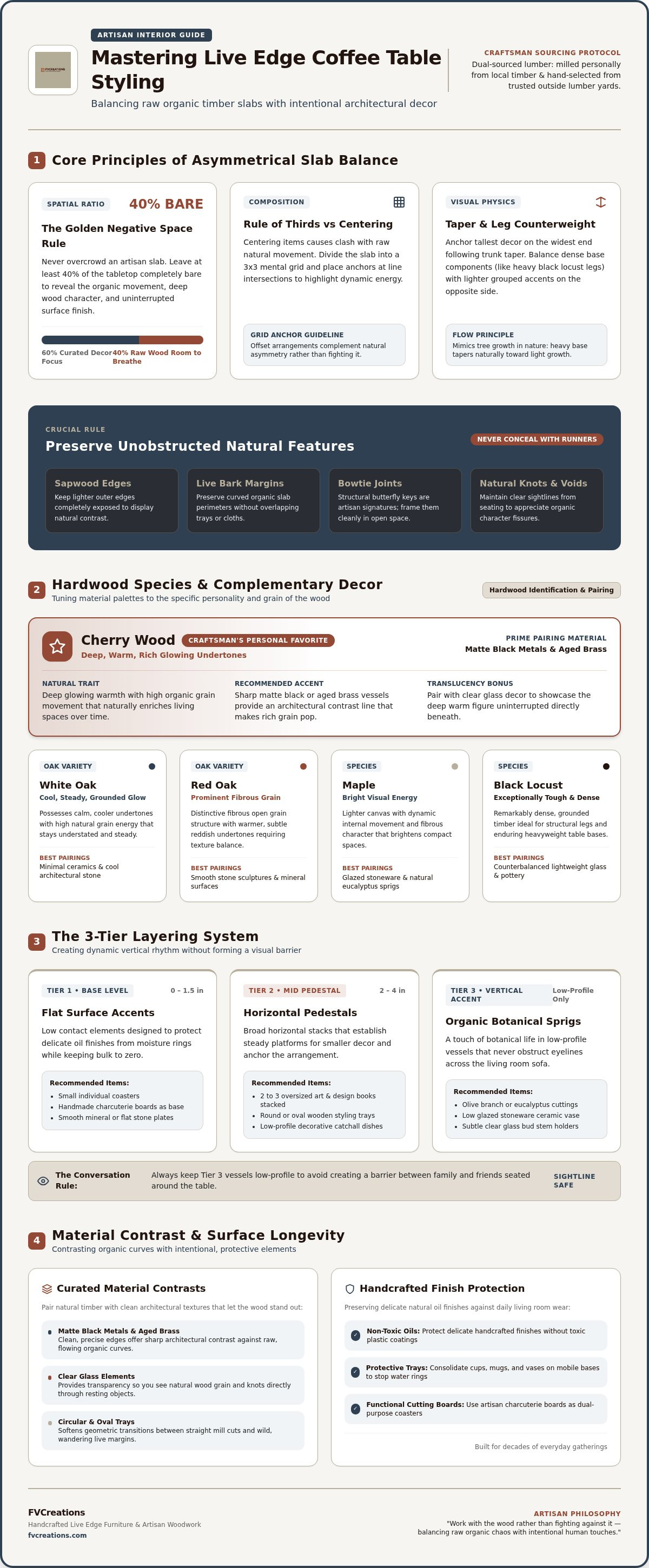
Symmetry is usually the first thing people try, but it often clashes with the natural movement of the wood. If I’ve built you a table out of white oak or maple, the grain already provides plenty of visual energy. Instead of centering a big bowl right in the middle, try the rule of thirds. Imagine your tabletop is divided into a grid and place your items where those lines intersect. Most importantly, give the wood room to breathe. I always recommend leaving at least forty percent of the tabletop completely bare. This lets the unique grain, especially the deep, warm tones of cherry wood, which is my personal favorite, really shine through.
Mastering Asymmetry and Visual Weight Across the Slab
Every slab has a heavy side and a light side. You’ll usually find the tallest part of your decor looks best when anchored on the widest end of the slab. This follows the natural taper of the tree trunk and feels right to the eye. If the table has heavy legs made from something dense like black locust, you can counterbalance that weight by grouping a few smaller, lighter accents on the opposite side. It’s all about creating a steady flow that mimics how the tree grew in the forest.
Using Negative Space to Highlight Natural Bark Lines and Voids
The most beautiful part of these tables is often the sapwood, the lighter outer edge of the tree. Keep these curved live margins completely unobstructed. If I’ve included a bowtie joint to stable a fissure or left a character-filled knot in the wood, don't hide it under a runner or a stack of magazines. Frame these natural features instead. You want to maintain clear sightlines across the surface from your sofa so you can enjoy the physical texture of the wood. Using negative space isn't just about "less is more"; it's about respecting the craftsmanship and the raw material.
Essential Decor Elements: Textures, Heights, and Materials
I've spent a lot of time in my shop watching how light hits the grain of different slabs. A piece of white oak has a cool, steady glow; black locust feels incredibly dense and grounded. When you're figuring out how to style a live edge coffee table, the key is to pick materials that don't compete with that natural beauty. You want contrast. If the wood is warm, like the slabs of cherry wood that I love working with most, I usually reach for matte black metals or aged brass. These materials provide a sharp, clean edge that highlights the organic movement of the lumber. Clear glass and fine crystal, such as the curated pieces from Benjamin & Maxwell, are another favorite of mine because they let you see the grain right through the objects sitting on top.
I like to arrange things in three distinct tiers to create visual movement. The lowest tier might be a small coaster or a flat stone. The middle tier could be a stack of books. The highest tier is usually a botanical sprig. It’s vital to keep your vessels low-profile. You don't want to block the view of your friends or family during a conversation. A table should bring people together, not act as a barrier.
Trays, Low Vessels, and Functional Centerpieces
Trays are a lifesaver for keeping things organized and protecting the wood. Since many slabs I mill personally or source from outside yards have a mix of straight cuts and wild edges, I recommend circular or oval trays. They soften the transition between the furniture and your decor. I often suggest using handmade charcuterie boards as a decorative base for candles or small vases. It’s a practical way to add a functional layer while showing off the craftsmanship of a well-finished piece of wood.
Art Books, Botanical Sprigs, and Natural Textures
Stack two or three oversized design books horizontally to act as stable pedestals for smaller items. For a bit of life, I love adding architectural stems like olive branches or eucalyptus in a simple glazed stoneware vase. The fibrous grain of a maple or red oak slab looks stunning next to smooth stone sculptures or mineral surfaces. It reminds you of the connection between the earth and the finished furniture in your home. If you appreciate this connection to the raw materials, you can explore our full range of artisan home goods to find the perfect match for your space.
Matching Decor Palettes to Hardwood Species and Undertones
Every time I step into my shop, I’m reminded that no two trees are the same. A slab’s personality is born long before it reaches your living room. My sourcing process is a dual effort; I spend a lot of time milling timber from my own property, but I also partner with reputable lumber yards to find specific species that offer unique character. This sourcing variety means I see a huge range of colors and grain patterns. When you're deciding how to style a live edge coffee table, you have to start by identifying the wood's natural undertones. The species establishes the entire mood of the room, and the grain density tells you whether to go bold or stay delicate with your decor.
Styling Cherry Wood: The Warm Crown Jewel of Hardwoods
If you’ve spent any time around my work, you know that cherry wood is my absolute favorite species. It’s the crown jewel of American hardwoods for a reason. When I first finish a cherry slab, it has a lovely light tone, but it soon develops a rich, deepening amber patina that is simply unmatched. To style this warmth, I suggest staying away from other "hot" colors. Instead, pair the amber glow with cool slate greys, crisp creams, or even a matte navy. These colors provide a sophisticated backdrop that lets the wood breathe. I’ve found that using aged brass or burnished bronze accents really enhances the golden undercurrents hidden in the grain.
Red Oak vs. White Oak: Balancing Undertones and Open Grain
I often see folks treat all oak the same, but red oak and white oak require very different styling choices. Red oak has a distinct, warm pinkish cast and a very prominent open grain. I like to anchor that texture with bold charcoal accents or dark ironware; something heavy enough to match the wood's visual strength. White oak is a different story. It has a more muted, olive-toned grain that feels very modern. It’s the perfect candidate for a minimalist Scandinavian look. Try styling white oak with washed linens, pale ceramics, and plenty of white space to keep the room feeling airy and light.
Curating Around Pale Maple and Dense Black Locust
Maple is wonderfully luminous. Its blond surface acts like a blank canvas, but it can look a bit washed out if you don't add some depth. I love complementing maple with deep terracotta tones and rich leathers to ground the space. On the other end of the spectrum is black locust. It’s exceptionally dense, heavy, and has a unique greenish-gold cast that you won't find anywhere else. Because the figure in black locust is so complex, I always advise keeping the surrounding silhouettes stark and minimalist. You want the wood to be the primary artwork in the room without having to compete for attention.
Integrating a Live Edge Table into Different Interior Design Aesthetics
I often hear folks say that a raw slab only belongs in a rustic cabin or a mountain lodge. In my experience at the shop, that couldn't be further from the truth. Whether I'm milling a fresh log from my own property or picking out a unique piece of black locust or maple from a local lumber yard, I see these tables as versatile bridges between styles. The trick for how to style a live edge coffee table in a modern home is all about balance. You want to surround the organic, wild curves of the wood with clean, architectural lines that anchor the piece in the room.
Modern Organic and Japandi Living Room Settings
For an industrial vibe, I love juxtaposing organic edges against black steel legs and heavy leather armchairs. If you prefer a Mid-Century Modern feel, you can use tapered legs to give a heavy hardwood slab a sense of visual lightness. This contrast between the rugged timber and the sleek metal or angled legs creates a lot of interest. If you're looking to carry this look throughout your home, you might enjoy my artisan's guide to handcrafted wood desks, which covers similar sourcing and quality principles for your workspace.
Selecting the Right Rug, Lighting, and Seating Proportions
Your rug and lighting are just as important as the decor on top. I always suggest choosing a solid or low-pattern wool rug. This provides a neutral foundation that doesn't compete with the irregular contours of the slab. When it comes to lighting, position an overhead pendant, directional sconces, or an artisan accent lamp from makers like Aihki Design on an adjacent surface to cast a soft raking light across the grain. This highlights the dimensional topography of the bark line, especially on a stunning piece of cherry wood, which remains my personal favorite species to work with. Just make sure you maintain at least eighteen inches of walking clearance between your sofa cushions and the table edges to keep the room functional.
Ready to bring a piece of the forest into your home? Browse our current artisan furniture offerings to find a slab that fits your unique style.
Protecting the Natural Wood Slab While Maintaining Everyday Style
When you're figuring out how to style a live edge coffee table, you aren't just thinking about the look; you're thinking about the life of the wood. In my workshop, I don't use thick, plastic-like coatings that sit on top of the grain. I prefer a breathable, non-toxic oil and wax finish. This allows you to actually feel the texture of the white oak or the dense fibers of a black locust slab. However, these natural finishes require a little more mindfulness than a mass-produced piece. Styling your table isn't just about beauty; it’s about creating a protective barrier between your daily life and the heirloom furniture I’ve spent hours crafting.
Felt Pads, Coasters, and Moisture Management Strategies
I always tell my customers that the easiest way to preserve a finish is to look at the bottom of your decor. Before you set down a ceramic vase or a metal tray, affix soft adhesive felt circles to the base. This prevents those tiny micro-scratches that can dull the luster of the wood over time. Moisture is the other big factor. I recommend using absorbent leather or end-grain wooden coasters to trap condensation. Never place a piping hot coffee mug or a damp planter directly against the timber. Even the most resilient red oak or maple can develop rings if standing water is left to sit on the surface.
Nourishing Hand-Rubbed Finishes and Natural Hardwood Fibers
Cleaning your table doesn't require harsh chemicals. A soft microfiber cloth dampened slightly with plain lukewarm water is usually all you need to wipe away dust. If the wood starts to look a bit thirsty or dull after a year or two, you can revitalize it. I suggest using pure plant-derived oils or beeswax blends to bring back that deep glow. For pieces that see a lot of action, I trust formulas like Outdoor Defense Oil to preserve both interior and exterior resilience. It’s a great way to keep the grain of my favorite species, cherry wood, looking rich and vibrant as it ages.
The Value of Bespoke Hardwood Slabs from an Authentic Workshop
A quality live edge table starts with the sourcing. I take a dual approach to finding the right timber; I mill many logs right here on my own property, but I also partner with trusted outside lumber yards to find rare figures and specific species. Whether it’s a wide slab of maple or a character-filled piece of white oak, I select every board for its structural balance and proper moisture content. This ensures that the table I build for you won't warp or crack unexpectedly in your home. If you have a specific vision for your living room, I’d love to chat. Reach out to me directly to discuss custom commissions and tailored dimensions that fit your space perfectly.
Bringing the Forest Home with Confidence
Styling a live edge coffee table isn't just about placing objects; it's about honoring the tree's history. You've learned to balance organic asymmetry with the rule of thirds and to leave enough negative space for the grain to breathe. Whether your table is crafted from dense maple or my personal favorite, glowing cherry wood, the key is letting the natural edges guide your decor choices. Don't forget to protect that hand-rubbed finish with felt pads and proper coasters so the wood stays beautiful for generations.
When you truly understand how to style a live edge coffee table, you turn a piece of furniture into a living centerpiece. I take humble pride in every slab I build, whether it's milled right here on my property or hand-selected from a trusted lumber yard. I’m always happy to discuss custom dimensions or species like white oak and black locust to fit your specific room. Explore handcrafted custom woodwork and sustainable furniture commissions at FVCreations. I look forward to helping you bring a piece of authentic craftsmanship into your home.
Frequently Asked Questions
How do you style a live edge coffee table without making it look too rustic?
You can keep a live edge table from looking too much like a mountain cabin by pairing it with sleek, modern furnishings. I often suggest matching a white oak or maple slab with a low-slung, neutral linen sofa and black steel legs. Using architectural decor like glass vases or matte metal trays creates a sharp contrast against the raw wood. This balance between organic curves and clean lines is the secret to how to style a live edge coffee table in a contemporary home.
What kind of rug looks best underneath an asymmetrical live edge coffee table?
A solid or low-pattern wool rug works best because it provides a calm foundation for the table's irregular shape. Avoid busy, colorful patterns that compete with the natural bark line and grain movement. I’ve noticed that neutral tones like slate grey or cream highlight the warm amber of cherry wood, which is my personal favorite species. Keeping the rug simple ensures that the unique silhouette of the timber slab remains the focal point of your living room.
Can you put books and decorative trays directly on an oil-finished wood slab?
You can certainly display books and trays, but you should always use protective felt pads on the bottom of hard objects. My furniture uses non-toxic oil and wax finishes that breathe, so they don't have a thick plastic shield like polyurethane. Never place damp items or hot mugs directly on the wood. Using a tray to corral smaller items is a smart way to add style while keeping the raw hardwood surface safe from daily wear.
How much open space should you leave on a live edge coffee table top?
I recommend leaving at least forty to fifty percent of the tabletop bare. The whole point of an artisan piece is to see the wood grain and those beautiful natural margins. If you crowd the surface with too much clutter, you lose the visual impact of the slab. I source my timber from my own property and reputable local yards specifically for its character, so don't be afraid to let a large portion of that hardwood be the main attraction.
What is the best way to clean and dust an irregular live edge with natural crevices?
A soft microfiber cloth is your best tool for regular dusting. For those deep natural crevices and bark lines, a clean, soft-bristled paintbrush works wonders to whisk away debris without scratching the finish. If you need to clean a spill, use a cloth dampened slightly with plain lukewarm water. Avoid harsh chemical sprays; they can strip the natural oils I use in the shop. Keeping it simple is the best way to maintain handcrafted quality.
How do you balance decor on a coffee table that is wider on one side?
Use the visual weight of the slab to guide your placement. I usually anchor the widest end with a taller item, like a vase or a stack of books, to follow the natural taper of the tree trunk. On the narrower side, place a smaller, low-profile accent to provide a subtle counterbalance. This asymmetrical approach is a key part of how to style a live edge coffee table when the slab has a distinct taper, like those I mill from native red oak.
Which wood species works best for a modern live edge coffee table?
White oak and maple are excellent choices for a modern aesthetic because of their light, neutral tones and clean grain patterns. Black locust also works well in minimalist spaces due to its unique greenish-gold cast and incredible density. While I have a deep personal love for cherry wood and its rich patina, the pale, luminous surface of maple is often the go-to for Japandi or contemporary urban lofts. Each species brings a different energy to your home.