

Is Your Wood Finish Food Safe? The 2026 Artisan’s Checklist
That "non-toxic" label on your favorite wood finish might not actually mean it is safe for your family to eat off of. I've spent years in my shop working with both the lumber I mill myself and the specialty boards I buy from outside lumber yards, and I've seen how confusing these labels can get. You shouldn't have to worry about chemicals leaching into your dinner or a finish turning rancid and sticky just because a marketing team used the wrong words. It is a common frustration, and with the FDA tightening up regulations on food-contact substances in 2026, it is more important than ever to know exactly what is in your tin.
I am sharing the exact checklist I use to vet every food safe wood finishing oil that enters my workshop. My goal is to help you stop second-guessing your supplies and start finishing your projects with total confidence. In this guide, I will walk you through the real difference between drying and curing, why a 30-day wait is often non-negotiable, and why I personally lean on natural, plant-based options like Pure Tung Oil for a finish that stands the test of time. Let's get into the shop secrets that keep your kitchenware beautiful and safe.
Key Takeaways
- Understand the critical difference between "food grade" and "food safe" labels so you can protect your kitchenware from chemical leaching.
- Learn why a drying food safe wood finishing oil is the secret to avoiding the sticky, rancid surfaces often caused by non-drying oils.
- Get a clear, five-point checklist for vetting ingredients and VOC levels before you start your next woodworking project.
- Master professional application techniques, from proper sanding grits to the "flood and soak" method, for a durable and safe seal.
- See why I use the same vetted finishes on lumber I mill myself and on the specialty wood I buy from outside lumber yards.
Understanding "Food Safe" vs. "Food Grade" for Woodworking
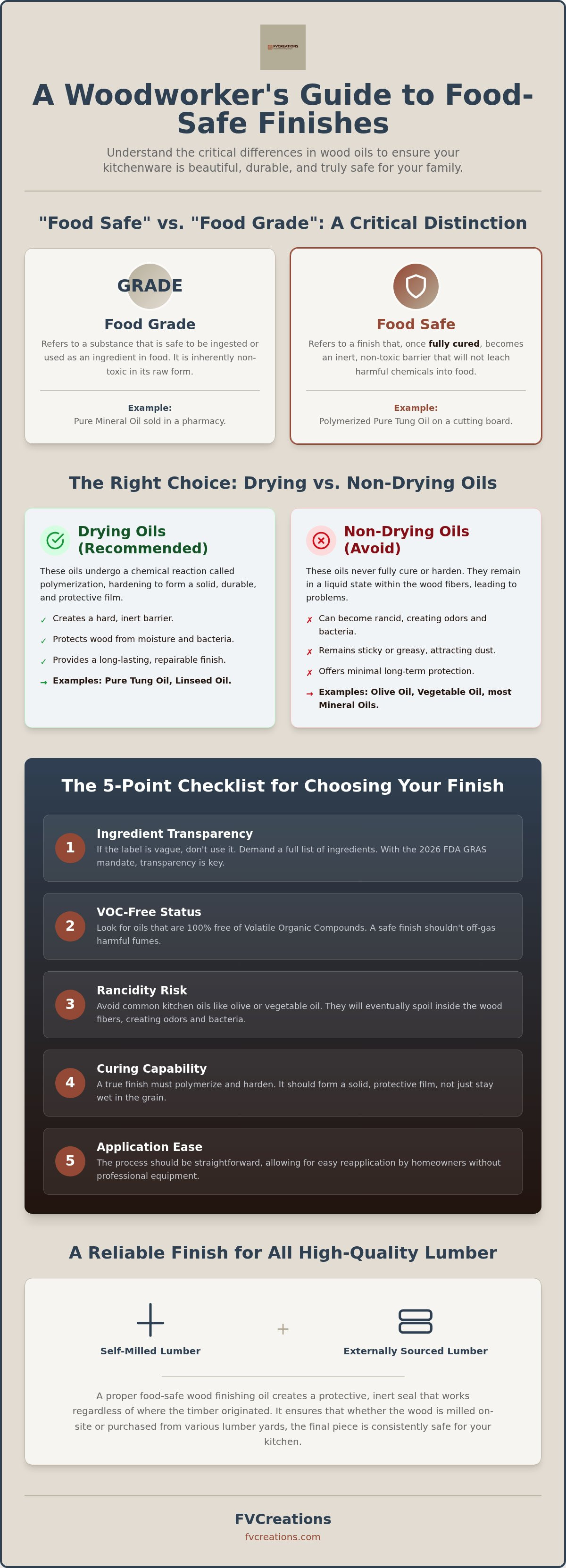
In my shop, I'm often asked if a board is "food grade" or "food safe." Most folks use those terms like they're the same thing, but there is a big difference that matters when you're preparing a meal. Food grade refers to materials that are actually safe for you to swallow or have in direct contact with food as an ingredient. Think of the high-quality mineral oil you might find at a pharmacy or a grocery store. On the other hand, food safe means the product won't leach harmful chemicals into your food once it has fully cured. A finish might be quite harsh while it's still liquid in the tin, but after the chemical reaction of curing finishes, it becomes a hard, inert surface. This distinction is vital for a porous material like wood. Because wood has open fibers, it acts like a sponge. If you use a finish that never truly hardens, it stays "wet" inside those fibers and can eventually migrate into your bread or cheese. Choosing the right food safe wood finishing oil ensures that once the work is done, the surface is a reliable barrier rather than a chemical cocktail.
The FDA Standard for Wood Contact
The FDA sets the bar with regulation 21 CFR 175.300, which covers resinous and polymeric coatings intended for food contact. It's a bit of a technical rabbit hole, but the main takeaway is that many manufacturers "self-certify." They look at the ingredients and decide if they meet the criteria based on existing data. This is why I'm cautious about the word "non-toxic." It's a marketing term that doesn't have a strict legal definition in the woodworking world. A product can be non-toxic to touch but still not be something you want touching your steak. As we move through 2026, the FDA is increasing scrutiny on substances claimed to be "Generally Recognized as Safe" (GRAS), requiring more formal notices. I always look for brands that are transparent about every single ingredient, so I know exactly what I'm putting on my boards.
Why Your Wood Source Affects Safety
Where your wood comes from also plays a part in this safety dance. I use a lot of wood I've milled myself right here on the property, which gives me a clear history of the tree from the stump to the shop. However, I also buy in a lot of outside lumber from various lumber yards to keep up with my orders. Wood from a lumber yard might have been handled differently or stored near other materials. Even my self-milled cedar or walnut has natural oils and tannins that can sometimes react with certain foods if left bare. A proper food safe wood finishing oil creates a protective seal that works regardless of where the timber started its journey. It levels the playing field, making sure that whether the wood came from my backyard or a commercial yard, the final piece is safe for your kitchen. This barrier is what I rely on for all my charcuterie boards to ensure they last for generations. For readers who are preparing for special celebrations and need more than just serving boards, you can check out Foam Cake Dummy for professional-grade display solutions.
The 5-Point Checklist for Choosing a Food Safe Wood Finishing Oil
Picking a finish shouldn't feel like a guessing game. I've spent plenty of hours in my workshop, transitioning from milling property-harvested cedar to prepping walnut I've bought from various lumber yards. Each piece of wood is different, but the safety standard for a food safe wood finishing oil should never waver. Whether I am working with a slab I cut myself or stock I sourced from a yard, I use this checklist to ensure every board is ready for your home. It's about peace of mind for me as a maker and safety for you as a user.
- Ingredient Transparency: If the label is vague, I don't use it. With the 2026 FDA mandate requiring mandatory GRAS (Generally Recognized as Safe) notices for new substances, we're seeing more accountability. I want to see a full list of what is inside that tin.
- VOC-Free Status: I look for oils that don't off-gas harmful fumes. You shouldn't need a respirator just to maintain your kitchenware.
- Rancidity Risk: I avoid anything that can rot. Kitchen staples like olive or vegetable oil will eventually go rancid inside the wood fibers, creating smells and bacteria.
- Curing Capability: A true finish needs to harden. I check if the oil polymerizes into a solid film or if it just stays "wet" and greasy deep in the grain.
- Application Ease: The process should be straightforward. I prefer finishes that a homeowner can reapply easily without professional equipment.
Checking for Hidden Driers and Solvents
Many products labeled as "boiled" linseed oil aren't actually boiled at all. Instead, they're often treated with metallic driers like cobalt or manganese to mimic the drying process. I always take the time to pull up the Safety Data Sheet (SDS) for any new finish. If I see "petroleum distillates" or "mystery solvents" listed, I won't let it touch a food-contact surface. As of July 2026, the FDA is even reassessing common additives like BHT, so staying informed on these chemical components is a full-time job for a responsible artisan.
Why Natural Doesn’t Always Mean Safe
There is a common myth that any oil from your pantry is fine for wood. That simply isn't true. While nut-based oils like walnut oil are great because they actually cure, they pose a serious risk for anyone with severe allergies. I personally trust Real Milk Paint Co. oils because they offer a consistent, professional-grade result that I can stand behind. They work beautifully on both my self-milled lumber and the boards I buy from outside lumber yards. If you want a piece that has already been through this rigorous vetting, you can see the results on my handcrafted charcuterie boards.
Drying vs. Non-Drying Oils: Which One Does Your Project Need?
I often see folks get frustrated when their freshly oiled board feels "thirsty" again just a week later. The reason usually comes down to whether they used a drying or a non-drying oil. In my shop, I handle a variety of materials, from property-harvested cedar to high-end hardwoods I've bought from outside lumber yards. Each piece of wood reacts differently, but the chemistry of the oil remains the same. A non-drying oil, like food-grade mineral oil, stays liquid inside the wood fibers. It's affordable and easy to find, but it never actually hardens. This means it can wash away with soap and water, requiring you to reapply it constantly to keep the wood protected. It's a temporary fix, not a permanent seal.
A drying food safe wood finishing oil, like Pure Tung Oil, is a different beast entirely. These oils go through a process called polymerization. When they're exposed to oxygen, they undergo a chemical reaction that turns the liquid oil into a hard, durable solid. This solid film lives inside the wood grain, creating a permanent barrier that won't wash off. There are also semi-drying oils, like walnut or linseed oil, which sit somewhere in the middle. They will eventually harden, but they take much longer and often don't provide the same level of water resistance as a true drying oil. Choosing between them depends on how you plan to use the piece. If you're just looking for a quick shine on a decorative bowl, a non-drying oil is fine. If you want a legacy piece that stands up to moisture, you want something that cures.
The Case for Pure Tung Oil
I consider Pure Tung Oil the gold standard for handmade charcuterie boards. It is a completely natural, plant-based finish that creates a matte, waterproof seal once it's done. The catch is that you have to be patient. While the surface might feel dry in a day or two, it takes a full 30 days to reach a total cure. That's the window the FDA and most artisans agree on for a finish to be truly food-safe and durable. I use this on almost everything I make, whether it's from my own milled lumber or stock from the lumber yards, because I know it won't ever go rancid or leach into your food.
When to Use Mineral Oil and Beeswax
There is still a place for mineral oil in the kitchen, especially for high-use butcher blocks that see a lot of heavy chopping. Since knives will eventually scar any hard finish, many people prefer a non-drying food safe wood finishing oil that they can just wipe on every few weeks. Mixing mineral oil with beeswax creates a "board butter" that adds a nice grip to the wood and a bit of an extra moisture barrier. It is a great solution for daily tools that get beat up and need a quick, convenient refresh without waiting a month for a full cure.
How to Apply Finishing Oil for a Durable, Food-Safe Seal
Applying a food safe wood finishing oil is where the real magic happens in my shop. I've spent thousands of hours at my workbench, and I can tell you that even the most expensive oil won't help if the application is rushed. Whether I'm finishing a walnut board I milled from my own property or a piece of cherry I bought from one of the local lumber yards, the technique stays the same. The wood needs to be prepared to "drink" the oil so the protection goes deep into the fibers rather than just sitting on top.
- Sanding the Surface: I start by sanding the wood to a 150 or 220 grit. If you sand much higher than that, you can actually "burnish" the wood, which closes the pores and prevents the oil from soaking in.
- The Flood and Soak Method: I don't just wipe the oil on. I pour a generous amount onto the wood and spread it out until the board can't take any more. I let it sit for about 20 minutes to ensure total saturation.
- Wiping the Excess: This is the most important step. After the soak, you must wipe away every bit of liquid oil with a clean, lint-free rag. If you leave puddles, they will turn into a sticky, gummy mess that is very hard to fix.
- Patience for the Cure: There's a big difference between drying and curing. Your board might feel dry in a few hours, but it isn't ready for a steak until it has fully cured, which usually takes about 30 days.
Farmer Vic’s Shop Secret: Grain Raising
One trick I always use, whether I'm working with self-milled cedar or outside lumber from a yard, is called raising the grain. Before my final sanding, I take a damp cloth and wipe down the entire piece. This "pops" the wood fibers that were flattened during the previous sanding steps. Once the wood is dry, it will feel a bit fuzzy. I then go back over it with the final grit from my sanding paper collections. This simple step ensures your board stays buttery smooth even after its first few washes in your kitchen sink.
Long-Term Maintenance Schedule
Wood is a living material, and it will eventually get "thirsty" again. You'll know it's time for a top-up when the color looks a bit dull or water stops beading on the surface. Just make sure you clean the wood with a mild soap and let it dry completely before you add a fresh coat of oil. For a deeper look at keeping your boards in top shape, you can read my guide on how to oil a wooden cutting board. If you want a piece that has already been through this professional finishing process, take a look at my latest charcuterie boards.
Why I Trust Real Milk Paint Co. for My Handcrafted Boards
I've learned the hard way that a beautiful piece of wood is only as good as the finish you put on it. In my shop, my reputation is built on the personal connection between the raw material and the final product. I can't afford to use a mystery finish that might peel, turn sticky, or fail to protect. That is why I have personally vetted every food safe wood finishing oil I use, and I keep coming back to Real Milk Paint Co. Their products offer the kind of transparency that a small-batch artisan needs to sleep at night. I know that when I send a board to your kitchen, it is finished with something that is as honest as the wood itself.
One of the things I appreciate most is how these finishes handle different wood species. I work with a lot of cedar for my outdoor items, which has its own natural resins and oils. Then I have the hardwoods like walnut and cherry that I use for my kitchenware. Whether the wood is dense or porous, these oils penetrate deeply and cure to a reliable, matte finish. It is a professional-grade solution that I feel comfortable recommending to anyone looking to maintain their own wooden tools at home.
Sourcing Quality: From Milling to Finishing
My workshop is a bit of a hybrid. I take a lot of pride in milling wood right here on my property, but I also buy in a lot of outside lumber from various lumber yards to make sure I have the right stock for every order. This mix of sources means I need a finish that is incredibly consistent. A board from a commercial yard might have different moisture levels or grain patterns than a piece I cut myself last summer. Using Real Milk Paint products gives me a baseline of quality. I know exactly how the oil will react, how long it will take to cure, and how it will look once it's done. That reliability is the backbone of a professional workshop.
Sustainable Choices for the Home
Sustainability isn't just a buzzword for me; it's a way of life. I prefer plant-based, biodegradable oils because they are better for the environment and safer for your home. This commitment to natural purity is something I prioritize in all areas of my life, which is why I value the organic approach of House of Eden & Adam for our family's skincare needs. Research shows that 80% of consumers are now willing to pay more for sustainably produced goods, and I believe that starts with the finish. Every custom wood cutting board I make is an investment in quality and longevity. By using a high-quality food safe wood finishing oil, I am ensuring that the piece won't just look good for a week, but will stay protected for years. A good finish honors the tree it came from and the hands that shaped it, making sure the story of the wood continues in your kitchen for a long time to come.
Protect Your Kitchenware with Professional-Grade Care
Choosing the right food safe wood finishing oil shouldn't feel like a roll of the dice. You now have the tools to look past marketing buzzwords and identify finishes that actually protect your wood and your family. Remember that the real secret lies in the 30-day cure and choosing a drying oil that polymerizes into a solid, waterproof barrier. I've spent years testing these products on everything from the cedar I mill myself to the fine hardwoods I buy from local lumber yards; I know they work in the real world.
I only use 100% plant-based, VOC-free options in my shop because I want every board I make to be as safe as it is beautiful. These are the same vetted supplies I use daily on all my handcrafted pieces. If you're ready to take the guesswork out of your next project, you can Shop Farmer Vic’s Vetted Food-Safe Finishes right here. Whether you're a fellow maker or just looking to maintain your favorite board, I'm here to help you get the best results possible. Keep crafting and enjoy the peace of mind that comes with a job done right.
Common Questions About Wood Finishes
Is mineral oil actually safe to use on my cutting board?
Mineral oil is safe for food contact as long as it is labeled as "food grade" or "white mineral oil." It is a non-drying oil, which means it stays liquid inside the wood fibers and will never harden or cure. While it is great for a quick refresh on a butcher block, it does require frequent reapplication because it washes away with soap and water.
Can I use olive oil or vegetable oil to finish wood?
You should never use common cooking oils like olive, vegetable, or canola oil to finish your wood projects. These oils are organic fats that will eventually go rancid, creating a sour smell and a sticky surface that can harbor bacteria. For a professional result, always use a dedicated food safe wood finishing oil that is designed to stay stable over time.
How long does it take for food-safe wood oil to cure completely?
A full chemical cure typically takes 30 days for most drying oils like Pure Tung Oil. Even if the surface feels dry to the touch within 24 to 48 hours, the oil is still polymerizing deep inside the grain. I recommend waiting the full month before you subject the board to heavy washing or use it to serve wet or oily foods.
Does "non-toxic" mean the same thing as "food safe"?
No, "non-toxic" and "food safe" are two different standards. A product can be labeled non-toxic because it won't harm you on contact, but that doesn't mean it won't leach chemicals into your food. Food safe specifically means the finish is inert and won't migrate into your meals once it has reached a full cure according to FDA guidelines.
How often should I re-apply oil to my charcuterie board?
You should re-apply oil whenever the wood starts to look "thirsty" or loses its luster. A good test is to drop a little water on the surface; if it doesn't bead up, it is time for a maintenance coat. For boards I make from lumber yard stock or my own milled timber, a light top-up every few months keeps the wood protected.
Are nut-based oils like walnut oil safe for people with allergies?
Walnut oil can still pose a risk to people with severe nut allergies, even after it has dried. While Pure Tung Oil is also derived from a nut, it is generally considered safe once fully cured because the proteins that trigger allergies are typically removed or neutralized during the curing process. If you're worried about allergies, a food-grade mineral oil is the safest bet.
What happens if I use a non-food-safe finish by mistake?
If you accidentally use a finish that isn't safe for food, you will need to sand the piece back down to raw wood. It is important to remove all the old finish from the pores of the wood to ensure no chemicals remain. Once you're back to bare wood, you can start fresh with a vetted food safe wood finishing oil to seal it properly.
Can I use tung oil on outdoor furniture that might touch food?
Yes, Pure Tung Oil is a fantastic choice for outdoor items like patio tables or cedar planters. It provides a natural, waterproof seal that handles the weather much better than non-drying oils. I've used it on both property-milled cedar and hardwoods bought from outside lumber yards with great success, as it protects the wood without the need for harsh, flaky topcoats.