

Starbond Buying Guide: Woodworking Adhesives (2026)
You've spent hours milling a perfect slab of White Oak, only to find a hairline crack right in the middle of your best face grain. It is a heart-sinking moment every maker knows. Whether I am working with lumber I've milled myself on the property or a special board from the yard, I've found that starbond adhesives are the best way to save a piece without leaving an ugly scar. We have all tried to hide flaws with standard wood glue, only to end up with a blotchy line that ruins the finish. It is frustrating when your supplies don't match the quality of your timber.
I want to help you skip that frustration. In this guide, I'll show you how to choose the right CA glues and abrasives to make repairs invisible and get your projects off the bench faster. I use these exact products every day on everything from tough Black Locust and Maple to my personal favorite, Cherry wood. We will look at which viscosities actually work for filling gaps and how to use ceramic-hybrid sanding discs to stop paper from clogging during heavy stock removal. This is about more than just glue; it is about having the right tools to respect the wood you're working with.
Key Takeaways
- Learn how to match Starbond viscosity to your specific wood project, from stabilizing cracks in punky boards to filling gaps in dense Maple or Black Locust.
- Discover why I prefer full-faced sandpaper over mesh discs to get a cleaner cut and longer life when finishing high-end pieces like my favorite Cherry wood.
- Get my personal advice on making invisible repairs across different species, including the best ways to hide knots in Red and White Oak.
- Find out how to speed up your workshop workflow with instant-cure essentials like the Wood Knot Filler Kit and accelerator.
- Understand how the right adhesive protects the integrity of your lumber, whether it is property-milled timber or premium boards from the yard.
Why Starbond is the Artisan’s Choice for Professional Woodworking
I have spent years learning the personality of different woods. Whether I am milling a fresh log from my own property or carefully selecting a board of White Oak from a lumber yard, I know that every piece has its quirks. Sometimes a beautiful slab of Maple has a tiny check, or a piece of Black Locust has a knot that needs stabilizing. Standard wood glue just won't cut it for these fine repairs. It stays on the surface, leaves a noticeable line, and takes far too long to cure when you are in the middle of a build. That is why starbond has become a permanent fixture on my workbench.
Using a professional-grade adhesive is about respecting the material. When I am working with my favorite species, Cherry, I want a fix that disappears into the grain. Standard PVA glues are meant for big surface areas and tight joinery; they aren't designed for the precision work of an artisan. Professional adhesives allow me to save a board that might otherwise end up in the scrap pile. It bridges the gap between raw lumber and a finished heirloom piece, providing the strength and clarity that high-end furniture requires.
The Difference Between Consumer Super Glue and Professional CA Glue
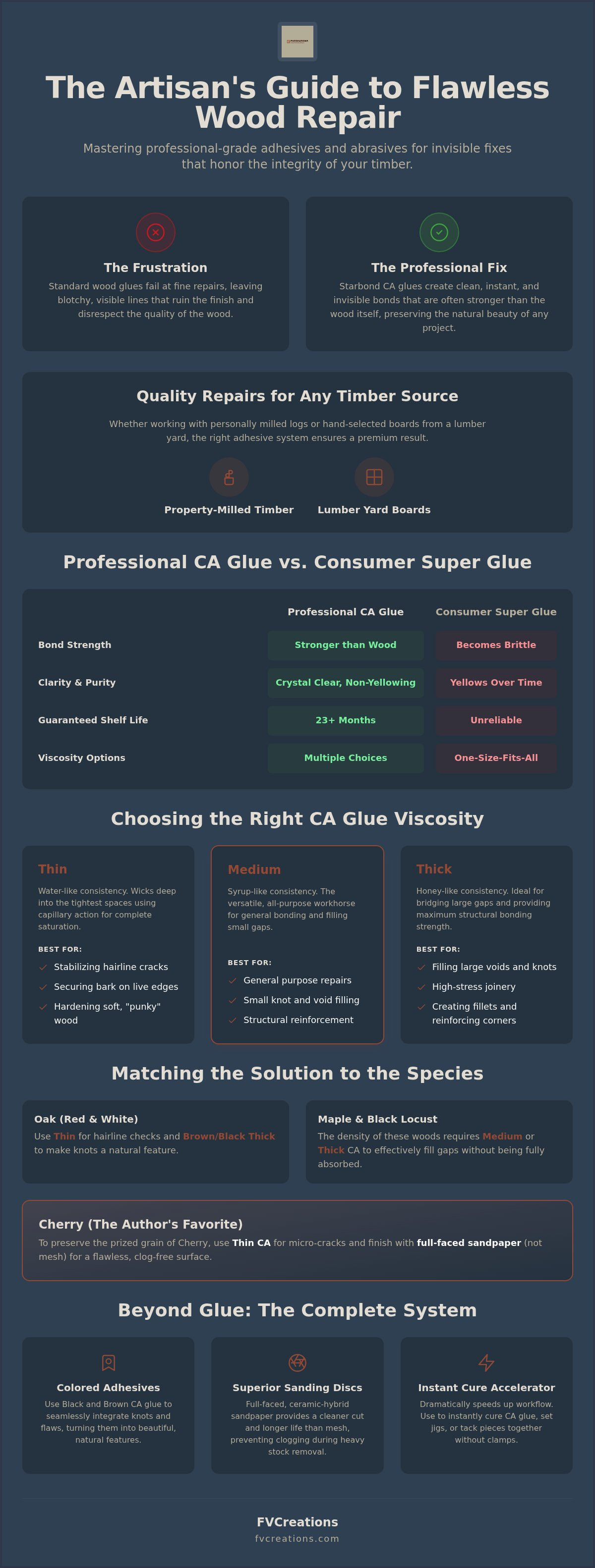
Many folks think all "super glues" are the same, but that is a mistake that can ruin a project. Professional Cyanoacrylate is chemically refined for purity and performance. Starbond is produced in small batches in Japan, which is why they can guarantee a shelf life of 23 months or more. You won't find that kind of reliability with the tubes from a big-box store. Those cheap glues often get brittle or yellow over time. In contrast, a professional CA glue acts as an "instant clamp" in the shop, providing a bond that is often stronger than the wood itself. You also get to choose your viscosity, which means you can pick the exact flow needed for a hairline crack in Red Oak or a larger gap in a rustic bench.
Integrating Starbond into Your Workshop Workflow
Efficiency is key when you are running a small shop. I use these adhesives to keep my momentum going. For example, I often use them to tack down small jigs or temporary fences while I am machining a piece. It saves me from having to drill holes or use bulky clamps that get in the way. When you learn more about CA glue for wood repair, you realize it is a tool for assembly just as much as it is for fixing mistakes. It significantly reduces the time spent waiting for traditional glues to tack up during complex assemblies like desks or benches. This speed allows me to focus on the craftsmanship rather than the clock.
Choosing the Right CA Glue Viscosity: Thin, Medium, or Thick?
Picking the right bottle is half the battle when you are standing at the workbench. I keep a variety of starbond viscosities on my shelf because a slab of Red Oak from the lumber yard behaves differently than a piece of property-harvested Cedar. Thin glue is like water, while Thick is more like honey. If you use the wrong one, you either waste glue or end up with a mess that won't cure properly. Understanding how these liquids move through wood grain is what separates a visible patch from a professional repair.
I also rely heavily on colored adhesives for a natural look. Black and Brown versions are incredible for knot integration. Instead of trying to hide a knot in a piece of Maple or Black Locust, you fill it with a dark glue that makes it look like a natural part of the wood's history. It is a much better look than a clear patch that can sometimes look like plastic. While you work with these chemicals, remember that shop safety is a priority. You can check out Woodworking - Hazards and Solutions for more on handling adhesives and dust safely.
Thin CA Glue for Hairline Cracks and Inlays
Thin glue is a lifesaver for those tiny, hairline cracks that show up after a board has been sitting in the shop. It works through capillary action, which means it literally gets sucked into the tightest grains. I use this often when I am stabilizing bark edges on my live-edge pieces. It keeps the bark from peeling off over time, which is essential when I am crafting my handmade charcuterie board collection. You just run a bead along the edge and watch it disappear into the wood. It is also the best choice for penetrating deep into "punky" or soft spots to make them solid again.
Medium and Thick Glues for Structural Reinforcement
Medium viscosity is my go-to staple for general shop tasks. It has enough body to stay where you put it but still flows well enough to fill small voids. When I move to species with deep grain or larger defects, like White Oak, I reach for the Thick or Gel versions. These are perfect for vertical surfaces because they won't run down the side of your project. They stay put in the gap until you are ready to cure them.
To make these thicker glues work their magic, you need an accelerator. It turns a minutes-long wait into a five-second cure. This is especially helpful when I am working with my favorite species, Cherry, where I want a perfect, crystal-clear finish without any bubbles. If you are looking to round out your own workshop kit, you might want to browse the Starbond collection to see which viscosities fit your current project list.
Why I Prefer Full-Faced Starbond Sandpaper over Mesh Discs
I have tried just about every abrasive on the market over the years. There is a lot of noise lately about mesh discs being the future of sanding, but in my shop, I keep coming back to full-faced starbond sandpaper. It is my little secret for getting a surface that is truly ready for a finish. Whether I am working through a stack of White Oak boards from the lumber yard or smoothing out a slab of property-milled Black Locust, the cut rate of a solid disc is just superior. Mesh has its place, but it often lacks the aggressive bite you need for heavy stock removal on harder species.
The hassle factor with mesh is a real headache in a busy shop. I've found that mesh discs tend to snag on the sharp corners of my furniture or tear when they catch a tiny knot in a piece of Maple. Full-faced paper is just more rugged and dependable. Some folks worry about dust collection, but if you have a decent vacuum setup, the hole patterns on these discs handle debris just fine. You get more grit in contact with the wood and less downtime spent changing out torn discs. If you want to see what I keep in my own cabinet, you can browse the full Starbond sandpaper collection to find the right grits for your next build.
Analyzing the Cut Rate of Starbond Abrasives
Professional sandpaper stays sharper for more passes because of how the abrasive minerals are bonded to the backing. When I am finishing my favorite species, Cherry, I need a perfectly consistent scratch pattern from 80 grit all the way up to my final sanding. Premium Starbond coatings are engineered with specialized clog-resistance that keeps wood resins from building up and causing friction burns. This is absolutely vital when you are working with dense woods like Black Locust or oily species, where heat can quickly turn a good disc into a useless piece of paper. The paper stays cool, the wood stays clean, and the work goes faster.
Longevity and Value in the Workshop
I have done the math on this more than once. In my experience, one high-quality disc lasts about as long as three generic alternatives from the big-box store. That is not just about saving a few cents; it is about the quality of the final product. A consistent scratch pattern makes a huge difference when you apply a finish like Real Milk Paint. To get even more value, I use a rubber cleaning stick to buff out the dust every few minutes. It is a simple step that extends the life of the disc and keeps the cut aggressive. While Starbond is widely known for different types of wood glue, their abrasives are just as essential for any artisan who cares about a professional result.
Matching Starbond Products to Your Wood Species and Project
Using the right adhesive is about more than just sticking two things together. It is about ensuring the repair behaves like the wood around it. Whether you are filling a knot or stabilizing a check, the goal is a seamless look. This is especially true for high-tannin woods or dense hardwoods where standard glues often fail to penetrate. I've spent years testing these combinations so you don't have to guess which bottle to grab.
Cherry is my all-time favorite wood species. I love how it starts with a soft glow and eventually deepens into a rich, dark patina. Because it changes so much over time, I only use the clearest adhesives on it. If the glue is cloudy, it will stick out like a sore thumb in two years. For light-colored Maple, the challenge is avoiding blotchiness. I use a very small amount of thin CA glue for grain repairs on custom desks and benches, making sure to sand it flush immediately. This keeps the repair localized and prevents the liquid from soaking into the surrounding fibers and ruining your finish.
Taming the Grain of Oak and Black Locust
Red Oak and White Oak might look similar, but they have very different personalities. Red Oak has wide, open pores that can drink up thin glue like a sponge. I prefer using a Medium viscosity to fill those pores or hide small knot repairs. On the other hand, Black Locust is one of the hardest domestic timbers you'll ever find. It is incredibly dense and requires a high-performance bond to hold up. I often use these tougher adhesives when building items meant for the outdoors, where the wood will move with the seasons. If you are planning a garden project, you can check out our heavy duty cedar planters to see how I combine durable timber with the right shop supplies.
To get the best results for your specific project, I recommend you explore the full range of starbond adhesives we carry in the shop.
Standout Starbond Essentials for Your Shop
After years at the bench, I have learned that your results are only as good as the supplies you keep in your cabinet. Whether I am working with a slab of Black Locust I milled myself on the property or a premium piece of White Oak from the lumber yard, I rely on a few specific items to get the job done right. The Wood Knot Filler Kit is a total game changer for anyone who loves rustic furniture. It allows you to stabilize those beautiful, gnarly knots in Red Oak or Maple without losing the character of the wood. It is a much cleaner solution than the old trick of mixing sawdust with glue, which almost always leaves a muddy mess.
You also simply cannot skip the starbond accelerator. It is the one accessory that turns a good adhesive into a precision tool. It provides that instant cure that allows you to move directly from repair to sanding without losing your momentum. I also keep a dedicated sandpaper pack on hand at all times, specifically in 80, 120, 180, and 220 grits. Having these ready to go means I can handle everything from heavy stock removal on tough timbers to the final, delicate smoothing of a tabletop.
The 'Must-Have' Starter Setup
If you are just getting started, I always recommend a multi-viscosity kit over one single large bottle. Wood is unpredictable. You might need the thin version to seep into a hairline crack in a Maple board one minute, and the thick version to fill a void in an Oak leg the next. These kits also come with precision micro-tips. These are essential for artisan work because they let you place a tiny drop exactly where it needs to go without over-applying. To make your supplies last until the final drop, keep them in a cool, dry place away from direct sunlight; I've found this keeps the chemistry fresh for much longer.
Specialty Solutions for Professional Finishes
I have discovered a few shop secrets over the years, like using thin glue as a sanding sealer for end-grain. On my charcuterie boards, the end-grain can be incredibly thirsty. A light application of adhesive seals those fibers so they don't drink up too much finish later. This is especially helpful when I am working with my favorite species, Cherry, to ensure the rich patina develops evenly. For my outdoor items, I often pair these repairs with Outdoor Defense Oil to ensure the bond stays protected against the elements. Quality supplies are the foundation of any heirloom piece, and they make the time you spend in the shop much more rewarding.
If you are ready to upgrade your own workbench, you can shop the full Starbond Collection at FVCreations to get the same tools I use every day.
Building Heirlooms with the Right Supplies
Woodworking is a journey of patience and respect for the material. Whether you are working with a slab of Black Locust you milled yourself or a piece of Red Oak from the yard, the supplies you choose define the final result. We have covered how to match the right starbond viscosity to your wood species and why full-faced sandpaper is my secret for a cleaner cut. These aren't just shop supplies; they are the tools that help you save a beautiful piece of Cherry or stabilize a knot in Maple so it lasts for generations.
I personally vet every product I carry because I use them on my own handcrafted furniture. You deserve professional-grade durability that makes your time in the shop more productive and your finished pieces more beautiful. It is about having the confidence that your repairs will be invisible and your finishes will be flawless. I am proud to share these supplies with you because I know they work in real-world conditions on property-harvested timber.
Ready to take your projects to the next level? Upgrade your shop with Farmer Vic's Starbond Collection today. I can't wait to see what you create with these tools in your own workshop.
Frequently Asked Questions
Is Starbond CA glue food safe for cutting boards?
Once fully cured, these adhesives are generally considered inert and safe for incidental food contact. They are excellent for filling small cracks or voids in species like Maple or my favorite, Cherry wood. You should always ensure the repair is sanded flush and finished with a quality food-safe oil. It is a reliable way to save a board without worrying about safety once the glue has hardened completely.
How long does a bottle of Starbond glue stay fresh?
A bottle of starbond carries a 23 month shelf life guarantee when you store it in a cool, dark place. The company produces these glues in small batches in Japan to ensure you receive a fresh product. I have found that keeping my bottles away from direct shop heat helps them last until the very last drop. It is far more dependable than generic glues that often dry up in a month.
Do I really need the Starbond Accelerator for every project?
You don't need it for every single bond, but it is essential for gap filling and using thicker viscosities. Without it, thick glues can take several minutes to set up properly. When I am working on a complex build, the accelerator saves me a massive amount of time by providing an instant cure. It allows me to move straight to the sanding phase with my preferred full-faced sandpaper without any waiting.
Can I use Starbond on oily woods like Cedar or Black Locust?
Yes, you can, but it helps to wipe the joint with a bit of solvent first to remove surface oils. Black Locust is incredibly dense and tough, while property-milled Cedar can be quite resinous. Cleaning the surface ensures the adhesive can bite into the wood fibers properly. Once the bond is set, it provides professional-grade durability that can handle the natural movement of these challenging domestic timbers, whether they are property-milled or yard-purchased.
What is the best way to remove CA glue from my fingers or wood surface?
For your skin, a dedicated debonder or acetone works best to soften the bond. If you get it on a wood surface like White Oak or Red Oak, let it cure completely first. Once it is hard, you can carefully chisel or sand it flush. This is much better than trying to wipe it while it is wet, which just smears the liquid deeper into the grain and creates a bigger mess.
Why does Farmer Vic prefer full-faced sandpaper over mesh?
I prefer full-faced sandpaper because it provides a more aggressive and consistent cut rate on hardwoods. Mesh discs are popular for dust collection, but they often tear on sharp edges or lack the bite needed for heavy stock removal on species like Black Locust. The premium coatings on the discs I carry are designed to resist clogging, giving me better results and a longer lifespan for every single disc I use in my shop.
How do I choose between Black, Brown, and Clear Starbond glue?
It depends on the look you want for your repair. I use Clear for my favorite Cherry wood or light Maple to keep the fix invisible. Black and Brown starbond versions are perfect for natural knot integration in Red or White Oak. Instead of hiding the flaw, you make it look like a natural feature of the timber. It adds a professional touch to rustic furniture that clear glue just cannot match.
Can Starbond be used for outdoor furniture repairs?
It is excellent for stabilizing cracks or filling voids in outdoor pieces, especially when paired with a protective finish. I use it on my heavy-duty Cedar planters and Black Locust items to ensure they stand up to the elements. The adhesive is heat and cold resistant once cured. Just make sure to seal the repair with a quality product like Outdoor Defense Oil to keep moisture out of the wood grain over time.