

Why Custom Furniture Is the Ultimate Housewarming Gift
Custom furniture can make a housewarming gift feel as though it belongs in the new home from the start. Choosing custom furniture as a housewarming gift lets you tailor a piece to the recipient’s space and needs instead of guessing at a standard size or style. The best choice is thoughtful and useful, without leaving the recipient with something that doesn’t fit.
A new home brings plenty of decisions, so a gift that feels special and practical can be especially welcome. A handcrafted table, bench, or smaller wooden piece can add warmth and serve a purpose for years. To choose well, consider the room’s dimensions, the recipient’s daily needs, and their taste.
This guide explains how to choose a custom piece, avoid common gifting mistakes, and find ideas for different budgets. You’ll learn what to consider before deciding, which furniture suits different spaces, and how wood, size, and use can make a gift feel personal rather than presumptive.
Key Takeaways
- Measure the intended space and consider how the recipient will use the piece before choosing its size or shape.
- Reduce gifting guesswork by learning the homeowner’s style and leaving room for practical preferences.
- Match the wood and construction to the home, keeping seasonal movement and local conditions in mind.
- Consider a smaller wooden gift for a modest budget, or a custom table or bench when you want a more substantial piece.
- Choose a piece that solves a real need, whether that’s furnishing an awkward empty spot or adding a useful touch to the home.
1. Choosing furniture without knowing the recipient's room dimensions
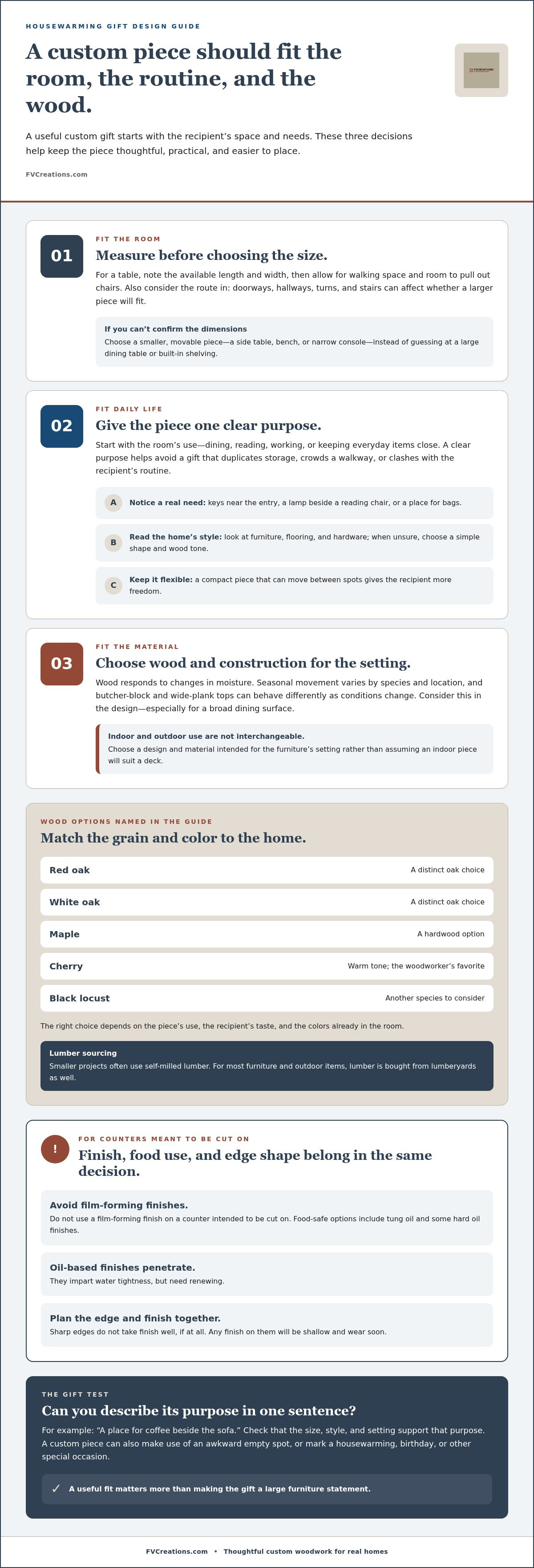
A table that looks modest in a workshop can crowd a narrow entryway or block a doorway. First, identify the room and its likely use, such as dining, reading, or storing everyday items. Ask the recipient for a quick measurement, or discreetly ask someone familiar with the home. For a table, record the available length and width, then account for walking space and room to pull out chairs. A custom piece can be made to the homeowner’s chosen dimensions and wood preferences, helping it fit the actual room.
If you can’t get exact dimensions, choose a smaller piece with a flexible purpose. A compact side table can hold keys near an entry or a lamp beside a chair. A bench can provide seating and a place to set bags, while a narrow console adds a surface without taking up the depth of a cabinet. Avoid guessing at a large dining table or built-in shelving, which depend heavily on room measurements and layout.
What materials are best for durable custom furniture? Oak, maple, cherry, walnut, butternut, elm, tiger maple, pine, and hickory are options for handcrafted furniture, each with its own grain, color, and character. Red oak and white oak are distinct choices, while cherry offers a warm tone and is a personal favorite of many woodworkers. The right material depends on the piece’s use, the recipient’s taste, and how it will fit the home.
Wood responds to changes in moisture, so seasonal movement should be part of the design conversation. The amount varies by species and location. Butcher-block and wide-plank tops can behave differently as conditions change, so construction should suit the wood and the home’s environment. This matters more for a broad dining surface than a small accent piece. For outdoor furniture, choose a design and material intended for outdoor use rather than assuming an indoor table will suit a deck.
Let the recipient’s interests guide your choice of a wooden gift. A home cook might enjoy a handcrafted charcuterie or cutting board, while someone furnishing a new office may appreciate a desk or small table. Cherry, maple, and oak have different looks, so consider the colors already in the room. A useful smaller piece can feel thoughtful on a tighter budget; the gift doesn’t need to be a large furniture statement.
Usefulness helps prevent a gift from becoming clutter. Think through the recipient’s daily routine: do keys pile up near the door, is there a bare corner beside a reading chair, or would extra storage help in a small bedroom? Choose a piece that addresses one of those needs. If you don’t know the space, a smaller handcrafted wooden gift is often easier to place than a full-size table.
2. Common mistakes when gifting furniture
A common mistake is choosing furniture for its appearance without considering the recipient’s daily routine. A sculptural coffee table may look striking, but a family with young children might need rounded corners and an easy-to-use surface. Consider whether the homeowners read, entertain, work from home, or need a place for shoes and bags. A practical gift should welcome people into the home and make an everyday task easier.
Another misstep is assuming your taste matches someone else’s style. A dark, rustic bench may feel warm to you, while the recipient’s living room has pale finishes and clean lines. Look for clues in the home’s furniture, flooring, and hardware. If you can’t identify a style they enjoy, choose a simple shape and wood tone that can sit comfortably beside different pieces.
Don’t assume every homeowner needs more storage. A cabinet or shelving unit may be useful, but it could duplicate what the recipient owns or take up space they want to keep open. Start with a specific need: an entry table for keys, a side table beside a reading chair, or a bench near the door. A clear purpose makes a gift easier to appreciate and use.
Oversizing is another avoidable problem, especially with living-room furniture. A broad coffee table can restrict the path between a sofa and doorway, while a deep bookcase may overwhelm a narrow wall. If the layout is uncertain, choose a compact, movable piece instead of a large centerpiece. A piece that can work in more than one spot gives recipients more freedom to arrange their home.
It’s also easy to overlook how the piece will fit through the home. A long table may suit a dining area but prove awkward in a stairwell or tight hallway. Before choosing a substantial gift, consider the route from the entrance to its intended room, including turns and doorways. If you don’t know the measurements, a smaller item is less likely to create a moving-day problem.
Finally, avoid choosing an outdoor piece for an indoor routine, or the reverse. A chair selected for a sunny deck needs to suit that setting, while a living-room side table belongs inside. Match the gift to where it will be used and how the recipient spends time there. For a home with an established patio, outdoor furniture may be a better fit than another piece for a crowded room.
Before settling on a gift, describe its intended use in one sentence, such as “a place for coffee beside the sofa.” Then check that the size, style, and setting support that purpose. This quick test helps distinguish a thoughtful, useful choice from furniture the recipient must rearrange their home to accommodate.
3. Custom furniture as a housewarming gift
A custom piece can make a new home feel personal because its size, shape, and purpose can be tailored to the recipient. It suits a housewarming, birthday, or other special occasion, especially when a standard table won’t make good use of an awkward corner. A narrow table can turn an empty spot into a practical place for a lamp, books, or coffee.
Start with the room’s needs, then shape the design around them. A bedroom might call for a bedside table with a drawer, while an entry could use a slim bench. Friends who host often may appreciate a dining table or wooden serving piece. A thoughtful design doesn’t need elaborate decoration; the proportions and natural character of the wood can give it a personal feel.
My experience and skill in making custom indoor furniture allow me to build tables in diverse designs and sizes, from compact accent tables to substantial dining tables. For most furniture and outdoor pieces, I buy lumber from lumberyards; I mostly use self-milled lumber for smaller projects. That means I can choose boards for each project’s size and appearance while shaping the design around how the recipient will use the finished piece. A table built for an underused corner can make that space useful without forcing a larger furniture arrangement.
Before choosing a design, consider how much the recipient would enjoy deciding themselves. Some people have a clear preference for a particular wood appearance or finish, while others would rather receive a completed piece. Share a rough sketch, the intended use, and the room’s overall feel to guide the design. These details turn a broad idea into a piece with a clear purpose.
How long does custom furniture take to make and deliver? Solid wood furniture typically has a standard delivery time of 6-8 weeks. Build that schedule into your plans if the gift is meant for a particular housewarming date, and remember that the design and delivery arrangements influence the timeline.
Which US furniture makers offer customization and gift certificates? Custom furniture makers can tailor a piece to a recipient’s requested dimensions and wood preferences. Gift certificates are a separate option, offered by makers who sell them. A certificate gives the recipient control over the final design; a completed piece works well when you already know their needs and style.
Can custom furniture be returned or exchanged in the US? Return and exchange terms are set out in the seller’s policy and the order agreement. Read those terms before placing a custom order, and keep the final design details with your purchase records.
Custom-built furniture can fill an awkward, empty space with a table made for its purpose. The gift can become part of daily life rather than another object waiting for a place. Start with the recipient’s routines and the room they want to improve, then let those details shape the piece.
4. Furniture gift ideas for different budgets
A thoughtful gift doesn’t have to be a large piece of furniture. Match its scale to your budget, then choose something the new homeowner can use or display. A small wooden accent can celebrate the move without requiring the recipient to rearrange a room. Give the gift a clear purpose: a place for keys, a spot for a plant, or a surface beside a favorite chair.
For a modest budget, consider a handmade serving board, a small shelf, or a compact bedside table. A board suits someone who enjoys hosting, while a shelf can display framed photographs or keepsakes. These gift ideas feel more personal than a generic home accessory because you can choose a form and finish that reflect the recipient’s taste. Keep the design simple if you don’t know their color preferences.
A mid-range gift might be a side table, entryway bench, or small coffee table. Choose it for a real task: a bench offers a place to sit while taking off shoes, and a side table can hold a reading lamp. For a living room, consider whether the recipient needs another surface or would rather keep the floor open. A compact footprint helps the piece work in more than one arrangement.
For a larger gift, a custom table or built-in can address a specific gap in the home. A narrow table may fit an awkward wall, while a dining table can become a gathering place for friends and family. This works best when the recipient has shared the room’s needs and measurements. A custom piece should solve a clear problem, not simply occupy a prominent space.
A group gift can make a substantial piece more manageable for several friends. Agree on its purpose before choosing a design, such as furnishing a dining nook or adding storage to an entryway. Then settle on the form together rather than combining separate ideas that could produce a mismatched result. A shared contribution can mark the move with one useful piece the household will enjoy.
Your budget also affects how much choice you can leave to the recipient. A smaller finished item provides an immediate gift, while a planned furniture piece may involve decisions about dimensions, wood, and finish. If you’re unsure of the home’s style, choose a smaller, adaptable piece. If you know the space well, a custom table can make an empty corner useful. Either way, start with how the homeowner lives, not with filling a price bracket.
5. How do I choose custom furniture that fits the recipient's home and style?
Look for patterns in the recipient’s home before settling on a design. Notice whether their furniture has straight lines or curved profiles, visible hardware or clean fronts, and a light or dark visual weight. A custom piece feels connected when its shape echoes one or two of those choices without copying the whole room. For example, a simple table with tapered legs can sit comfortably among both vintage and modern pieces.
Pay attention to the home’s existing materials, too. A room with woven baskets, linen, and natural textures may suit an uncomplicated wooden form. A space with metal accents and crisp furnishings might call for a more restrained silhouette. Use these clues to guide the design, not to create a strict matching set. Furniture that relates to the room while adding a little contrast often feels more considered.
Think about how the recipient uses the space throughout the day. A quiet reading corner may call for a small table with room for a book and a drink. A household that gathers for meals may value a table designed around conversation. Rather than adding decorative features by default, choose details that serve the person, such as a drawer for everyday items or an open shelf for frequently used books.
When possible, ask the recipient to choose between a few clear design directions. Show examples of a rounded edge versus a squared profile, or a table with a lower shelf versus an open base. A handful of focused choices makes the process collaborative without asking them to design the whole piece. It also helps avoid guessing about a detail they’ll see and use every day.
Keep the intended room in mind as you settle the design. A piece for a calm bedroom can feel softer and quieter than one intended as the center of a busy dining area. If the home has both indoor and outdoor gathering spaces, match the gift to where the recipient spends time. For a deck or patio, outdoor furniture ideas can help frame that choice around the setting.
Before placing an order, write a short design brief in plain language. Include the room, main use, style clues, and details the recipient selected. A note such as “simple lines, open base, for evening reading” gives the maker a useful direction. Keep the recipient’s comfort at the center, and let the final choices make the piece feel naturally at home.
Give the New Home a Piece That Feels Like Theirs
A new home takes shape through the details its owners choose to keep, use, and enjoy. Custom furniture as a housewarming gift can mark the beginning of a home’s next chapter with something made for its people, not just its floor plan. Think beyond move-in day: a well-chosen piece can become part of birthdays, shared meals, and everyday routines.
FVCreations offers custom indoor furniture made with the experience and skill to create tables in diverse designs and sizes, along with unique statement pieces and handcrafted items shaped around a particular need for your living space.
If you have a room, use, or rough idea in mind, take that starting point into a conversation. Contact FVCreations about custom furniture and share what you hope the piece will bring to the home. A thoughtful gift doesn’t need to be grand; it needs to feel right for the person receiving it.
Frequently Asked Questions
What types of custom furniture make good housewarming gifts?
A useful custom piece addresses a need the recipient already has, such as a desk for working from home or a bookcase for a growing collection. A small built-in can make an underused alcove functional, while a custom dining table can suit a household that regularly shares meals. For custom furniture as a housewarming gift, match the piece to the recipient’s routines, not just the room’s appearance.
How much does custom furniture typically cost in the US?
There isn’t one typical cost for custom furniture in the US because the design determines the work involved. A small, straightforward piece requires different materials and labor than a large table, built-in, or detailed storage unit. Wood species, dimensions, joinery, finish, and design complexity all affect the final quote. To compare ideas responsibly, define the piece’s purpose and essential features before discussing the project’s scope.
What are affordable custom furniture gift options?
Smaller pieces are often a practical starting point: consider a simple wall shelf, a compact plant stand, or a small serving board. Keeping the design straightforward and avoiding elaborate details can help make a custom gift more manageable. You can also give a gift card or contribute toward a larger project, allowing the recipient to choose the piece and its details. Focus on one useful feature rather than extra decoration.
What measurements should I get before ordering custom furniture?
Measure the intended space’s width, depth, and available height, then note nearby doors, windows, outlets, and trim. For a desk, record chair clearance and the legroom the recipient needs. For a cabinet, measure the wall and check that drawers or doors can open without hitting other furniture. Also measure the route into the room, including hallways and stair turns, so the finished piece can reach its destination.
What are the risks of gifting furniture without the recipient's input?
A surprise piece can miss the recipient’s taste, duplicate furniture they own, or create a problem they didn’t have before. A cabinet might cover an outlet, while a desk may not suit the way they work. Custom orders also involve choices about materials and finish that can be difficult to guess. Reduce those risks by discussing the intended use or choosing a smaller gift that leaves major room decisions to the homeowner.
How can I present or arrange delivery of custom furniture as a gift?
Coordinate delivery arrangements with the maker and allow for the standard 6-8-week delivery time. Before choosing a substantial piece, check that it can pass through the home’s entrance, hallways, stairwells, turns, and doorways.