

Handcrafted Cedar Planters with Legs: The Ultimate Comparison & Buying Guide (2026)
A garden planter shouldn't be a disposable item that ends up in a landfill after just two seasons. I've seen too many neighbors get excited about a cheap kit only to watch the wood warp and the legs buckle under the weight of wet soil by year three. It's truly frustrating to invest your heart into a garden only to have the structure fail you. You're likely looking for a way to save your back and knees from the strain of ground-level work while adding something beautiful to your patio. That's exactly why handcrafted cedar planters with legs are more than just boxes of dirt. They're pieces of outdoor furniture designed to last a lifetime.
In this guide, I'll show you why elevated cedar is the gold standard for durability and how to choose an artisan-built piece that won't rot out. I'll share how I source my materials, whether I'm milling the lumber myself or picking it up from a vetted local yard. We'll look at the best options available in 2026 and compare how cedar stacks up against other species like red oak, white oak, maple, and black locust. I'll dive into the structural secrets that prevent sagging and give you clear instructions on keeping your wood healthy. I'll even explain why cherry is my personal favorite species, though for the garden, nothing beats the natural resilience of cedar.
Key Takeaways
- Save your back and knees by choosing the right height for your garden beds, which also acts as a natural barrier against ground-dwelling pests.
- Learn why cedar planters with legs offer superior longevity compared to mass-produced kits, especially when built with proper joinery that won't pull apart.
- Understand my unique sourcing process that combines property-harvested lumber with vetted wood from local yards to ensure every piece is sustainably built.
- Explore how different species like white oak and my favorite, cherry, compare to cedar when it comes to outdoor performance and aesthetics.
- Get practical advice on using high-quality outdoor finishes to preserve the wood's natural glow or let it transition gracefully into a weathered silver.
Why Choose Cedar Planters with Legs for Your Garden?
Gardening should be about the joy of seeing things grow, not the dread of how your back will feel the next morning. I've spent plenty of years in both my workshop and my own garden, and I've learned that Raised-bed gardening is the best way to keep this hobby sustainable as we get older. Choosing cedar planters with legs isn't just about the look; it's about making the garden work for you. By bringing the soil up to waist height, you're cutting out the constant kneeling and bending that usually comes with tending to crops. It's a simple change that makes a massive difference for your joints and overall energy levels.
Beyond your own comfort, these elevated beds act as a fortress for your plants. Keeping your greens roughly 30 inches off the ground creates a natural hurdle for rabbits and those pesky ground-dwelling insects that usually treat your seedlings like a buffet. There's also a hidden benefit in the soil itself. The earth in an elevated bed warms up much faster in the spring than the cold, dense ground. This gives your herbs and veggies a head start on the season, leading to more productive harvests before the summer heat really kicks in.
Accessibility and Comfort in the Garden
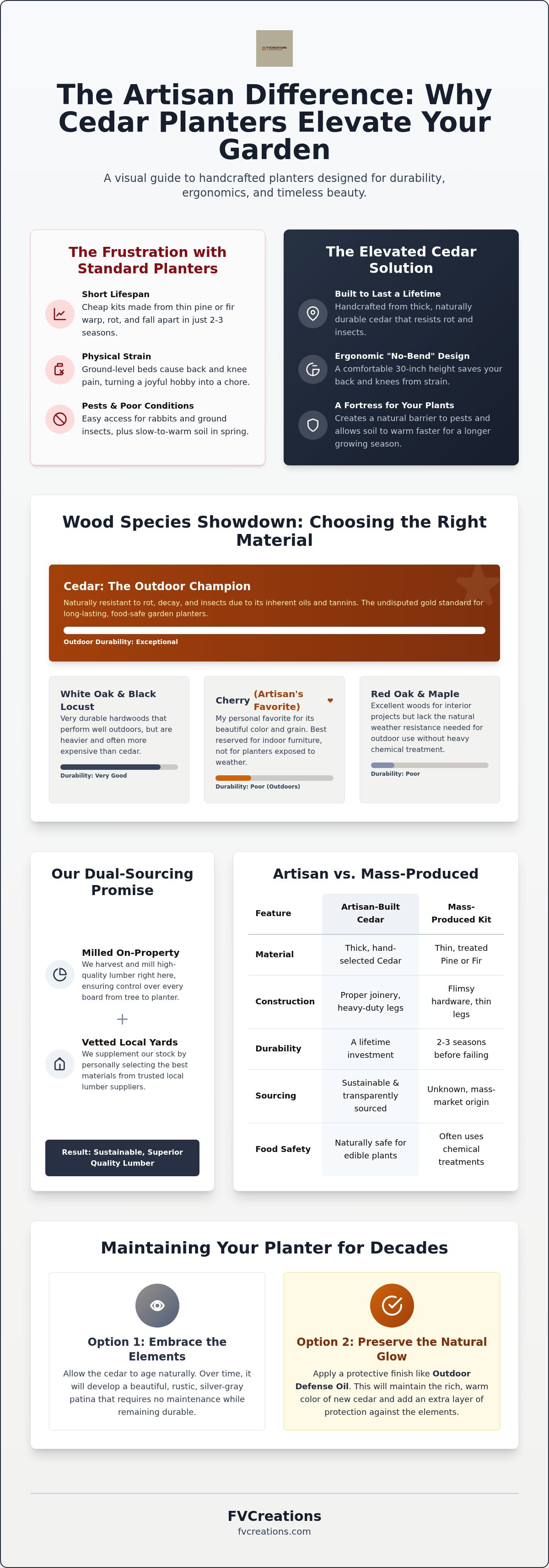
Most of the pieces I build are set at a height of 30 inches. It's the sweet spot for "no-bend" gardening. Whether you're working on a small urban balcony or a wide-open deck, these planters help you create a dedicated garden zone without the mess of digging up your lawn. I source the wood for these pieces very carefully. I often mill cedar right here on my property, but I also supplement that with high-quality stock from local lumber yards I trust. While I enjoy working with red oak or white oak for interior projects, and species like black locust or maple for their unique grains, cedar remains the king for outdoor durability. I'll admit, cherry is my absolute favorite wood to handle in the shop because of its incredible warmth and color, but for a planter that lives in the rain, cedar's natural oils are what you need for longevity.
The Structural Benefit of the "Legged" Design
One thing folks often overlook is what happens underneath the planter. When a box sits flat on a wooden deck, it traps moisture. This eventually leads to rot and ugly staining on your patio. My cedar planters with legs solve this by allowing constant airflow underneath the structure. This keeps your deck dry and helps with drainage, which is the secret to preventing root rot in your plants. I make sure these legs are heavy-duty because wet soil is incredibly heavy. You don't want a flimsy kit that sags after the first big storm. For extra protection against the elements, I always recommend a coat of Outdoor Defense Oil to keep the wood looking fresh and the structure sound for years to come.
Material Matters: Artisan-Sourced Cedar vs. Mass-Produced Kits
I've seen those big-box store kits. They look fine in the box, but once you get them home, you realize the wood is thin and the hardware is flimsy. Most of those budget options are made from fast-growth pine or fir that's been chemically treated. I don't use pine for planters. It just doesn't have the guts to stand up to wet soil and sun for more than a year or two. When I build cedar planters with legs, I take a completely different approach. I use a mix of cedar I've milled myself right here on the property and high-quality stock I've personally vetted from local lumber yards. This dual sourcing ensures I always have the best boards for the job, rather than whatever was cheapest on a pallet.
Cedar is the gold standard for a reason. The natural durability of cedar comes from organic oils and tannins that act as a built-in preservative. These compounds repel insects and resist rot without needing the nasty chemicals found in pressure-treated wood. It’s food-safe and rugged. When you're comparing cedar planters with legs to a mass-produced kit, the difference is in the thickness of the boards and the intent of the maker. While a factory might prioritize speed, I prioritize the grain. I look for boards that will stay straight and true under the pressure of a full garden.
Comparing Wood Species for Outdoor Use
In the shop, I work with all sorts of species. Black locust is another champion of rot resistance, often rivaling cedar for longevity in the ground. Then there's the oak family. I'll use white oak for certain outdoor projects because its closed-cell structure naturally keeps water out. Red oak, on the other hand, is like a bundle of straws. It'll soak up moisture and rot from the inside out, so I keep that strictly for indoor furniture. Maple is a beautiful wood that I love using for handmade charcuterie boards, but it would be a disaster in a planter. It’s just too prone to decay when it stays damp.
The Cherry Wood Distinction
If you ask me what my favorite wood is, the answer is always cherry. I love the way it smells when I’m cutting it and how it deepens into a rich, reddish-brown patina over time. The grain patterns in property-harvested cherry are truly unique, often showing character you won't find in a standard lumber yard. However, I reserve cherry for bespoke furniture and indoor commissions. It’s too precious, and frankly not durable enough, for a life of ground contact. For your backyard, you want the reliability of my handcrafted outdoor items made from honest, hardworking cedar.
Elevated Planters vs. Inground Beds: Which is Right for You?
Deciding between an inground bed and cedar planters with legs usually comes down to two things: your physical comfort and your long-term goals for your backyard space. I've spent years working with different wood species on my property, and I've seen firsthand how ground contact is the ultimate enemy of any timber. Even rot-resistant species like cedar or black locust have a much harder time when they're sitting directly on damp earth. By lifting the garden up, you're giving the wood a chance to breathe. This simple design choice naturally extends the life of the planter, making it a true "one-time buy" for your home.
There's also the matter of mobility. An inground bed is a permanent commitment to a specific spot in your yard. If a nearby tree grows and starts shading your tomatoes, you're stuck. With cedar planters with legs, you have the flexibility to chase the sun as the seasons shift. I source the wood for these builds through a mix of personal milling here on the property and careful selection from local lumber yards. While I'm a huge fan of white oak for its ruggedness and maple for its clean look in the shop, cedar is the clear winner for these elevated designs. I'll always have a soft spot for cherry wood, it's my absolute favorite to work with, but I keep that for indoor furniture where its beautiful aging process can be appreciated away from the rain.
When to Choose an Elevated Cedar Planter
These pieces are the perfect solution for decks, patios, or any gardener who wants to avoid the physical strain of bending over. They allow you to follow container gardening best practices by giving you total control over your soil quality and drainage. They are ideal for shallow-root crops like herbs, spicy peppers, and leafy greens. If you're leaning toward this style, check out our Ultimate Elevated Cedar Planter Box Checklist to make sure you have everything you need for a successful season.
When an Inground Cedar Bed Makes More Sense
If you're looking to produce food on a massive scale or grow deep-root vegetables like large carrots and parsnips, an inground bed is often the better tool for the job. These beds become a permanent part of your landscape design. I build these using the same heavy-duty standards as my furniture, ensuring they can handle the pressure of the earth. For a deeper look at which style fits your specific needs, take a look at our comprehensive guide, Handcrafted Cedar Planters: The Ultimate Guide.
Structural Engineering: Designing Planters That Dont Sag or Rot
Wet soil is deceptively heavy. When you saturate a large planter, that dirt can easily weigh over 100 pounds per cubic foot. Most budget kits use thin half-inch slats held together with staples, which is a recipe for a blowout by the second season. When I design cedar planters with legs, I treat them like heavy-duty furniture rather than simple garden boxes. I focus on the physics of weight distribution to ensure the floor never sags and the legs don't splay. This involves using thicker stock and reinforced floor supports that can handle the constant pressure of wet earth and growing roots year after year.
The secret to a planter that lasts decades is in the joinery. I stay away from simple butt joints where boards are just nailed together at the corners. Those joints eventually pull apart as the wood expands and contracts with the weather. Instead, I use interlocking joints and mechanical fasteners that bite deep into the wood. For critical reinforcements, I trust Starbond adhesives to provide a secondary bond that won't fail under tension. I also build in specific drainage slots. Proper drainage isn't just for the plants; it's for the wood. If water sits in the corners, even cedar will eventually suffer, so I engineer every piece to shed moisture quickly.
My sourcing process is just as deliberate as my engineering. I mill quite a bit of cedar right here on my property, but I also work with local lumber yards to find specific dimensions. This mix allows me to pick the best species for the job. While I'll use black locust for its incredible toughness or white oak for its water resistance, I keep red oak and maple strictly for indoor projects where they won't rot. Now, I have to mention that cherry is my absolute favorite wood to work with because of its soul and color. I love the way it feels under a chisel, but I save it for my indoor furniture. For your garden, I stick to the proven durability of my handcrafted outdoor items made from rugged cedar.
Avoiding the Common Failure Points
Big-box store kits often fail because they use undersized legs. If a leg is too thin, it will warp under the weight of the soil, causing the whole structure to lean. I use thick, structural posts with shoulder joints that allow the weight of the planter box to rest directly on the meat of the leg. This transfers the load straight to the ground. If you see a planter held together only by a few screws through the side, it's a "cheap" build that won't survive the winter. Real quality means the wood itself is doing the heavy lifting, not just the hardware.
Custom Commissions and Sizing
Every deck and patio is different, so I often take on bespoke commissions for custom sizes. Whether you need a specific length to fit a narrow balcony or a custom height to match your exact reach, I can build it. Because I mill some of my own lumber, I can even include unique "live edge" accents that you'll never find in a mass-produced kit. This gives your garden a personal, artisan touch that reflects the natural beauty of the wood. If you have a specific space in mind, feel free to reach out about a custom build that fits your home perfectly.
To complement your custom-built planters, you might also consider exploring the wider range of stylish outdoor furniture and garden accessories available at Living Chic.
Maintaining Your Artisan Cedar Planter for Decades of Use
I've spent a lot of time milling cedar and black locust right here on my property, and I've learned that even the most rugged cedar planters with legs need a little help to truly survive the decades. People often ask me for the honest truth: How long do cedar planters last? While cedar is naturally rot-resistant, its lifespan depends on how you treat the wood after it leaves my shop. You have a choice to make regarding the look of your garden. You can let the cedar silver naturally, which gives it a rugged, weathered character, or you can preserve that warm, red glow with a quality finish. Either way, the wood's natural tannins do the heavy lifting, but a bit of seasonal care is what separates a five-year planter from a thirty-year heirloom.
Cleaning and winterizing are the two most important habits you can start. Before the first hard freeze, I recommend clearing out old plant debris and checking the drainage slots I've engineered into the floor. If water stays trapped and turns to ice, it can put unnecessary pressure on the joints. I source my lumber through a mix of personal milling and vetted local yards to ensure every board is top-tier, but no wood is immune to the physics of freezing water. I've worked with everything from white oak and red oak to maple in my shop, and while white oak is tough, cedar remains my pick for these elevated beds. I'll always tell you that cherry is my absolute favorite species to handle because of its incredible soul and aging process, but for a piece that lives in the rain, cedar is the worker bee you want.
The Best Oils for Cedar Longevity
I don't believe in using generic hardware store sealers that just sit on the surface and peel off. Instead, I personally use Outdoor Defense Oil on every piece I build for my own yard. This finish is a high-quality Tung oil blend that penetrates deep into the wood grain to block moisture from the inside out. Unlike film-forming stains, it doesn't crack or bubble. It simply wears away over time, making it easy to touch up without sanding. For a deeper dive into the process, you can read my guide on How to Maintain Cedar Planters for a Lifetime.
Using Milk Paint for a Splash of Color
If you want to add some personality to your patio, I'm a big advocate for using Milk Paint on the exterior of your planters. It's the most eco-friendly choice you can make, especially for a vegetable garden, because it's made from natural ingredients like milk protein and lime. It's completely food-safe and won't leach chemicals into your soil. You can create a beautiful, rustic look that lets the texture of the cedar show through while providing an extra layer of protection against the sun. It's a great way to make your cedar planters with legs stand out while keeping your crops healthy and organic.
Bring Your Garden to New Heights
Your backyard deserves a foundation that won't rot away after a single season. We've explored how artisan engineering and the right materials make all the difference for your physical comfort and the health of your plants. Every piece I build comes from a place of accountability. I use a dual sourcing approach, mixing property-harvested wood with the best stock from local lumber yards I've personally vetted. While I'll always be partial to the warmth of cherry wood in my workshop, I know that for cedar planters with legs, nothing beats the natural resilience of heavy-duty cedar. It's the only way to ensure a piece lasts 10 years or more.
I take a lot of pride in creating tools that help you enjoy your hobby without the pain of ground-level work. If you're ready to move away from disposable kits and toward a permanent, beautiful solution for your patio, I'm here to help. You can Browse Farmer Vics Handcrafted Cedar Planters with Legs to find the perfect fit for your home. Let's build something that grows with you and stays beautiful for years to come.
Frequently Asked Questions
Do cedar planters with legs need a liner?
You don't strictly need a liner because cedar is naturally rot-resistant. However, using a permeable landscape fabric liner helps keep the fine soil from washing through the drainage slots. It also adds a layer of protection between the wet earth and the wood, which can help your cedar planters with legs stay structurally sound even longer. I build mine to breathe, so if you use a liner, just make sure it doesn't trap standing water against the boards.
How much weight can an elevated cedar planter hold?
A well-built elevated planter can hold several hundred pounds of wet soil. Since wet dirt weighs roughly 100 pounds per cubic foot, I use heavy-duty floor supports and thick corner posts. My cedar planters with legs are engineered to handle this massive load without sagging. I've seen those flimsy store-bought kits buckle under the pressure, but my joinery is designed to stay rock-solid for the long haul.
Is untreated cedar safe for growing organic vegetables?
Untreated cedar is perfectly safe and actually ideal for organic gardening. The wood contains natural oils and tannins that repel bugs and fungi without the need for toxic chemical treatments. Unlike red oak, which is porous and prone to soaking up water, or maple, which decays quickly in the rain, cedar is a closed-cell wood that stays food-safe. It's a much better choice for your vegetables than almost any other common lumber species.
What is the best height for an elevated garden bed to prevent back pain?
For most gardeners, 30 inches is the ideal height to eliminate back and knee pain. This height allows you to tend your plants while standing comfortably or sitting on a garden stool. I've found that this countertop height makes gardening much more accessible for folks who find ground-level work too physically demanding. It's high enough to keep rabbits out but low enough to remain stable when filled with heavy soil.
Can I leave my cedar planter outside during the winter?
You can absolutely leave your planter outside all winter long. Cedar is a hardy species that handles freezing temperatures and snow quite well. Just ensure the soil is cleared of dead plants and the drainage slots are clear. This prevents ice from expanding inside the box, which could put stress on the joints and adhesives. If you've used a quality finish, it will help protect the wood from the harsh cycle of freezing and thawing.
How often should I re-oil my cedar planter box?
I recommend a fresh coat of oil every one to two years if you want to maintain the wood's original color. Using a natural finish like Outdoor Defense Oil once a year keeps the grain hydrated and the color vibrant. If you prefer the weathered silver look, you can leave it untreated and it will still remain rot-resistant for years. It really comes down to your personal style and how much of that warm cedar glow you want to keep.
Will the legs of the planter rot if they sit on grass?
Constant contact with wet grass will eventually cause the very bottom of the legs to soften over time. While cedar is tough, it's always best to place the legs on a hard surface like a deck, patio, or even simple stone pavers. This allows the end grain of the wood to dry out between rains, preventing premature decay at the base. A little bit of airflow around the feet goes a long way in ensuring the planter lasts for decades.
What is the difference between Western Red Cedar and property-harvested local cedar?
Western Red Cedar is the commercial standard, but property-harvested cedar often has more character and a smaller environmental impact. I use a mix of both to ensure every board is top-quality. While I use black locust for its incredible toughness and white oak for water-resistant projects, I keep red oak and maple out of the garden. My favorite wood is cherry, but I save that for the workshop and use vetted cedar for your garden beds.