

The Beauty of a Property Harvested Wood Serving Board: A 2026 Artisan Guide
Have you ever sat down for a meal and realized the board in front of you feels completely anonymous? It's a common frustration. You spend hours preparing a beautiful spread, only to serve it on generic wood that might have come from a factory halfway across the world. You probably worry about hidden chemicals or why those mass produced boards crack after just a few uses. I've been there too. Most kitchenware today lacks the soul and durability that comes from knowing exactly where the tree grew and how it was handled.
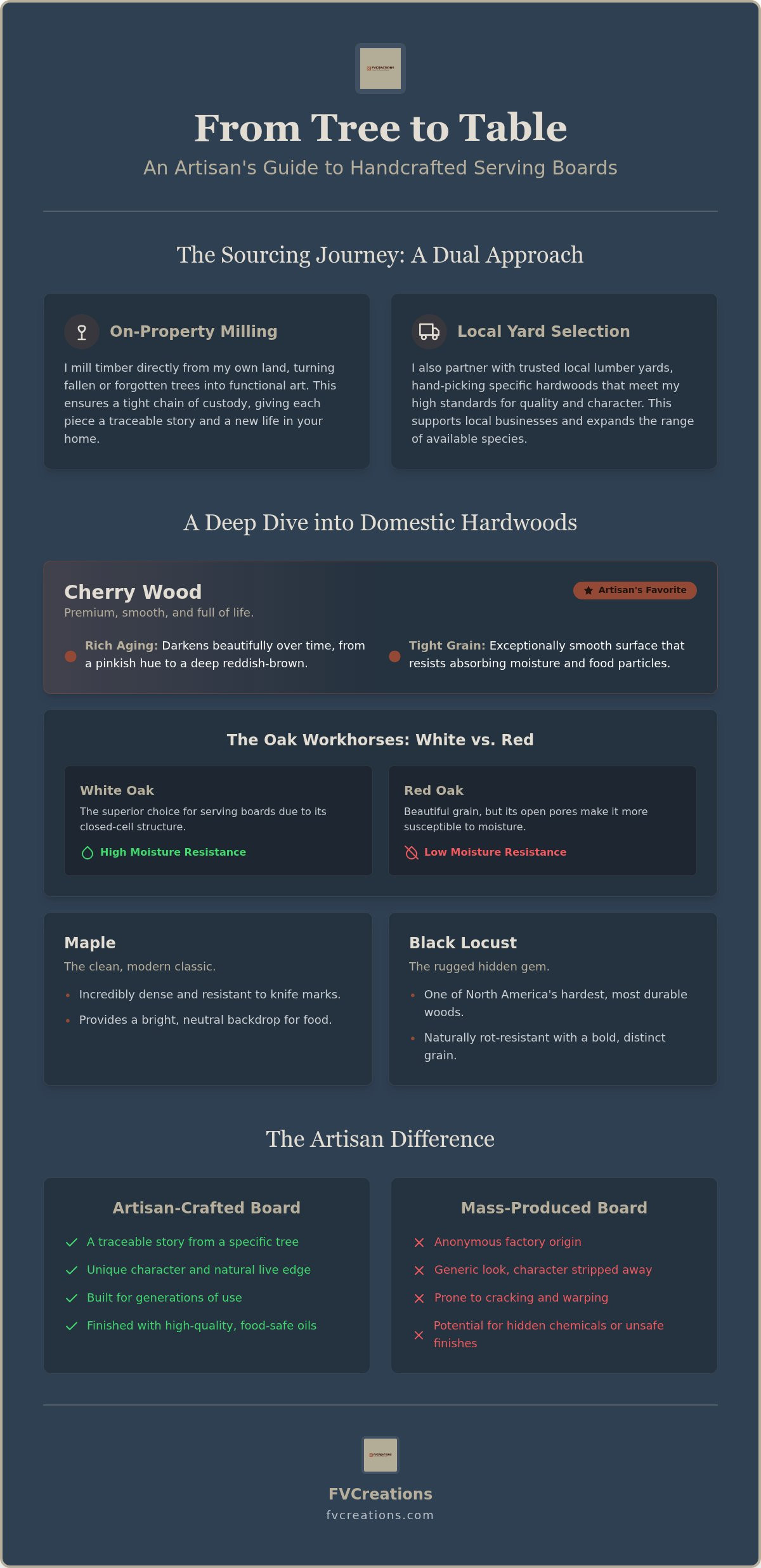
I believe a property harvested wood serving board offers something much deeper than just a surface for cheese. In this guide, I'll show you why wood taken from the land creates a more meaningful experience. We'll talk about the dual approach I use, milling lumber on my property while sourcing other pieces from local yards. I'm excited to walk you through the traits of white and red oak, maple, and black locust. I'll even share why cherry wood is my absolute favorite species to work with. You'll learn how to pick a board with a real story and keep it beautiful for years.
Key Takeaways
- Learn why a property harvested wood serving board offers a level of durability and character that mass-produced kitchenware simply can't match.
- Discover the unique personalities of domestic hardwoods, including my personal favorite, cherry, and the rugged strength of black locust.
- Understand the honest journey of our timber, which I source through a mix of personal milling on my property and careful selection from local lumber yards.
- Get practical advice on choosing the right board size for your hosting style and how to maintain its natural beauty for years.
- Find out why high-quality, food-safe finishes are essential for keeping your functional art safe and vibrant.
What Exactly is a Property Harvested Wood Serving Board?
When I talk about a property harvested wood serving board, I'm describing a piece of functional art that has never really left the hands of a craftsman. It starts with a tree right here on my own land or perhaps a log I've hand-picked from a trusted local yard. This creates a tight, single chain of custody. I mill the timber myself, watch it dry, and eventually shape it into something you can use. It's a world away from industrial lumber. Big factories process wood in massive, anonymous batches where the individual character of the tree is often stripped away. By focusing on property-specific harvesting, I can ensure that every board is unique, traceable, and completely safe for your family to use.
The Soul of the Wood: Beyond Mass Production
A board with a story just feels different when you set it on your dining table. It's not a disposable piece of plastic or a mass-produced bamboo slab that you'll throw away in a year. When you use one of our handcrafted serving boards, you are holding onto a real piece of the forest. Many of these pieces feature a Live edge or natural edge, which keeps the original outer shape of the tree visible. This style highlights the stunning natural grain of species like white oak, red oak, and maple. I also enjoy working with black locust because it's incredibly rugged and stands up to almost anything. Of course, cherry wood remains my absolute favorite. There's just something special about the way cherry warms up and deepens in color as it ages. It's the wood I reach for most often in my own home.
Sustainability in Your Own Backyard
Choosing wood harvested directly from the land is a simple way to support a healthier environment. It cuts down the carbon footprint because the timber isn't being shipped across oceans or hauled in massive trucks over long distances. As an artisan, I feel like a steward of the land. I often mill wood that would otherwise be forgotten, left to rot, or ground into mulch. By turning these logs into a property harvested wood serving board, I'm giving that tree a brand new life in your kitchen. This dual approach of milling my own timber and partnering with small local yards ensures I always have the best hardwoods ready for the workbench. It's about being a good neighbor to the earth while creating something honest that will last for generations.
Exploring the Species: From My Favorite Cherry to Rugged Black Locust
While many big retailers push exotic woods like acacia or teak, I believe the most beautiful materials grow right in our own soil. Every property harvested wood serving board I make starts with a careful look at the trees around us. I source my timber through a dual approach. Sometimes I mill a fallen log from my own property, and other times I visit local lumber yards to find specific hardwoods that meet my standards. This keeps the process grounded and honest. Using domestic hardwoods means I know exactly how the wood was treated before it reached your kitchen.
Cherry Wood: The Artisan’s Choice
Cherry wood is a premium serving material that darkens beautifully with age. It's my absolute favorite species to work with, and I always give it special attention in the shop. The grain is exceptionally tight and smooth. This is important for food contact because it prevents moisture and food particles from soaking in too quickly. I've spent quite a bit of time reading up on Black Cherry wood properties to better understand its stability and how it ages. When you first get a cherry board, it has a warm, pinkish hue. Over time, it deepens into a rich, reddish brown that looks better every year. It's the wood I choose for my most personal projects because it feels so alive.
Oak and Maple: The Kitchen Workhorses
We also rely on the "workhorses" of the forest: oak and maple. It's important to know the difference between red oak and white oak when you're picking a board. While red oak is beautiful, white oak is far superior for serving purposes because of its moisture resistance. Its pores are naturally plugged, which makes it nearly waterproof and very durable. Maple is the classic choice for anyone who likes a clean, modern aesthetic. It's an incredibly dense hardwood that resists knife marks well. It provides a bright, neutral backdrop that makes the colors of your fruits and cheeses really pop.
Black Locust: The Hidden Gem of the Property
I have to mention black locust, which is a hidden gem often found right on the property. It is incredibly hard and rot-resistant. In fact, it's one of the most durable woods in North America. Its grain pattern is bold and distinct, which makes it a real conversation starter during a dinner party. It's the kind of wood that was traditionally used for fence posts because it lasts forever, but when it's milled into a property harvested wood serving board, it reveals a surprising elegance. If you want a piece that can handle heavy use and still look like a piece of art, this is the one. If you're ready to see how these different species look when finished, you can browse our handcrafted charcuterie boards to find your perfect match.
The Journey from Tree to Table: How We Source and Mill Our Timber
Every property harvested wood serving board begins long before I ever touch a sander or a piece of sandpaper. It starts with the heavy, honest work of moving logs and assessing the raw timber. I've found that the most meaningful pieces come from a careful mix of my own land and local lumber yards. When a tree comes down on the property, I'm right there to see what's inside. If it's a cherry log, I get especially excited. It is my favorite species to work with because of its warmth and the way it darkens over time. But I don't just use whatever happens to be nearby. I also visit trusted local yards to pick out the best white oak, maple, and black locust. This dual sourcing approach ensures I'm always working with the highest quality hardwoods available.
Once I have the logs, the real transformation happens on the sawmill. I mill them into thick slabs, usually around two inches, to ensure they have the weight and stability needed for a lifetime of use. This is where I see the grain pattern for the very first time. It's a thrill that never gets old. After milling, the wood needs to dry. Patience is the most important tool in my shop. If I rush this step, the board will warp or crack once it reaches your home. I let the wood rest until the moisture content is exactly where it needs to be for a stable, food-safe surface.
Milling with Farmer Vic
I handle the milling myself because it gives me total control over the character of the wood. This hands-on process allows me to preserve unique shapes and natural edges that industrial machines would just cut away. I use specialized equipment to ensure every slab is perfectly flat and stable. It's a tactile experience. I can feel the density of the black locust or the smoothness of the maple as the blade moves through the wood. This personal involvement is why no two boards ever look the same.
Sourcing from Trusted Lumber Yards
While I love milling my own timber, I also rely on select cuts from outside lumber yards to supplement what I harvest. Sometimes my property doesn't have the specific species or size I need for a custom project. When I buy from these yards, I'm just as picky as I am in my own woods. I look for sustainability and character in every piece of red oak or white oak I select. Whether the wood comes from my backyard or a local partner, it has to meet my strict standards for durability. When you bring one of these pieces home, remember that Cleaning and sanitizing wooden boards is a simple but vital step to keep your artisan piece in top shape. If you're looking for a board with this kind of history, you can find our latest handcrafted charcuterie boards ready for your next gathering.
Selecting and Caring for Your Artisan Serving Board
Choosing a property harvested wood serving board is about more than just picking a pretty pattern. It's about finding a piece that fits into your daily life and matches how you host. If you're often serving small snacks for two, a compact cherry board might be perfect. Cherry is my absolute favorite species because of its warmth, but if you're hosting large family gatherings, you might want a larger piece of white oak or maple for their rugged durability. Whether the wood was milled right here on my property or selected from a local yard, the way you care for it will determine how long it stays a centerpiece in your home.
Think about your counter space and your storage before you decide on a size. A big black locust board makes a beautiful statement, but it needs room to breathe. I always tell my neighbors to pick a board that they'll actually want to reach for every day. A piece of functional art shouldn't just sit in a cupboard. It should be used and enjoyed. Just remember that daily care is simple but vital. Never put your board in the dishwasher. The high heat and harsh detergents will warp and crack even the toughest hardwoods. Just use warm soapy water, rinse it quickly, and wipe it dry immediately.
Is Your Finish Food Safe?
A food-safe finish is one that is non-toxic when fully cured and safe for direct contact with wet or dry foods. I'm very picky about what goes on my wood because I use these boards in my own kitchen. I avoid petroleum-based finishes because I don't want those chemicals near my food. Instead, I rely on natural options like Real Milk Paint finishes. You can check out my Food Safe Wood Finish Checklist to see exactly what I look for when I'm vetting supplies for the shop.
The Re-Oiling Ritual
Your board will eventually tell you when it's getting thirsty. If the wood looks dull, feels dry to the touch, or if water stops beading on the surface, it's time for a little maintenance. For extra long-term protection, I often use Outdoor Defense Oil. It provides a deeper level of defense that keeps the grain looking vibrant and healthy. I've put together a Guide on How to Oil a Wooden Cutting Board to help you through the step-by-step process. Taking care of an artisan piece is a rewarding ritual that ensures your board stays beautiful for decades. If you're ready to pick out your own unique piece, take a look at our handcrafted charcuterie boards today.
Bringing an Artisan Piece into Your Home with FVCreations
Buying from FVCreations isn't like clicking a button on a massive marketplace. It's a direct connection between my workshop and your kitchen. I take a humble pride in the manual work required to turn a raw log into a finished piece. When you choose a property harvested wood serving board from me, you're supporting a neighborly approach to craftsmanship. I'm always transparent about my process because I want you to feel as connected to the wood as I do. Whether I milled the timber here on the property or picked it up from a trusted local yard, every board has been personally vetted and handled with care.
Functional Art for Every Gathering
I design these boards to be more than just pretty objects sitting on a shelf. They are "heavy-duty" pieces of functional art built to be at the center of your busiest gatherings. One night your board might hold a flight of local cheeses, and the next morning it's the perfect surface for fresh bread service. The natural character of the wood makes it an immediate conversation starter for your guests. Because I use a dual sourcing method, I can offer a wide variety of handcrafted serving boards in species like maple, black locust, or white oak. Each one has its own personality and grain pattern that you won't find in a big-box store.
Custom Creations and Personalized Service
If you don't see exactly what you're looking for in the current inventory, I'm always open to custom commissions. Maybe you need a specific size for a large dining table or you've fallen in love with cherry wood just as much as I have. Getting a bespoke property harvested wood serving board is a simple process. You can reach out to me directly, and we'll talk about the species and dimensions you need. I'm honest about my lead times and small-batch production. I won't rush the process because the wood needs to be perfectly dry and stable before it leaves the shop. This patience ensures you get a piece that lasts for generations.
At the end of the day, woodworking is about the simple joy of the craft. It's about taking a raw material and making something that will serve a family for years to come. I love seeing where these boards end up and hearing the stories of the meals they've hosted. It's why I keep the sawdust flying and the blades sharp. Thank you for being part of this journey and for bringing a piece of my workshop into your home.
Start Your Own Story with a Handcrafted Board
Owning a property harvested wood serving board is about more than just having a place to put your snacks. It's about bringing an honest story and a piece of the forest into your home. I've shared how I source timber through personal milling and local yards to ensure every piece is stable, unique, and full of character. Whether you're drawn to the rugged strength of black locust or the warm, deepening tones of cherry wood, you're getting a piece that was built with a neighborly pride. I personally mill these sustainable North American hardwoods and finish them with food-safe oils so they're ready for your table right away. To further celebrate the natural world in your home decor, you can discover Endangered Inks for original wildlife illustrations that capture the spirit of the forest and pair beautifully with handcrafted woodwork.
I hope this guide helps you feel more confident in choosing and caring for your next artisan piece. These boards are meant to be used, shared, and passed down through the years. If you're ready to find a board that matches your hosting style, I invite you to Browse Our Collection of Handcrafted Property-Harvested Boards. I can't wait to see which piece of functional art finds a permanent home in your kitchen. Happy hosting!
Frequently Asked Questions
What does property harvested actually mean for a wood board?
Property harvested means the wood was sourced, milled, and crafted within a single chain of custody, often starting as a tree right on my own land. This ensures total traceability and a much lower carbon footprint. I handle the log from the moment it falls until it's a finished product. It's an honest way to give local trees a second life as functional art. You'll know exactly where your wood grew.
Is cherry wood durable enough for a serving board?
Cherry wood is exceptionally durable and is actually my favorite species to work with for serving pieces. Its tight grain naturally resists moisture and food particles quite well. While it is slightly softer than white oak, it handles daily serving tasks with ease. Plus, cherry has a unique way of darkening and becoming more beautiful as it ages. It's a premium choice that adds warmth to any kitchen spread.
What is the difference between red oak and white oak for kitchen use?
The main difference is moisture resistance. White oak has a closed cellular structure that makes it nearly waterproof and very rot resistant. Red oak has open pores that can soak up liquids and bacteria more easily. For a property harvested wood serving board, I always suggest white oak for kitchen use. It's more durable and stays cleaner over time when you're serving various types of meats or cheeses.
For culinary enthusiasts who want to master the art of the smoker to complement their artisan serving boards, read more from the experts at Conserverie Maison Marthe.
How do I know if my wood serving board is food safe?
A board is food safe if it's finished with non-toxic, natural oils or waxes that are safe for direct contact once cured. I personally use finishes from the Real Milk Paint Co. because they are plant-based and free from petroleum. You should avoid boards finished with mystery varnishes or stains that don't explicitly state they're food safe. If the wood feels dry or smells like chemicals, it's best to stay away.
Can I use a property harvested board as a daily cutting board?
You certainly can, especially if it's made from a dense hardwood like maple or black locust. These species are built for heavy-duty use and resist knife marks well. Just keep in mind that a serving board with a live edge might be a bit more awkward for heavy chopping. If you use it daily, you'll just need to be more diligent about cleaning and re-oiling it to maintain the wood's health.
Why do you source from both your property and lumber yards?
I use a dual approach to ensure I always have the best variety and quality of hardwoods available for my customers. Milling trees from my own property allows for total traceability and unique, character-filled pieces. However, local lumber yards help me source specific species like white oak or maple when my own woods don't have exactly what I need. This balance keeps my production steady while maintaining an honest, artisan process.
What is the best way to clean a handmade wooden serving board?
The best method is a quick hand wash with warm, soapy water followed by immediate towel drying. Never soak the board in a sink or put it in the dishwasher. The extreme heat and moisture will cause the wood to warp or crack. I recommend standing the board on its edge to dry so that air can circulate around both sides. This simple routine keeps the wood stable and prevents bacteria growth.
How often should I re-apply oil to my serving board?
You should re-oil your board whenever the wood starts to look dull or feels dry to the touch. For most homes, this happens every few months, but it depends on how often you wash it. I like to use Outdoor Defense Oil for a deep, lasting finish. A well-oiled board will bead water on the surface. This is a clear sign that your property harvested wood serving board is protected and healthy.